
Knowledge AI Services
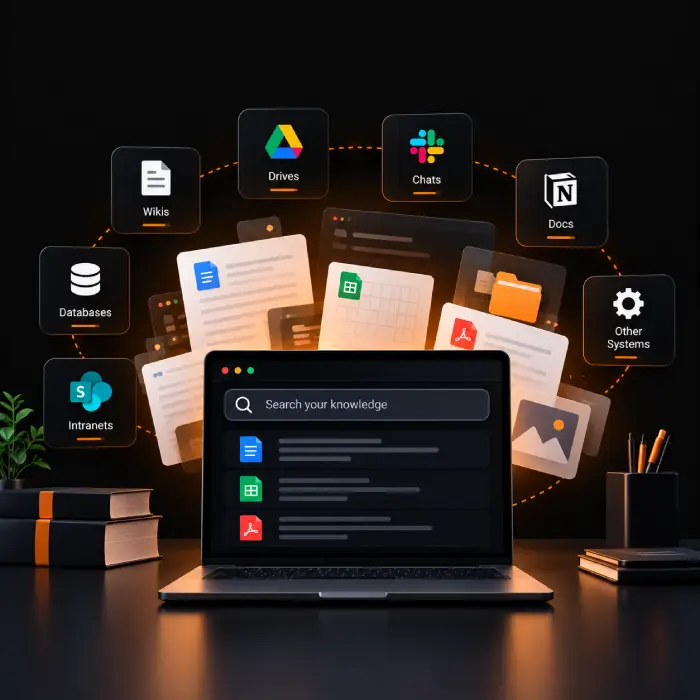
Your company’s knowledge is scattered across wikis, drives, and systems that don’t talk to each other, and employees waste time searching for answers that already exist somewhere. Wappnet.ai’s Knowledge AI services connect your approved sources into one searchable, permission-aware layer, built around your existing systems and access rules, not a generic search box.

What Does Knowledge AI Service Include?
Our Enterprise Knowledge AI Services cover the engineering work needed to make an organization's existing knowledge discoverable and usable by people and by other AI systems, including a conversational assistant such as our Business GPT solution. As part of our broader Knowledge AI Solutions portfolio, this work is delivered as a standalone engagement or alongside other AI and data initiatives.
A typical Knowledge AI services engagement covers:
- Assessing your document stores, wikis, and systems, then connecting and preparing the ones in scope so content can be searched accurately as volume grows.
- Building AI-powered knowledge discovery that matches a question's meaning through contextual search and retrieval, not only exact keywords.
- Enforcing your existing access rules so results never surface information a user isn't authorized to see.
- Monitoring source documents for changes so results stay aligned with the current, approved version.
- Capturing whether results were useful and feeding that signal back into ranking over time.
Why Businesses Invest in Knowledge AI
These problems rarely show up as one dramatic failure. They show up as a few extra minutes lost dozens of times a day, repeated across an entire organization.
Information Scattered Across Systems
Policies live in one tool, documentation in another, and project history in a third, so employees routinely check multiple tabs and systems to find something that already exists, rather than getting a direct answer.
Outdated or Conflicting Documentation
Multiple versions of a policy circulate at once, and employees can't always tell which is current.
Repetitive Questions to Experts
The same handful of questions reach the same subject-matter experts every week, taking time from higher-value work.
Loss of Institutional Knowledge
Knowledge that lives mainly in one person's head is difficult to recover once they're gone, and organizational knowledge management practices rarely catch up on their own.
Inconsistent Knowledge Sharing
One team solves a problem that another team hits again later, with no shared, searchable record of what was already figured out, a gap better Knowledge Sharing and Discovery practices can close.
Knowledge AI Solutions Built for Your Business
Most engagements start with core discovery and retrieval, then grow into broader enterprise knowledge AI capabilities and complete Knowledge Discovery Solutions as sources and usage expand.
Enterprise Knowledge Discovery
Finding relevant information across multiple connected sources from a single search or question.
Contextual Information Search
Returning results based on the meaning and intent behind a question, not only exact keyword matches.
Internal Knowledge Base Access
Connecting wikis, intranets, and purpose-built knowledge bases to support internal knowledge discovery so their content becomes searchable.
Multi-Source Information Discovery
Searching across document repositories, policy systems, and support records together.
Document & Policy Retrieval
Surfacing specific documents or policy sections relevant to a question, with source references where supported.
Search Relevance & Filtering
Rank and filter results by recency, source, or department so the most useful information appears first.
Permission-Aware Knowledge Access
Enforcing existing access rules so results only include information a given employee is authorized to see. Must be deliberately engineered and tested, not assumed.
Content Freshness Workflows
Tracking when source documents change, so enterprise knowledge search results stay aligned with the current, approved version.
Feedback & Quality Evaluation
Capturing whether a result was actually useful and using that signal to improve retrieval over time.
Secure Enterprise Knowledge Access
Identity and access-management integration so retrieval respects who is allowed to see what, across every connected source.
Make Your Organization's Knowledge Easier to Find
If employees are still asking a colleague questions that are already answered in a document somewhere, or your intranet search routinely returns everything except the thing someone was looking for, that's a discovery problem our Knowledge AI services are built to address.
Our Knowledge AI Process
A discovery-first approach, since a search system designed around the wrong sources, or access rules copied from the wrong system, rarely holds up once real users show up.
- 1
Knowledge Needs Assessment
We identify which questions employees actually need answered and which business problems searching is currently getting in the way of.
- 2
Source & Access Mapping
We confirm which document stores, wikis, and systems are in scope, who owns each one, and how access is currently controlled.
- 3
Content Preparation & Indexing
Content from approved sources is connected, processed, and organized for efficient, accurate retrieval.
- 4
Retrieval & Relevance Design
We design how the system finds and ranks relevant content, using intelligent information retrieval techniques matched to your content.
- 5
Permission & Security Implementation
Access controls are built in and tested against your real access rules, not assumed to work automatically.
- 6
Evaluation, Launch & Tuning
We test relevance against real questions, launch to a defined user group, and keep refining ranking and freshness as usage evolves.
Knowledge AI: Use Cases
Common knowledge-discovery problems this service addresses across departments and functions.
Internal Policy & Procedure Discovery
Connects approved policy documentation so employees can search or ask in plain language and retrieve the current, approved version, with a source reference.
Employee Onboarding & HR Knowledge Access
Surfaces onboarding and role-specific documentation through AI for employee knowledge management.
Technical Documentation Discovery
Makes dense technical content searchable by meaning, so staff can find the right section without the exact original phrasing.
Customer Support Knowledge Access
Surfaces relevant support knowledge base content and prior resolved issues alongside the agent's current ticket.
Sales Enablement & Product Discovery
Connects approved sales and product content so reps can search across it from one place during live deal conversations.
Legal & Compliance Document Discovery
Supports internal document discovery across contracts and compliance documentation, with source references for verification.
Research & Organizational Knowledge Access
Surfaces relevant prior work and reference material across connected repositories for a given research question, supporting broader enterprise information access.
Internal Document Search Across Repositories
Provides one search experience across every approved, connected repository instead of a separate search per system.
Knowledge AI Services vs. Traditional Enterprise Search vs. a Generic AI Chatbot
Each approach has a real place. The right fit depends on your content, access-control requirements, and how much natural-language flexibility employees actually need.
Technologies We Use to Build Knowledge AI Solutions
Technology choice depends on your providers, content types, and security requirements, not a fixed set.
Industries We Help With Knowledge AI
Why Choose Wappnet AI as Your Knowledge AI Company?
As a Knowledge AI development company and Knowledge AI company, Wappnet.ai designs each engagement around your actual information sources and access rules, not a templated search box. That approach carries through every phase, from initial discovery to ongoing tuning after launch.
Business Problems Before Architecture
We start by understanding which questions employees need answered before any technical decision is made.
Knowledge Workflows Designed Around Your Sources
Every Knowledge AI implementation services engagement, including full Enterprise Knowledge AI implementation work, is scoped to the systems you actually use.
Data Quality & Access Control as First-Class Work
Permission-aware access and freshness are part of the architecture from the start, informed by our Data Engineering and Responsible AI practices.
AI & Data Engineering Under One Roof
Retrieval design, data preparation, and model/retrieval work are handled without the handoff gaps that cause production issues.
Real-World Knowledge AI Solutions We've Delivered
Case studies of enterprise search, contextual retrieval, and permission-aware knowledge management deployments in production environments.
Multi-Source Knowledge Discovery for Distributed Workforce
Unified Confluence, Google Drive, and Jira into a semantic retrieval layer with fine-grained access control, reducing search-to-answer time by 60%.
Permission-Aware Policy & Contract Retrieval
Engineered an internal document search system for legal and HR teams, ensuring instant source-referenced answers while strictly respecting role-based document access.
Contextual Support Knowledge Base Retrieval
Connected live customer ticketing with historical resolution records and internal technical documentation, speeding first-contact resolution for support agents.
Not Sure Where Your Knowledge Discovery Problem Actually Lives?
Tell us which systems your teams search today and what's slowing them down, and we'll give you an honest read on what a Knowledge AI services engagement would need to address first.
Latest AI Insights & Industry Trends
 RAG
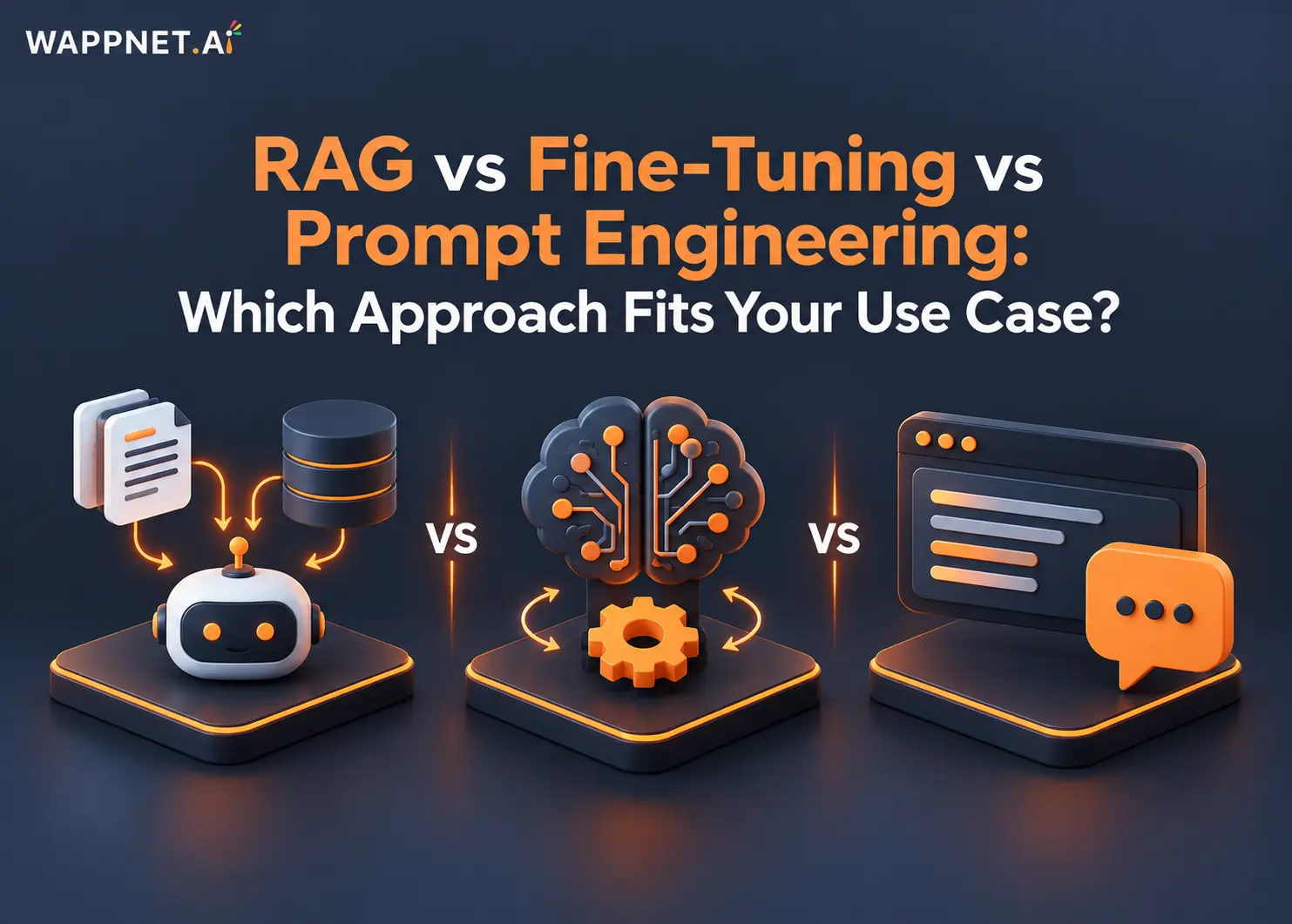
RAG vs Fine-Tuning vs Prompt Engineering: Which Approach Fits Your Use Case?
Compare RAG, fine-tuning, and prompt engineering to explore costs, use cases, and the best approach for enterprise AI.
 AI Copilot
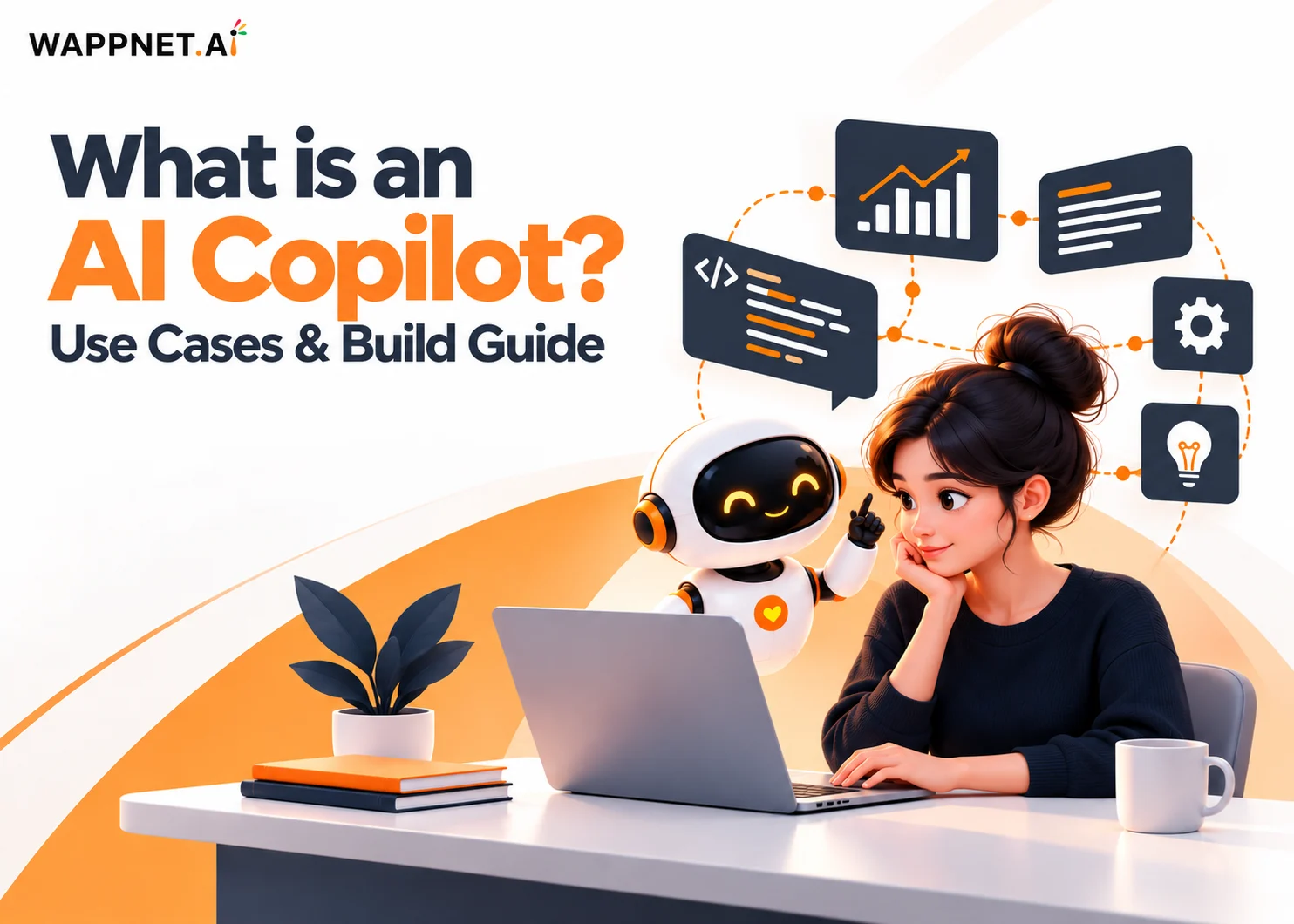
What is an AI Copilot? Use Cases & Build Guide
What is an AI Copilot? Learn how it works, how it differs from AI agents, key use cases, and how to build one for your business.
 RAG
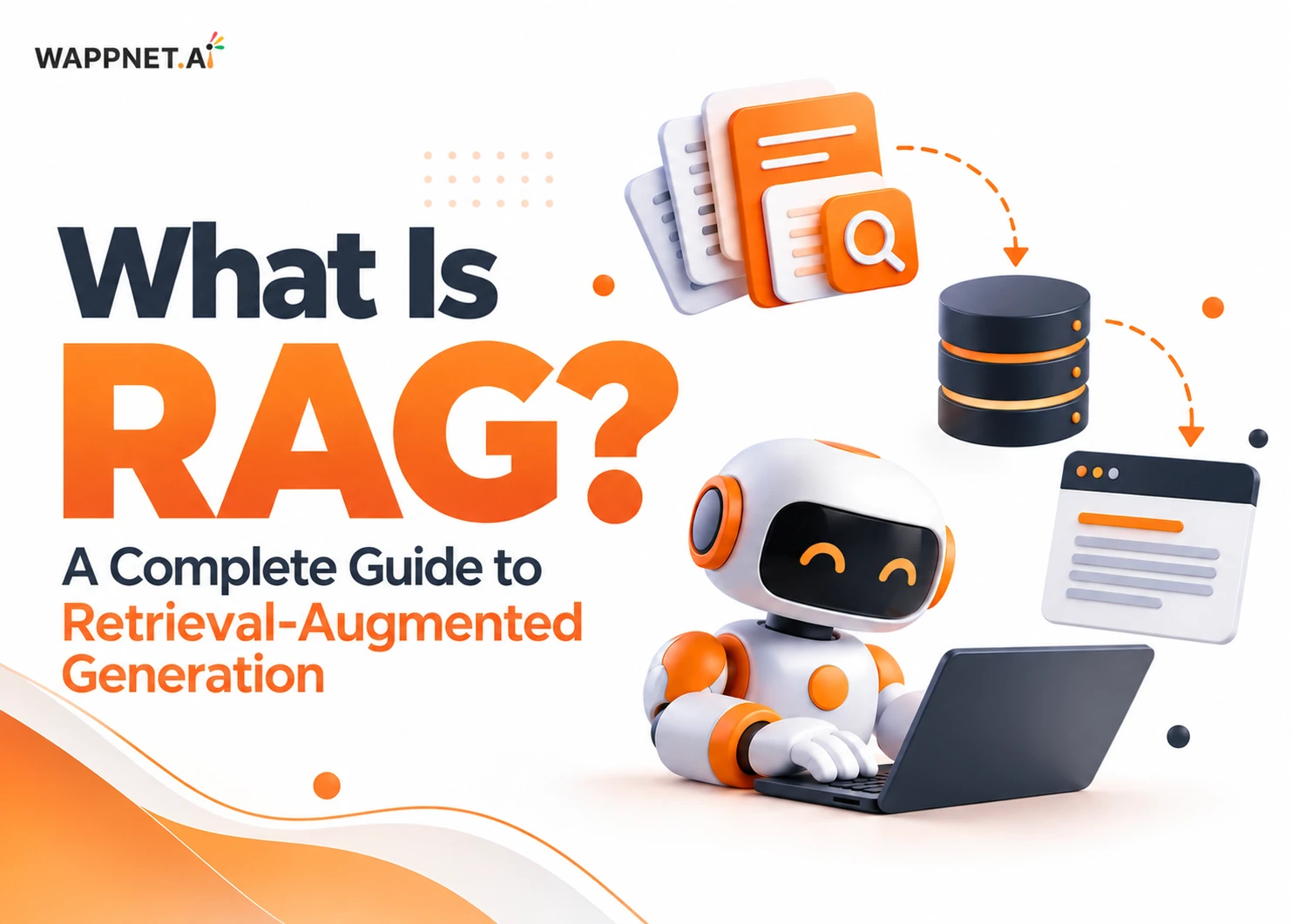
What Is RAG? A Complete Guide to Retrieval-Augmented Generation
Learn what RAG is, how Retrieval-Augmented Generation works, reduces AI hallucinations, and powers smarter enterprise AI.
Frequently Asked Questions
Knowledge AI services cover the engineering work needed to make an organization's existing internal knowledge discoverable, searchable, permission-aware, and continuously current, through AI-powered knowledge discovery and retrieval rather than manual search alone.
An Enterprise Knowledge AI implementation connects to your approved document stores and systems, indexes content so it can be searched by meaning, retrieves the most relevant material for a given question, and applies access controls so each employee only sees information they're authorized to see.
Traditional keyword search returns documents matching exact terms. Knowledge AI retrieves based on the meaning behind a question, draws on multiple connected sources at once, and, where supported, can surface a direct, source-referenced answer.
Through permission-aware retrieval that is deliberately designed and tested against existing access rules and identity systems, an engineering requirement, not an automatic property of connecting a search system to more sources.
By tracking search-to-answer time, successful retrieval rate, user satisfaction with results, unresolved query rate, and the share of answers carrying a verifiable source reference, measured over time rather than assumed from launch.
The quality and currency of existing source content, how clearly access rules are defined across systems, which systems are in scope for the first phase, and how success will be measured, assessed before architecture decisions are made.
Knowledge AI Solutions refer to the working system that helps employees find and use organizational information. Knowledge AI Services cover the engineering work required to build that system, including connecting data sources, configuring search and retrieval, and implementing access controls. Wappnet.ai provides both, tailored to your organization's needs.
AI Knowledge Management Solutions is another common term for the same capability area as Knowledge AI: using AI to organize, search, and surface an organization's existing knowledge. Whether a team searches for that phrase or AI-Powered Knowledge Management Solutions, the underlying engineering work, source connection, indexing, retrieval, and access control, is the same.
Basic internal search typically focuses on keyword matches within individual systems. Enterprise Knowledge Search connects multiple approved sources, retrieves information based on the meaning of a query, and applies access controls so employees can find relevant information they're authorized to view.
Look for a provider that understands your existing systems, content quality, and access requirements before recommending an architecture. They should also explain how search relevance is tested, how content freshness is maintained, and how permissions are verified. Wappnet.ai takes this practical, discovery-first approach to building secure and useful knowledge discovery systems.