
AI Solutions for Healthcare
Front-desk phones that never stop, referral forms keyed in by hand, and records spread across several systems pull staff away from patients. We build AI solutions for healthcare organizations, helping teams explore AI development services for healthcare administrative workflows, document processing, data analytics, and patient engagement. We start with the operational problem, build around the systems you already run, keep your people in the review loop, and measure results against your own baseline.

What Is AI in Healthcare?
AI in healthcare means software that learns from data to support tasks like handling documents, answering routine enquiries, and spotting patterns in operational data. It assists staff and does not replace healthcare professionals, who make all clinical decisions. Artificial intelligence in healthcare is a set of capabilities for specific problems, and generative AI in healthcare drafts text and answers questions from approved documents, always with staff review.
Handle documents
Reads forms, referrals, and letters, and pulls out the fields your staff need to check.
Support patients
Answers routine questions and sends reminders from approved content, passing sensitive cases to staff.
Coordinate work
Tracks requests, follow-ups, and handoffs so tasks do not stall between teams.
See operations clearly
Brings scheduling and service data together so managers spot backlogs sooner.
Key Challenges Facing Healthcare Organizations
Most healthcare AI projects start with a day-to-day operational frustration, not a model. Which of these sounds like your organization?
Administrative Workload
Scheduling, forms, referrals, and follow-ups take hours that clinical and front-desk staff would rather spend with patients, and the pile grows when volumes rise.
Fragmented Healthcare Information
Details sit in the EHR, the scheduling tool, email, and shared drives. Staff re-enter data and search several places to answer one question.
Time-Consuming Document Processing
Referral letters, intake forms, insurance paperwork, and scanned reports arrive in mixed formats. Someone has to read, key in, and check each one before work can move.
Patient Communication and Engagement Gaps
Patients wait for answers to routine questions, miss reminders, or are unsure what happens next, and staff spend phone time on questions a clear answer could settle.
Disconnected Operational Workflows
Handoffs between front desk, billing, and departments rely on email and manual follow-up, so requests stall and nobody can see where they are.
Limited Visibility Across Operational Data
Leaders see waiting times, no-shows, and processing backlogs late, often in spreadsheets built by hand, which makes it hard to act while it still matters.
Healthcare AI Solutions We Build
Our AI solutions and services for healthcare providers start with one problem worth solving and fit around the platforms you already have. These are solution areas we can explore with you, not ready-made medical products. Each card shows what it does, where it fits in a workflow, and what you can measure.
AI-Powered Patient Engagement
Help patients get timely, consistent answers. AI for patient engagement can handle routine questions, appointment reminders, and pre-visit instructions on your website, app, or messaging channels, and hand anything uncertain or clinical to your staff. You can then evaluate enquiry response time and appointment workflow completion.
Intelligent Healthcare Document Processing
Turn paperwork into structured data your team can check. AI for medical document processing uses OCR and language models to read forms, referrals, and letters, extract the fields you need, and route anything unclear to a staff member. You can then evaluate processing time and exception rates.
Healthcare Workflow Automation
Keep requests moving between teams. Healthcare workflow automation services coordinate reminders, status updates, and handoffs within permissions you set, and escalate exceptions to a person. You can then evaluate staff time on repetitive tasks and request completion.
Healthcare Data Analytics and Decision Support
See operations clearly. Healthcare data analytics brings scheduling, throughput, and service data together so managers can spot backlogs and trends sooner. It supports operational decisions, not clinical ones. You can then evaluate data retrieval time and reporting effort.
Healthcare Knowledge Assistants
Find the right policy or procedure document faster. A healthcare knowledge management assistant retrieves answers from your approved documents, shows the source, and says when it does not know. It is for administrative and policy questions, not diagnosis or treatment advice. You can then evaluate retrieval time and answer quality.
Administrative and Service Desk AI Assistants
Take routine requests off busy teams. An assistant can answer front-desk, billing-enquiry, and internal IT questions from your approved content and open tickets with context for your team. It is an administrative assistant, not a clinically validated medical tool. You can then evaluate resolution time and handover rate.
Ready to Explore AI Opportunities for Your Healthcare Organization?
Tell us which administrative bottleneck costs your team the most time, whether it is intake paperwork, a crowded phone line, or reports built by hand. We will tell you plainly where AI can help and what it would take.
AI Use Cases Across Healthcare Operations
Solutions describe what AI can do. These use cases from our AI services for the healthcare industry show where it fits into a normal day for your team, with a clear owner and review step, so each one can be tried and measured.
01. Patient Communication and Appointment Workflows
Your front-desk lead decides which questions the assistant may answer and which appointment requests it may handle. This kind of AI-powered patient support sends confirmations and reminders, and passes anything it cannot settle, especially anything clinical, to staff with the conversation attached. Data sharing follows the privacy rules you agree. See also our patient appointment and results tracking workflow.
02. Clinical Documentation Assistance
A clinician dictates or types notes, and AI for clinical documentation drafts a structured summary for them to edit and approve before anything enters the record. The clinician stays responsible for the final note. This needs a validated approach, a privacy review, and agreement on what a draft may include.
03. Medical Document Intake and Information Extraction
Referral forms arrive by email and scan. The system reads each one, extracts fields such as patient name, referring provider, and requested service, and sends any low-confidence or missing fields to a staff member. Staff verifies extracted values, and none are treated as automatically correct.
04. Healthcare Knowledge Retrieval
A coordinator asks how your organization reschedules a missed procedure and gets an answer drawn from your approved policy documents, with the source shown. If the documents do not cover it, the assistant says so. It is for administrative questions, not medical advice.
05. Administrative Workflow Coordination
When a referral or authorization is pending, the system creates the follow-up task, notifies the owner, and tracks it until it is closed. This healthcare administrative automation surfaces overdue items for the team lead, and people decide every exception.
06. Healthcare Operations Analytics
An operations manager asks which clinics have the longest scheduling backlog this month and gets an answer from your own data, with the definition used. With AI for hospital operations, analysts spend less time assembling reports and more time acting on them.
Business Benefits of AI in Healthcare
The benefits of AI in healthcare administration depend on the use case, your data, and how your teams adopt it. So we agree what success looks like before we build, and compare against your own starting point instead of promising numbers.
Administrative processing time
How long routine administrative tasks take from start to finish.
Document processing accuracy
How often extracted fields match what a reviewer confirms.
Appointment workflow completion
How many appointment requests reach a confirmed outcome without manual chasing.
Patient enquiry response time
How quickly routine enquiries get an accurate answer.
Service request resolution time
How quickly internal and patient-facing requests are closed.
Staff time on repetitive tasks
Hours spent on work the AI now prepares or completes for review.
Data retrieval time
How long staff take to find the document or figure they need.
Workflow exception rate
How many cases fall out of the automated path, and why.
Human review rate
How often staff accept, edit, or reject AI output, a direct signal of quality and trust.
Our Approach to Healthcare AI Implementation
Whether you need healthcare AI consulting services, engineering, or hands-on AI implementation services for healthcare systems, you will see progress in stages, with a clear go or no-go decision at each one. Timelines depend on scope, data readiness, and integrations, so we agree on them with you after discovery.
- 1
Discovery and Use-Case Prioritization
We learn your goals, teams, and constraints, then rank possible use cases by business value, feasibility, and risk, so you start with the one most worth doing.
- 2
Data and Workflow Assessment
We check data quality, coverage, and access, and map how work moves between people and systems today, so we know what an AI solution would sit inside.
- 3
Security, Privacy and Integration Review
With your security and compliance teams, we agree what data the use case needs, who may access it, how it is stored and retained, what your systems expose, and which rules apply in your region and workflow.
- 4
Solution Design and Validation
We choose the approach, place human review points in the workflow, and test it on realistic scenarios, using sample or de-identified data where possible.
- 5
Pilot, Testing and Deployment
We run it with one team, clinic, or workflow, gather feedback from the people who use it, then connect it to agreed systems with access controls in place.
- 6
Monitoring and Optimization
We track the KPIs you agreed on, the review rate, answer quality, and running costs, then refine as your workflows and volumes change.
Technologies Powering Our Healthcare AI Solutions
You should not have to pick technology first. Our healthcare AI software development services begin with your data, existing systems, security needs, and the problem at hand, not a favorite tool. These capabilities support our AI services for healthcare, and we confirm what can connect to your systems before the project starts.
Healthcare Segments Where AI Can Help
AI for healthcare providers and digital health teams starts from different workflows depending on the setting. These are the groups this page is written for, and where an administrative AI solution could fit each one.
Hospitals and Health Systems
Large volumes of referrals, scheduling requests, and internal enquiries across many departments. AI can help with document intake, routing, and operational reporting, with staff approving the outcome.
Clinics and Specialty Practices
Small teams carrying heavy front-desk and paperwork loads. Appointment requests, reminders, and intake forms are common starting points.
Diagnostic Centers and Laboratories
Bookings, report requests, and patient questions arrive by phone, email, and forms. AI can support booking workflows and routine enquiries. It does not interpret results.
Digital Health Companies
Product teams adding AI features, such as a patient support assistant or document handling, to an existing platform, with privacy and review built into the design.
Patient Experience and Engagement Teams
Teams responsible for how quickly and clearly patients get answers. Routine questions, reminders, and follow-up messages can be handled from approved content, with handover to staff.
Healthcare IT and Data Leaders
Leaders who need AI to fit existing systems and data rules. Integration checks, data quality review, and monitoring are agreed before anything is built.
Why Choose Wappnet AI for Healthcare AI Solutions?
We are an AI development company for healthcare teams that want engineering built around their own workflows, not a fixed clinical product. When you shortlist an AI company for healthcare, here is what you can expect from us and hold us to.
Start With Your Busiest Workflow
We begin with the bottleneck your team feels most, such as referral intake, appointment calls, or manual reporting, and rank options by value, feasibility, risk, and data readiness before anything is built.
Built Around Front-Desk and Clinical Admin Teams
We map how front-desk, billing, and operations staff really work, so healthcare workflow optimization removes steps instead of adding one more screen to check.
Works With Your EHR and Scheduling Systems
We check what your EHR, scheduling, and document systems expose before the project starts, and design around them instead of asking you to replace them.
Patient Data Privacy Comes First
Patient data questions come first: what data is needed, who may see it, where it is stored, and which rules apply in your region, agreed with your security and compliance teams.
Staff Review What Matters
Clinicians and administrators review what matters, with clear escalation for anything sensitive, uncertain, or clinical. The AI prepares work and people approve it.
Measured Against Your Own Baseline
Before we build, we record a baseline from your own scheduling, processing, and enquiry data, so you judge results against your starting point and not a generic benchmark.
Real-World AI Solutions for Healthcare We've Delivered
Proven real-world AI implementations delivering measurable business outcomes and operational scale across healthcare providers and life sciences.
Pharmacy Refill & Verification Platform
Automating prescription verification, inventory telemetry, and refill coordination workflows with human-in-the-loop oversight.
Medical Referral & Intake Document Processing
Intelligent OCR and medical record data extraction reducing intake processing turnaround from days to minutes with zero data loss.
Voice & Chat Patient Scheduling Assistant
HIPAA-compliant conversational AI handling 24/7 patient booking, pre-visit instructions, and routine inquiry routing.
Ready to Explore AI Opportunities for Your Healthcare Organization?
Not sure whether AI fits, or where to begin? Tell us about one operational challenge or a project you are considering, and we will help you choose a first use case and decide how to measure it.
Latest AI Insights & Industry Trends
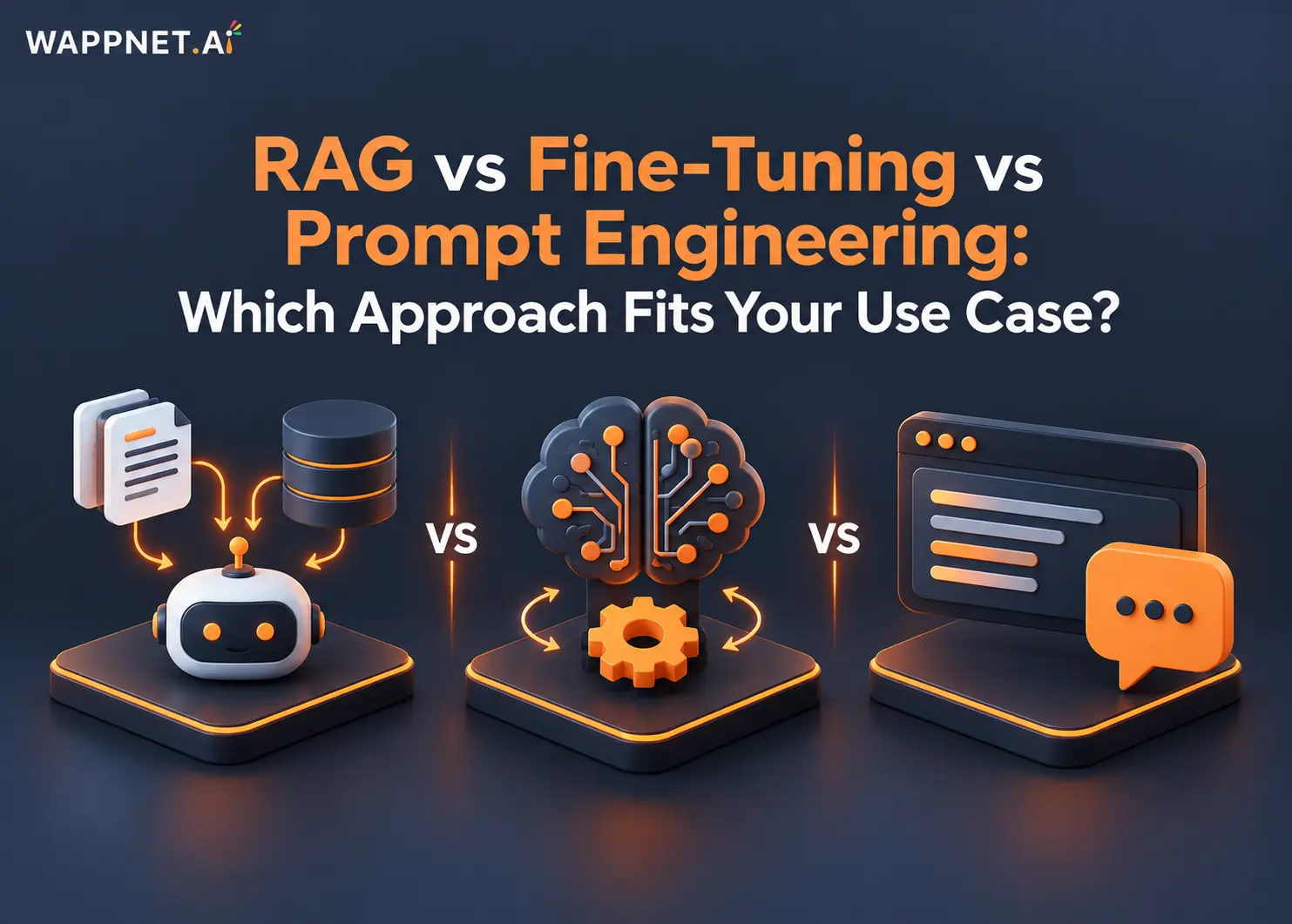 RAG
RAG vs Fine-Tuning vs Prompt Engineering: Which Approach Fits Your Use Case?
Compare RAG, fine-tuning, and prompt engineering to explore costs, use cases, and the best approach for enterprise AI.
 AI Copilot
What is an AI Copilot? Use Cases & Build Guide
What is an AI Copilot? Learn how it works, how it differs from AI agents, key use cases, and how to build one for your business.
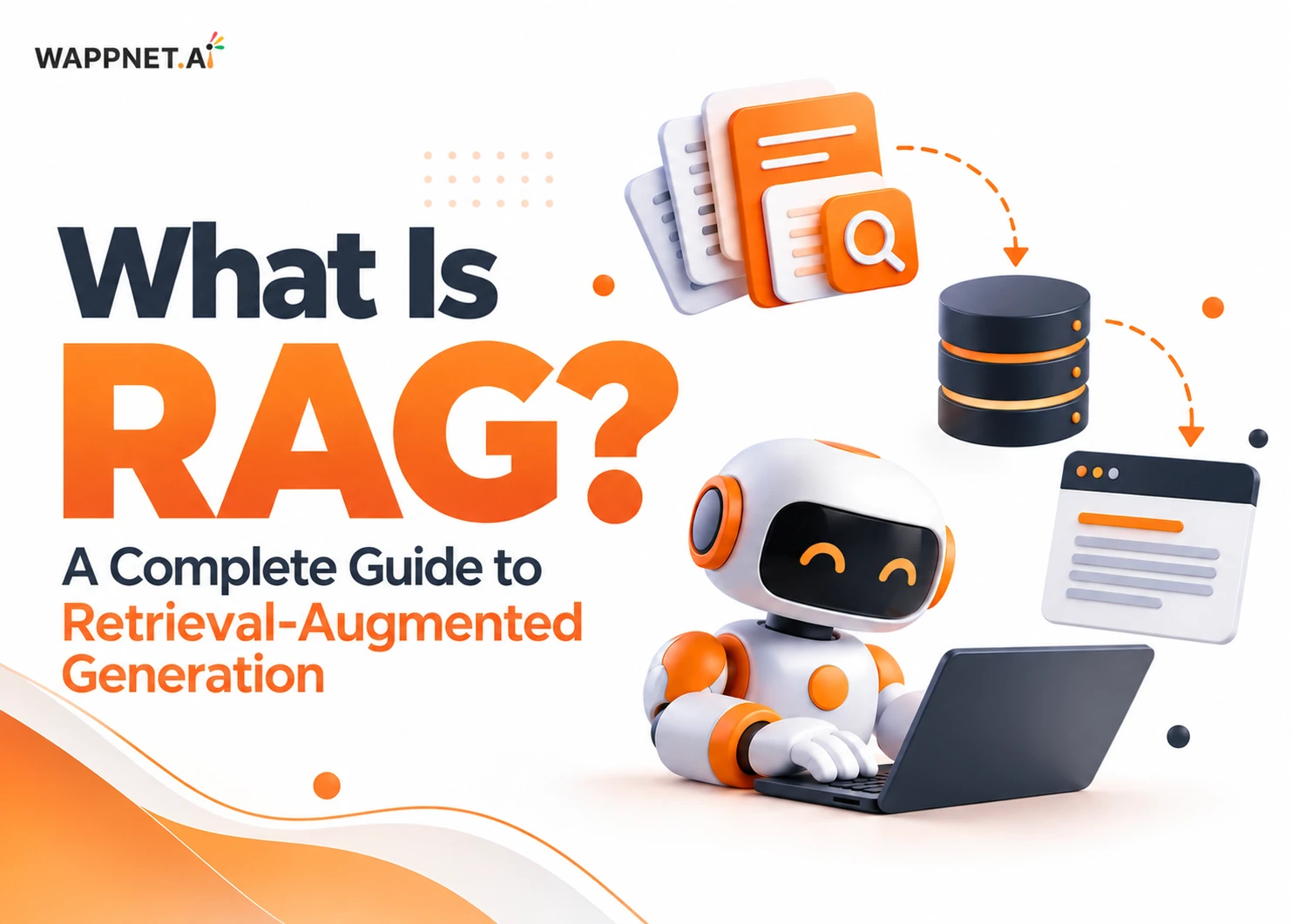 RAG
What Is RAG? A Complete Guide to Retrieval-Augmented Generation
Learn what RAG is, how Retrieval-Augmented Generation works, reduces AI hallucinations, and powers smarter enterprise AI.
Frequently Asked Questions
AI solutions for healthcare are software tools that use machine learning, language models, or document AI to support tasks like handling referrals, answering routine patient questions, and analyzing operational data. They assist staff and do not replace healthcare professionals or make clinical decisions. Healthcare artificial intelligence services cover planning, building, and maintaining them, and healthcare AI services can extend to clinical uses that need their own validation.
AI takes the first pass at repetitive work, such as reading forms, routing requests, and answering routine questions. This healthcare process automation leaves staff to review exceptions, and you measure the gain against a baseline taken before launch.
An assistant answers routine questions from approved content, sends reminders, and helps with appointments, then hands off to staff. It should avoid medical advice and follow your privacy rules. AI in healthcare works best here when it removes friction.
Often, yes, depending on what your systems expose. Connections may use APIs, standards such as HL7 FHIR, or data exports. We check integration early and do not claim existing integrations with specific products.
Healthcare document AI services use OCR and language models to read forms and referrals and pull out fields like dates and names. Uncertain fields go to a staff member, and extracted data should be verified.
Ask what data is needed, where it is stored, who can access it, how long it is kept, whether it trains models, and how outputs are logged. Involve your security and compliance teams early.
Set a baseline before launch, track measures tied to the use case, and compare over an agreed period including running costs. No ROI figure can be promised in advance.
It depends on scope, data readiness, integrations, and privacy review. A one-workflow pilot is usually quicker than a multi-site rollout, and you get a milestone plan after discovery.
Look for a clear problem focus, careful data and privacy handling, fit with your systems, human review of output, and success measured against your baseline. Be cautious of promises about clinical outcomes or compliance made before they’ve seen your workflows.