
Machine Learning & Predictive Analytics Services
Most businesses already have the data they need to forecast demand, flag risk, and predict what a customer will do next. It is just sitting in disconnected systems instead of informing a decision. We design, build, and deploy custom machine learning and predictive analytics solutions around your actual data and decision points.
What Do Machine Learning & Predictive Analytics Services Include?
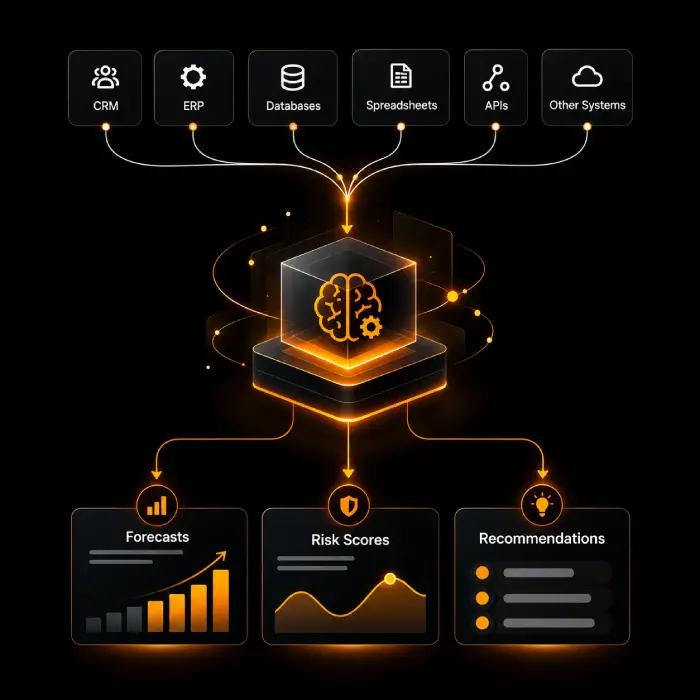
Machine Learning & predictive analytics services turn scattered business data into forecasts, scores, and recommendations your teams can act on, not a proof of concept that never leaves a notebook. The goal is simple: predict what matters and put that prediction where a decision actually gets made.
Every engagement moves through six connected disciplines:
- Build predictive models matched to what you're forecasting, not a default algorithm.
- Prepare and engineer the data signals a model actually learns from.
- Train and validate against data the model has never seen, so accuracy holds up.
- Deploy into the CRM, ERP, or app your teams already use, not a standalone tool.
- Monitor live accuracy and retrain on a set cadence as behavior shifts.
- Surface every prediction with the context a decision-maker actually needs.
Why Businesses Invest in Machine Learning & Predictive Analytics
Most organizations don't wake up wanting a model. They invest because a specific problem has started costing time, money, or trust.
Improve Forecasting Accuracy & Planning
Models find patterns across far more variables than a spreadsheet or gut-feel forecast can track, holding up better under real variability.
Make Faster, Data-Driven Decisions
Decisions rest on what the data shows instead of whoever argued most persuasively in a meeting, without removing human judgment.
Predict Customer Behavior & Churn
Know which customers are likely to churn, buy, or respond to an offer in time to act, not after the moment has passed.
Detect Fraud, Risk & Anomalies Earlier
Anomaly and risk scoring models catch unusual patterns at a volume no manual review process could match.
Optimize Operations & Reduce Downtime
Predictive maintenance and demand forecasting shift operations from reacting to a problem to acting before it happens, turning weeks of manual analysis into a dashboard anyone can check today.
Machine Learning & Predictive Analytics Solutions Built for Your Business
The right solution depends on what you're trying to predict, the data you already have, and how the prediction needs to reach the people who'll act on it.
Machine Learning Model Development
End to end machine learning model development from data preparation through training and validation, built around your specific prediction problem instead of a generic algorithm.
Predictive Analytics Solutions
Custom forecasting and scoring systems designed around a specific business question, not a generic dashboard. These predictive analytics solutions tie every score to a decision your planning, finance, and ops teams already make.
Demand & Sales Forecasting
Models that predict future demand, order volume, or sales performance from historical and seasonal patterns, giving supply chain and revenue teams demand forecasting accurate enough to cut both stockouts and overstocks.
Customer Churn & Lifetime Value Prediction
Models that flag which customers are likely to leave and estimate what each is worth over time, so customer churn prediction aims retention effort and spend at the accounts that matter most.
Fraud & Risk Detection
Models that score transactions, applications, or claims for fraud and credit risk in real time, helping financial services and insurance teams run fraud detection with fewer losses and fewer false declines.
Recommendation Engine Development
Models that predict which product, content, or offer a specific user is most likely to want next, so e-commerce and product teams get recommendation engine development that lifts conversion and engagement.
Predictive Maintenance
Models that predict equipment failure from sensor and maintenance history before a breakdown happens, letting manufacturing and logistics teams run predictive maintenance scheduled by need, not calendar.
Anomaly Detection
Models that flag unusual patterns in transactions, network activity, or operational data, so security and operations teams catch problems through anomaly detection before real damage is done.
Real-Time Predictive Analytics
Prediction pipelines that score events as they happen instead of overnight, so real-time predictive analytics can drive fraud alerts, live dashboards, and other decisions that can't wait for a batch run.
ML Model Deployment & MLOps
Models shipped as production APIs with monitoring, versioning, and retraining built in, so ML model deployment and MLOps keep accuracy from quietly decaying after launch.
Have a Data-Driven Business Problem to Solve?
Tell us what you're working with, and our machine learning services can help you determine what's realistic and identify the right approach for your business.
Our Machine Learning & Predictive Analytics Development Process
A structured, six-stage path from business question to a monitored production model, with each stage having a clear output so nothing moves forward on an assumption.
- 1
Business Problem Definition
We define the business decision a model needs to support and what a good enough answer looks like.
- 2
Data Assessment & Prep
We review how much history exists and how clean it is. This sets what's realistically achievable.
- 3
Model Selection & Development
We select and build the architecture suited to your specific prediction problem.
- 4
Training & Validation
Trained and tested against data the model has never seen, so accuracy reflects real performance.
- 5
Deployment & Integration
Deployed as an API or embedded service, connected into the system where the prediction gets used.
- 6
Monitoring & Optimization
We track live accuracy, watch for drift, and retrain on a defined schedule.
Machine Learning & Predictive Analytics : Use Cases
How our machine learning services and predictive analytics services play out in practice: the real business problem each one replaces with a working prediction, built through our broader machine learning development services.
Smarter Inventory & Sales Planning
Static, average based planning misses real seasonal shifts, so a forecasting model trained on sales, seasonality, and promotions, one of our core predictive analytics solutions, keeps inventory and staffing matched to actual expected demand.
Spotting At Risk Customers Early
Warning signs sit scattered across tickets and usage logs until a churn model built as part of our machine learning solutions, trained on combined behavioral signals, surfaces them early enough to aim retention effort at the accounts genuinely at risk.
Catching Fraud Before It Costs You
Manual review can't keep pace with transaction volume, so a real time scoring model from our predictive analytics development work, trained on confirmed fraud and risk patterns, catches more fraud while wrongly declining fewer legitimate cases.
Preventing Costly Equipment Downtime
Equipment fails unexpectedly between scheduled maintenance windows, so a model trained on sensor and maintenance history through our predictive analytics software development predicts failure risk and shifts upkeep to when it's actually needed.
Personalizing What Customers See Next
Generic most popular picks convert poorly compared to recommendations matched to individual behavior, which is why businesses bring in a machine learning development company to build a model that predicts what a specific user wants next.
Flagging the Unusual Before It Escalates
Static rules miss the full risk picture buried in normal looking data, so our machine learning consulting services start by training a model to flag statistically unusual patterns while there's still time to act on them.
Machine Learning vs. Predictive Analytics vs. Traditional Analytics
Helping you self-diagnose which approach actually fits your problem.
Technologies We Use to Build ML & Predictive Analytics Solutions
The languages, frameworks, and cloud platforms behind our machine learning development services matched to your data, scale, and existing infrastructure, never a fixed stack applied to every engagement.











Industries We Help With Machine Learning & Predictive Analytics
Why Choose Wappnet AI as Your Machine Learning Development Company?
Choosing a machine learning partner is a long term decision. The model has to keep working after launch, not just in the demo. Here's what you can expect when you work with us.
Business First Approach
The technical approach follows the business decision a model needs to support, not the other way around.
Custom ML Solutions
As a Machine Learning Development Company, we build around your actual data and decision points, not a generic template.
Data to Production Expertise
Data prep, development, deployment, integration, and monitoring are handled as one engagement, not a series of disconnected handoffs.
Validated Accuracy & MLOps
As a predictive analytics development company, we validate every model against unseen data and keep tracking, retraining, and optimization running after launch.
Real-World Machine Learning & Predictive Analytics Solutions We've Delivered
Production predictive models and ML pipelines delivering measurable business results for industry leaders.
E-Commerce Customer Churn & LTV Prediction
Built a real-time customer churn prediction and LTV scoring model that increased customer retention campaign ROI by 42%.
Real-Time Fraud & Anomaly Detection Pipeline
Implemented a high-throughput transaction fraud scoring system processing over 10M daily events with 99.4% precision.
Multi-Echelon Demand & Inventory Forecasting
Deployed automated sales and demand forecasting models cutting supply chain overstock and stockouts by 28%.
Turn Your Business Data Into Predictive Intelligence
A forecast that's directionally right, a risk score your team can trust, a churn signal that arrives in time to act on it. Let's talk about what your data could tell you.
Latest AI Insights & Industry Trends
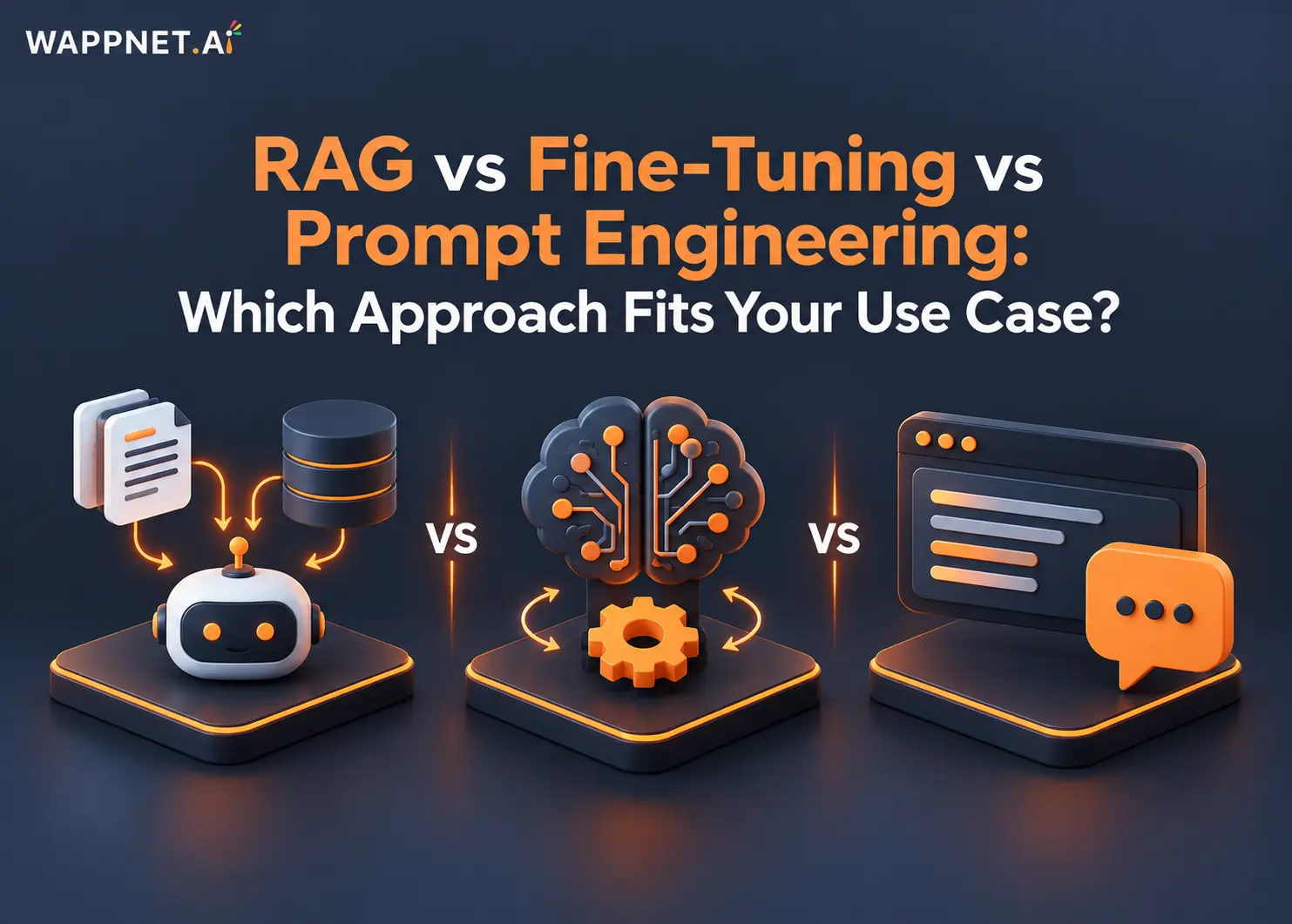 RAG
RAG vs Fine-Tuning vs Prompt Engineering: Which Approach Fits Your Use Case?
Compare RAG, fine-tuning, and prompt engineering to explore costs, use cases, and the best approach for enterprise AI.
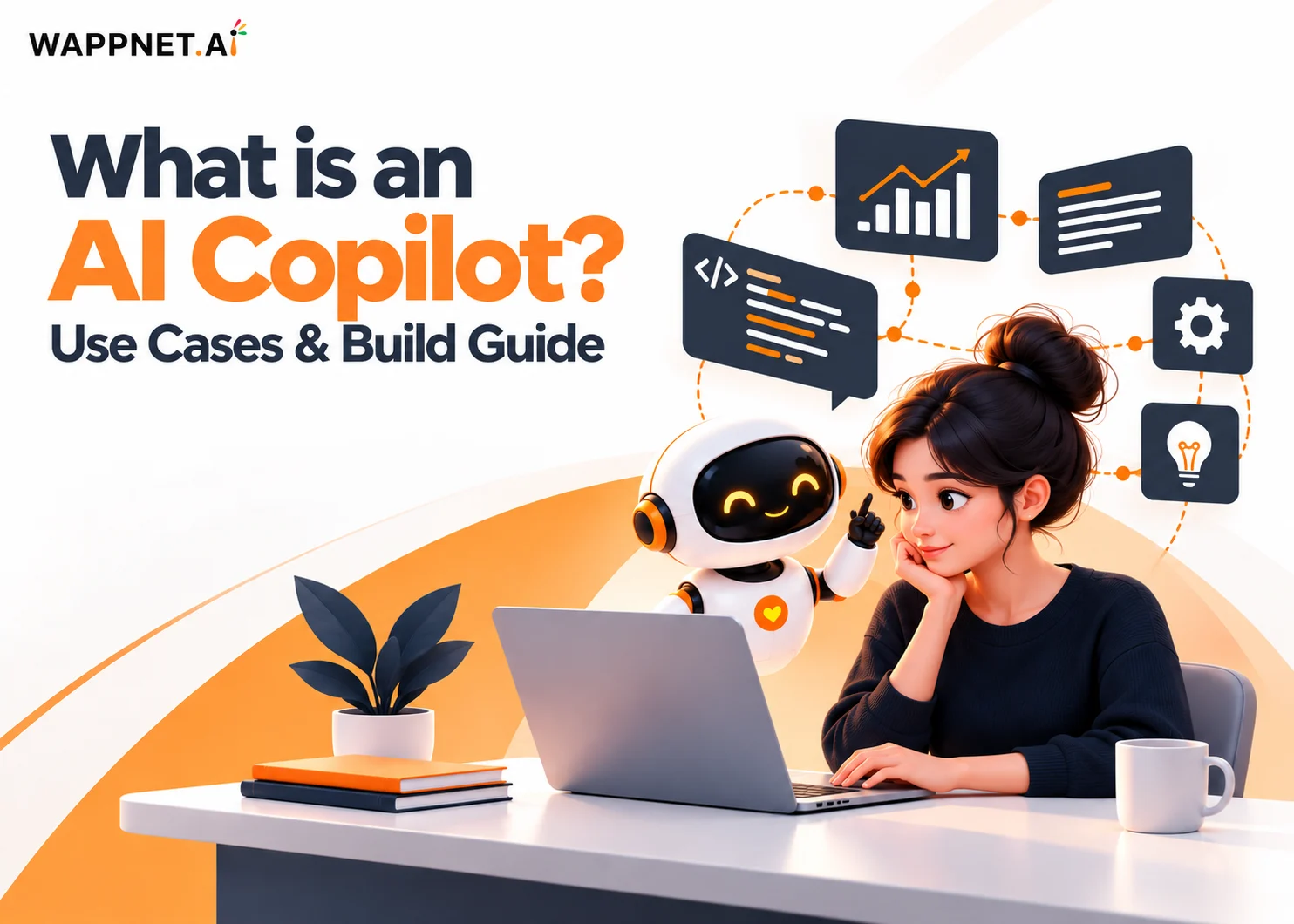 AI Copilot
What is an AI Copilot? Use Cases & Build Guide
What is an AI Copilot? Learn how it works, how it differs from AI agents, key use cases, and how to build one for your business.
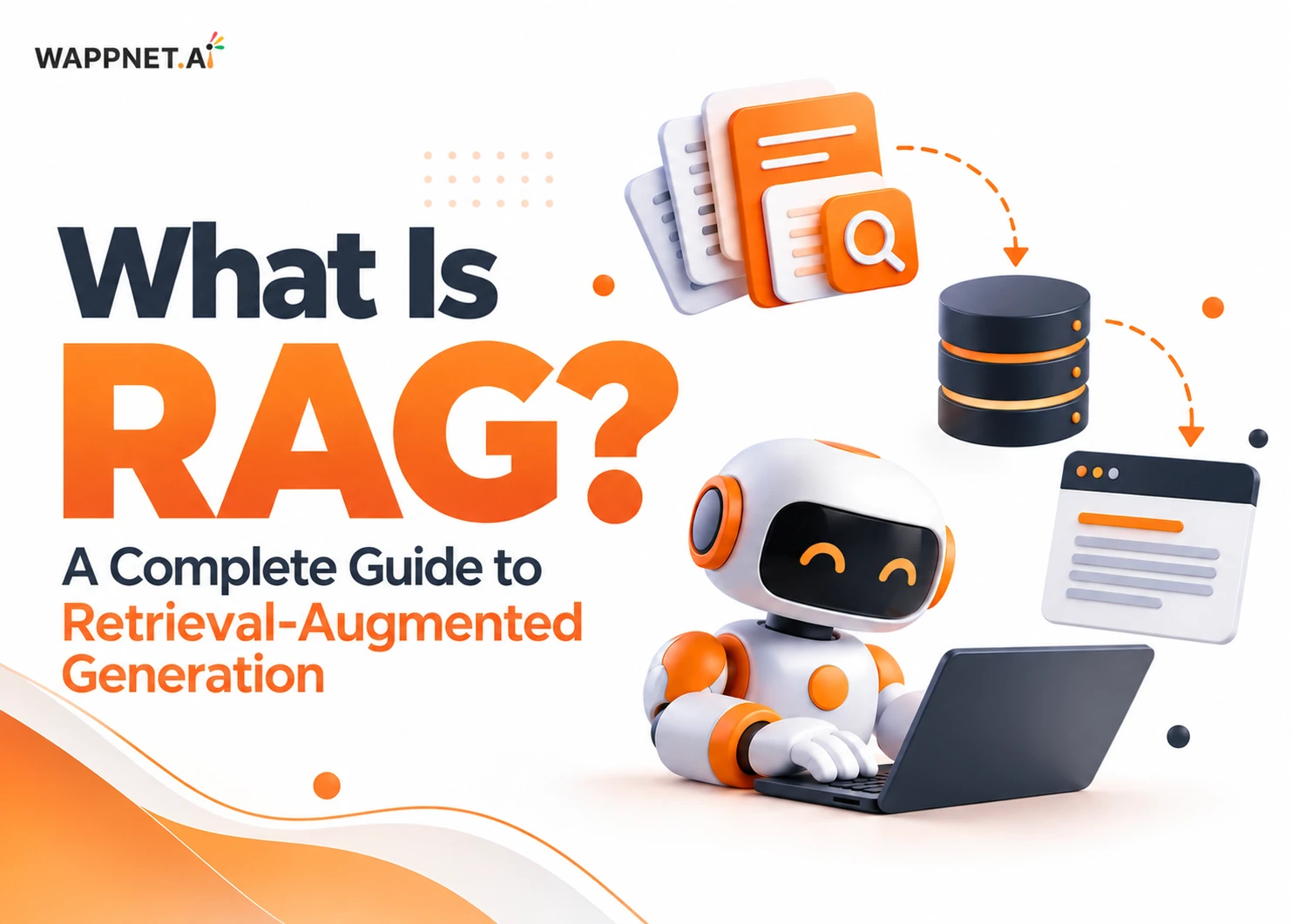 RAG
What Is RAG? A Complete Guide to Retrieval-Augmented Generation
Learn what RAG is, how Retrieval-Augmented Generation works, reduces AI hallucinations, and powers smarter enterprise AI.
Frequently Asked Questions
Machine learning development services cover the design, training, deployment, and ongoing maintenance of models that learn patterns from your data to predict, classify, or recommend, from initial data assessment through to a monitored, production system.
Predictive analytics services use historical and current data to estimate what's likely to happen next, such as demand, risk, churn, or failure, so a business can act ahead of an event instead of reacting after it.
Predictive analytics describes the goal, estimating future outcomes. Machine learning is one of the primary techniques used to achieve it. Most modern predictive analytics solutions are built using ML rather than simple statistical trend lines.
A model is trained on historical data to find patterns linked to a past outcome, then applied to new, current data to estimate the same outcome before it happens, such as a forecast, a risk score, or a probability.
Classification models (churn, fraud, default), regression and forecasting models (demand, sales, revenue), and recommendation or scoring models, chosen based on the specific business question as part of our broader machine learning solutions.
Requirements vary, but most projects need enough historical data to capture meaningful patterns, typically 12 to 24 months for seasonal forecasting, along with reasonably clean, consistent records. We assess data readiness before committing to an approach.
A focused proof of concept can take a few weeks. A production grade model with integration and monitoring typically takes two to four months, depending on data readiness and system complexity.
Cost depends on data complexity, how many systems a model needs to integrate with, and whether it's a proof of concept or a fully monitored production system. We scope cost after an initial assessment rather than quoting a fixed price upfront.
Yes. Models are typically deployed as APIs or embedded services that connect into your CRM, ERP, data warehouse, or customer facing application, so predictions reach the workflow where a decision actually gets made.
We track live model accuracy against real outcomes after deployment and watch for model drift, retraining on a defined schedule through ongoing ML model deployment and MLOps so performance doesn't quietly decline.
Healthcare, financial services, retail, manufacturing, logistics, insurance, telecom, and SaaS are among the most mature adopters of predictive analytics services, though any business with enough historical data can benefit.
Accuracy depends on the use case and data quality and is measured against data the model never saw during training, not the training data itself, which would overstate performance.
As a machine learning development company, we build custom models where your problem is specific enough that an off the shelf tool would force a compromise, and recommend a simpler approach when one genuinely fits. The decision follows your problem, not a default preference.
In practice, the two overlap heavily. A machine learning development company builds the models, and a predictive analytics development company applies them to forecasting and scoring problems. Most teams, including ours, deliver both under one engagement rather than as separate specialties.
Yes. Our machine learning consulting services start with a discovery and data assessment phase that confirms a prediction problem is well defined and your data can actually support it before any model gets built.