
AI Agent Development & Workflow Automation Services
Most automation today still runs through a person, reading, checking, copying data between systems, then deciding what's next. Our AI workflow automation services help businesses replace that manual coordination with intelligent agents. As an AI agent development company, we build agents that read the request, pull what they need from your systems, decide the next step, act, and hand off to a person only when human judgment is required.
What Do AI Agent & Workflow Automation Services Include?
AI agent and workflow automation services cover everything involved in turning a manual, multi-step process into a system that understands the request, decides what to do, and carries the work forward without someone coordinating every step by hand. The first job isn't picking a model; it's figuring out whether the workflow actually needs an agent.
A full engagement runs through four connected disciplines:
- Our AI agent consulting process assesses your workflow and data before recommending an approach.
- We define what the agent needs to understand, decide, and which tools it can use.
- We build the agent around your existing systems.
- We monitor performance after launch and refine as conditions change.
Why Businesses Invest in AI Agent & Workflow Automation
Most operational drag comes from coordinating systems and decisions, not any one hard task. Intelligent workflow automation closes that gap, usually starting with one high friction process.
Reduce Repetitive Work
No more re-keying data or checking the same systems by hand.
Move Work Across Systems Automatically
CRM, ERP, email, and internal tools stay in sync on their own.
Shorten Process Cycle Times
Work moves forward the moment it's ready, not when someone's free.
Scale Without Scaling Manual Effort
Handle more volume without adding headcount to match it.
Keep Humans in Control
Approval gates stay in place wherever judgment is required.
AI Agent & Workflow Automation Solutions
AI Agent Solutions and Custom AI Automation Solutions from a single custom agent build to enterprise agents coordinating a cross-functional process.
Custom AI Agent Development
Custom AI agent development reads the inputs specific to your process and applies your own rules and exceptions, giving you a system built around the workflow as it actually runs, not a generic template.
AI Workflow Automation
AI workflow automation carries work through intake, review, approval, and notification, routing exceptions as they arise, so handoffs stop stalling between steps.
CRM & Sales AI Agents
CRM AI agents read inbound leads, enrich records, score and route them, and keep the CRM current, freeing reps to spend more time on qualified conversations.
Customer Support AI Agents
Customer support AI agents triage tickets, pull account and policy context, resolve in-scope cases, and escalate the rest, so routine requests get a faster first response while hard cases still reach your team.
Document Processing Agents
Document processing agents extract structured data, validate it against your rules, and route it to the right system or person, cutting manual entry and the errors that come with re-keying.
Research & Intelligence Agents
AI research agents pull from the sources you point them at, structure the findings, and flag what needs a closer look, turning hours of research into something ready for review in a fraction of the time.
Reporting & Data Agents
Reporting and data agents gather information from multiple systems on schedule, format it consistently, and flag anomalies, so a report that used to take a day now runs on its own.
Multi-Agent Workflow Systems
Multi-agent workflow systems coordinate several specialized agents under one AI agent orchestration layer, so a cross-functional process spanning sales, finance, and operations runs as one coordinated system built for enterprise AI agents at scale.
AI Agent Integration
AI agent integration connects agents to your CRM, ERP, ticketing system, or internal database through secured, permissioned connections, so the agent's output becomes a completed action instead of a report someone still has to act on.
Human-in-the-Loop Automation
Human-in-the-loop automation routes high-impact actions to a person for approval and escalates low-confidence cases, keeping intelligent process automation fast on routine work while people still make the calls that need a person.
Does Your Team Spend Too Much Time Coordinating Workflows?
Tell us about the process, the systems it touches, where it slows down, and who has to step in to keep it moving. Our AI automation services team will tell you honestly whether an AI agent is the right fit or whether a simpler automation gets you there faster.
Our AI Agent & Workflow Automation Process
A six-step path from a manual process to production, AI-powered workflow automation with a decision point at every stage for whether an agent is actually the right next move.
- 1
Workflow Discovery & Assessment
Our AI agent consulting process maps the workflow as it actually runs today, every system it touches, every handoff, and every exception your team currently handles by judgment rather than rule.
- 2
Automation Opportunity Mapping
We identify which parts genuinely benefit from an AI agent, which are better served by simpler rule based automation, and which shouldn't be automated yet.
- 3
Agent & Workflow Architecture
We design what the agent needs to understand, which tools it's allowed to use, and where a human approval gate belongs in the sequence.
- 4
Prototype & Evaluation
We build a scoped version and test it against real scenarios and edge cases from your actual workflow before committing to a full build.
- 5
Integration & Production Build
We connect the agent to your live systems and move into full AI agent implementation, with the permissions and guardrails defined earlier built into the production version.
- 6
Deployment, Monitoring & Optimization
We deploy with monitoring in place from day one, track accuracy and exceptions, and refine the agent as your workflow and volume change.
AI Agent Development Services: Use Cases
Everyday workflows where an AI agent takes over the reading, deciding, and coordinating your team by hand.
Lead Qualification
Agents enrich and score inbound leads automatically, so reps start every conversation with context already gathered.
Customer Support Triage
Agents classify, research, and resolve routine tickets, escalating complex cases with full context attached.
Invoice Processing
Agents extract invoice line items, match them to purchase orders, and flag discrepancies before payment.
Employee Onboarding
Agents trigger provisioning and track onboarding tasks across HR, IT, and the hiring manager.
Compliance Review
Agents check submissions against policy and flag exceptions for human review.
IT Service Desk Automation
Agents resolve routine IT requests and escalate incidents with diagnostics already attached.
AI Agents vs. Traditional Automation vs. RPA
Traditional automation and RPA are the right fit when inputs are structured and the workflow rarely changes. AI agents earn their cost once inputs vary, documents need interpretation, and decisions span multiple systems.
Technologies We Use to Build AI Agent & Workflow Automation
We select models, frameworks, workflow engines, and infrastructure based on your performance, reliability, and security requirements.







.webp)


Industries We Help With AI Agent & Workflow Automation
Why Choose Wappnet AI as Your AI Agent Development Company?
We deliver AI agent development services with the production engineering, integration, and governance work built in, not just the model.
Business First Automation Strategy
We start with the workflow and the business outcome you're after, not a model or framework looking for a use case.
AI + Software Engineering
We don't just build the agent. We build the surrounding production system: integrations, error handling, logging, and deployment.
Integration First Architecture
Agents connect to the systems where work actually happens, instead of asking your team to bridge the gap.
Human Oversight Where It Matters
Automation doesn't mean removing control. Approval gates and escalation paths are part of the architecture from the start.
Real-World AI Agent Development & Workflow Automation Solutions We've Delivered
Real-world intelligent automation implementations delivering measurable ROI and operational efficiency.
Autonomous Lead Triage & Qualification Agent
Multi-agent orchestration handling lead routing, CRM enrichment, and automated booking with human-in-the-loop oversight.
Intelligent Support Ticket Escalation System
Autonomous support agent resolving 70% of multi-step tier-1 queries and routing complex edge cases.
Automated Invoice Reconciliation Agent
Cross-system autonomous matching agent processing purchase orders against ERP ledger entries.
Turn Your Time-Consuming Workflow into Intelligent Automation
As an AI Agent Development Company, we help you identify where AI agents, traditional automation, or a combination of both can improve your workflow.
Latest AI Insights & Industry Trends
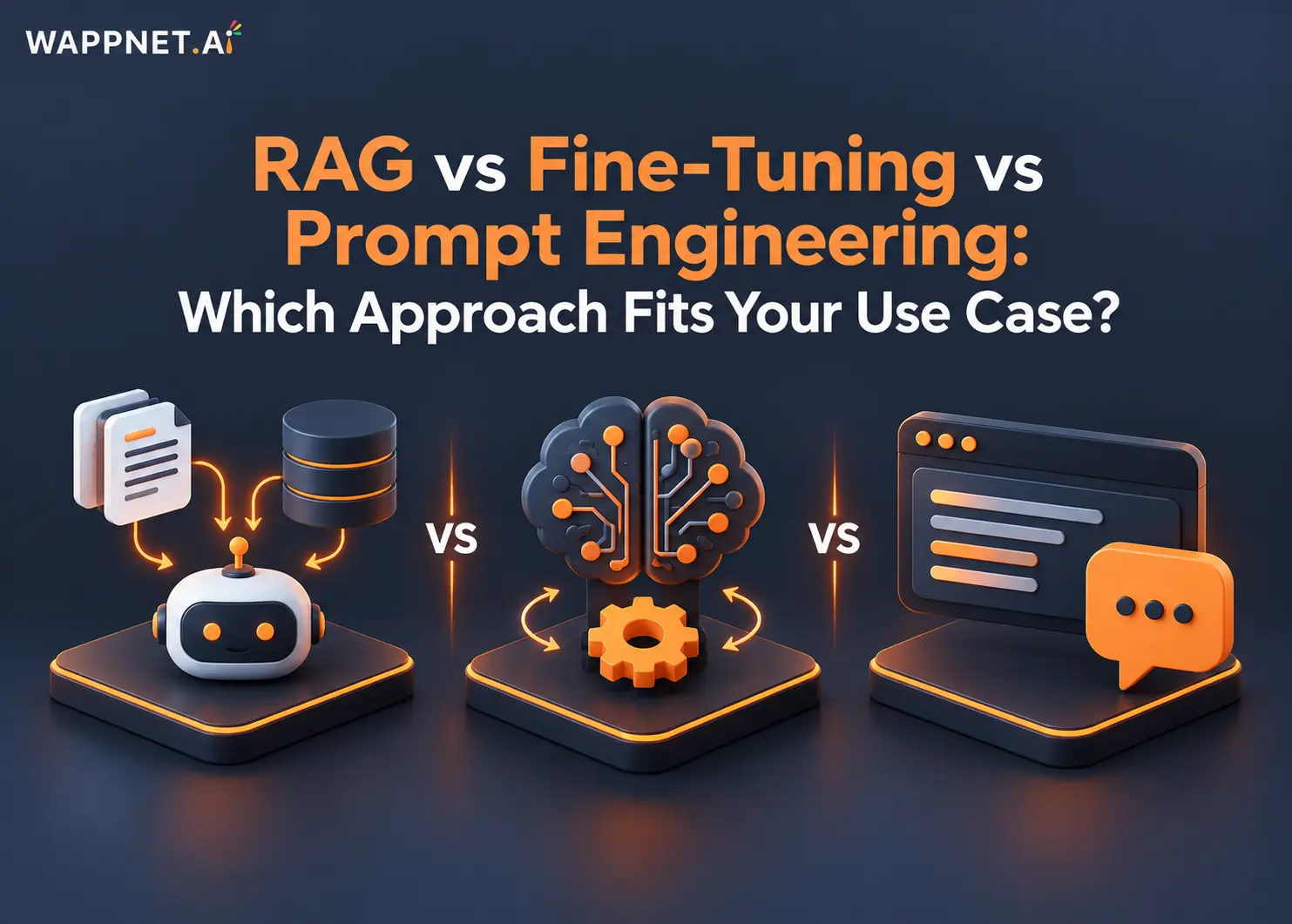 RAG
RAG vs Fine-Tuning vs Prompt Engineering: Which Approach Fits Your Use Case?
Compare RAG, fine-tuning, and prompt engineering to explore costs, use cases, and the best approach for enterprise AI.
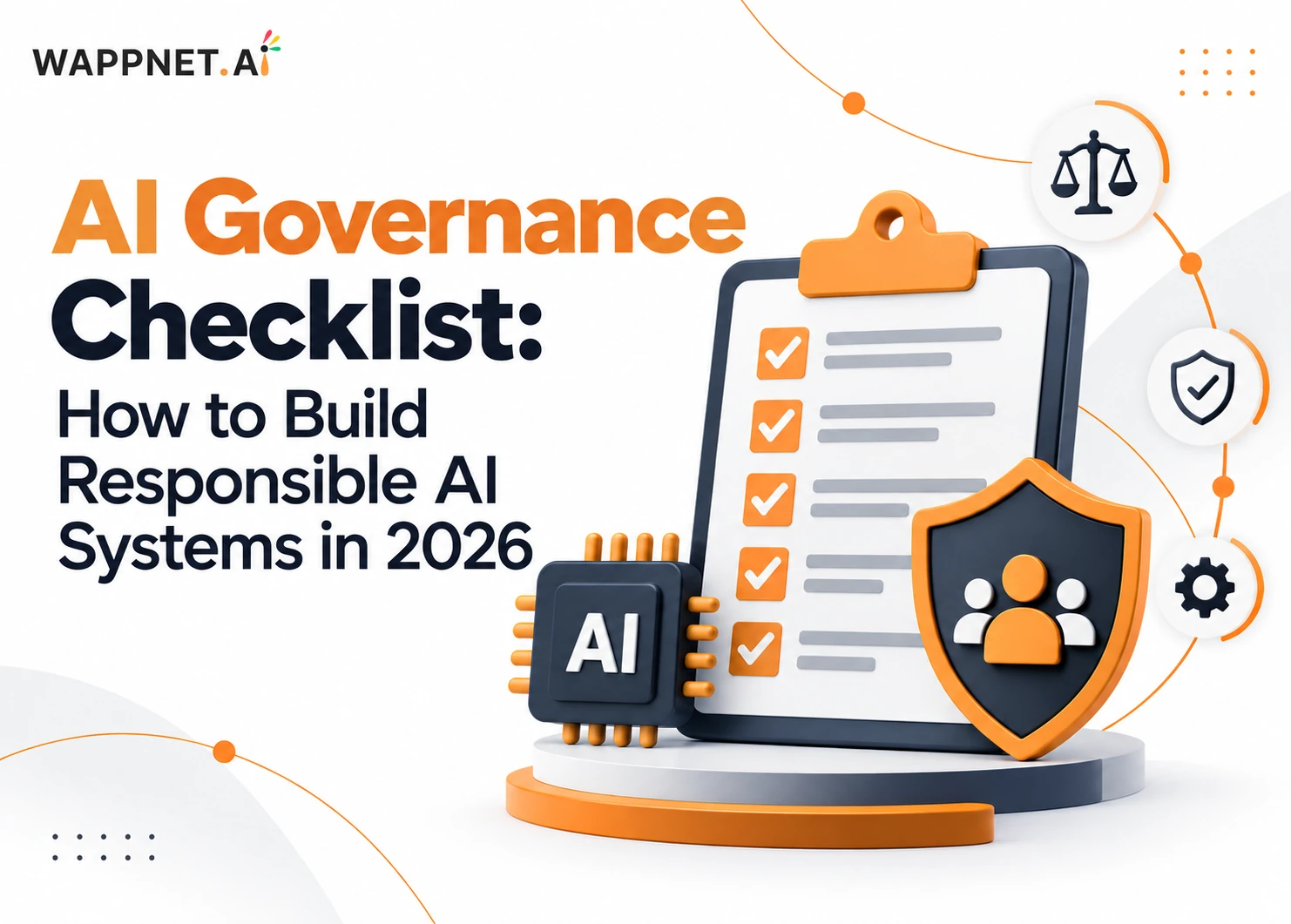 AI Governance
 Checklist: How to Build Responsible AI Systems in 2026
Explore an AI governance checklist covering risk, data, bias, oversight, monitoring, and compliance to build responsible AI systems.
 AI Agent
The Complete Guide to AI Agent Development in 2026
Learn how AI agent development works in 2026, including architecture, frameworks, build process, costs, and enterprise best practices.
Frequently Asked Questions
AI agents and workflow automation combine software that can understand a request and decide what to do with the connective layer that turns those decisions into a repeatable business process. Together, they let a business automate multi step work that currently requires a person to read, decide, and coordinate across systems.
A chatbot answers questions inside a conversation and stops there. An AI agent takes action. It can retrieve information, update a system, trigger the next step in a process, and escalate to a person when needed, rather than just responding with text.
RPA follows fixed, scripted steps and works best when inputs are structured and the process never changes. AI agents can interpret varied input, including documents, emails, and natural language requests, and make decisions within defined boundaries, which suits workflows with exceptions or unstructured data.
AI process automation commonly covers lead qualification, customer support triage, invoice and document processing, CRM data management, report generation, compliance review, and employee onboarding. These are generally processes that involve reading varied input, checking it against rules, and coordinating across more than one system.
Yes. Agents can integrate with CRM platforms such as Salesforce, HubSpot, and Microsoft Dynamics, and ERP systems such as SAP, NetSuite, and Oracle, through standard APIs and connectors.
Yes. Agents connect to REST and GraphQL APIs, webhooks, databases, and custom internal applications, so they can act on the specific systems your business runs, not just common SaaS tools.
Through role based permissions that limit what each agent can access, approval gates on high impact actions, audit trails of every action and decision, and ongoing monitoring for failures or unusual behavior. Security is built into the architecture, not added afterward.
Yes. Approval gates can be placed on any action your business considers high impact, and low confidence cases are automatically routed to a person rather than being acted on without review.
It depends on the workflow's complexity and how many systems need to be connected. A scoped, single workflow build typically moves faster than a multi agent system spanning several departments. We define a realistic timeline during discovery.
Cost depends on workflow complexity, the number of system integrations required, and the level of testing and governance the use case calls for. Most engagements start with a scoped workflow assessment before a fixed price or milestone based proposal.
We track accuracy, exception rates, latency, and cost after launch, and review performance regularly so issues are caught early and the agent is refined as your workflows and volume change.
Traditional automation or RPA is usually better when inputs are structured, rules are deterministic, and the process rarely changes. AI agents become more valuable when inputs vary, documents or emails need interpretation, decisions require context, or the workflow spans multiple systems with frequent exceptions.