
AI Solutions for Retail
Empty shelves on bestsellers, overstock on slow movers, and support teams buried in routine questions can quietly drain sales and margin. Wappnet.ai builds AI solutions for retail, helping businesses explore AI development services for customer experiences, demand planning, inventory visibility, and operational workflows. We start with the problem you want solved, build around the systems you already run, and measure the result against your own numbers.
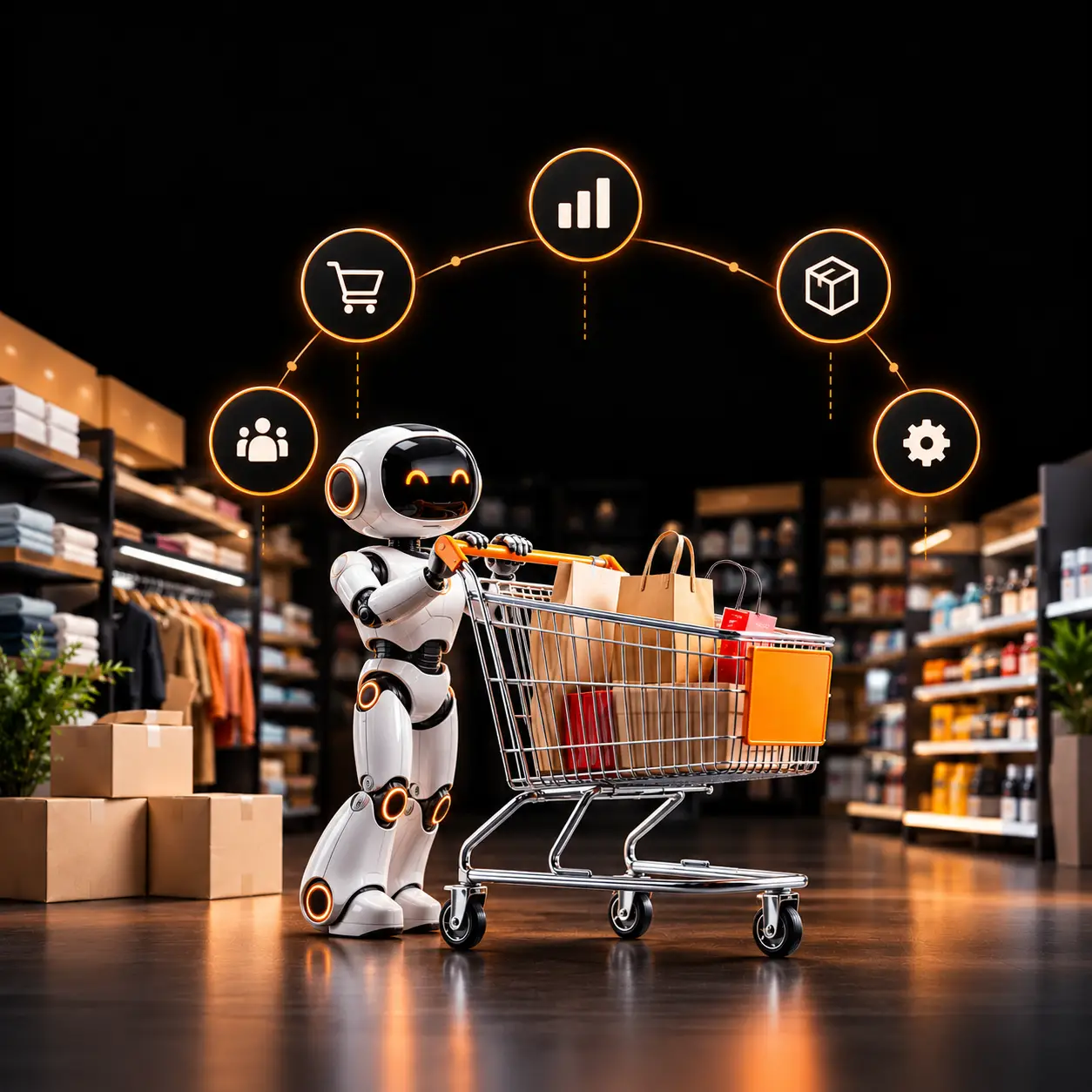
What Is AI in Retail?
AI in retail means using software that learns from your data to help with everyday retail decisions and tasks. Instead of following fixed rules, it spots patterns in what shoppers browse and buy, how products sell, and where stock sits, then turns them into suggestions or actions your team can use. Artificial intelligence in retail is not one tool. It is a set of capabilities you apply to specific problems.
Know your shoppers
Learns from browsing and buying behavior to recommend products and tailor search.
Plan demand and stock
Estimates what will sell, where, and when, and flags stock risks early.
Help shoppers and staff
Answers questions, handles routine requests, and automates repetitive back-office work.
See what is on the shelf
Uses store images to spot empty shelves and misplaced products, where privacy rules allow.
Key Challenges Facing Retail Businesses
Most retail AI projects start with a day-to-day frustration, not a model. Which of these sounds like your business?
Fragmented Customer Journeys
Your shoppers' browsing, purchases, loyalty points, and support chats live in different tools. The result is offers that miss the mark and customers who repeat themselves to three teams.
Unpredictable Demand
Promotions, seasons, and trends move faster than a spreadsheet forecast. You pay twice: markdowns on what did not sell, and empty shelves on what did.
Inventory Visibility Gaps
When stock counts lag between warehouse, stores, and online, you promise items you cannot ship and miss transfers that would have saved a sale.
Slow or Repetitive Customer Support
Order status, returns, and sizing questions fill your queue, so customers wait longer and your team has less time for the cases that truly need them.
Manual Operational Work
Your analysts rebuild the same reports, your merchandisers clean product data by hand, and planners chase exceptions across tools instead of acting on them.
Disconnected Online and In-Store Channels
When prices, availability, or order history differ between your website and your stores, shoppers lose trust, and omnichannel services like pickup and returns get harder to run.
Retail AI Solutions We Build
Our AI solutions and services for retail businesses start with one problem worth solving and fit around the platforms you already have. Each card shows what you get, where it fits in your workflow, and what you can measure.
Personalized Shopping Experiences
Show each shopper products worth their attention. AI-powered product recommendations and tailored search use browsing and purchase data, so your storefront stops showing everyone the same thing, while your merchandisers keep control through rules. You can then see whether more shoppers find and buy what they came for.
Demand Forecasting and Planning
See demand coming, not just what already happened. Retail demand forecasting combines sales history, promotions, and seasonality, giving planners a ranked list to review instead of a number to trust blindly. You can then see how far forecasts miss, category by category, and whether the gap narrows.
Intelligent Inventory Management
Spot stock problems before your shoppers do. AI-powered inventory management flags likely stockouts and transfer opportunities from your existing data, and a person approves every action. You can then check whether you have fewer empty shelves and less unsold stock.
AI Shopping Assistants
Answer shopper questions at any hour. AI shopping assistant development gives customers accurate help with products, sizing, and orders, bringing AI for e-commerce to your site or app, with a handover to your team when needed. You can then see whether customers get answers faster and fewer questions reach your team.
Computer Vision for Retail
Cut manual shelf checks. Store images can show empty shelves and misplaced products, so staff get a simple task list, where privacy rules allow. Start with a small pilot in a few stores. You can then check whether audits take less time and shelves stay fuller.
AI Agents and Workflow Automation
Give your team hours back. Retail workflow automation handles order exceptions, supplier emails, and report prep within permissions you set, passing anything uncertain to a person. You can then see how many hours come back to your team.
Ready to Explore AI Opportunities for Your Retail Business?
Tell us what is costing you the most today, whether it is stockouts, a busy support queue, or shoppers who cannot find what they want. We will tell you honestly where AI can help and what it would take.
AI Use Cases Across the Retail Value Chain
Solutions describe what AI can do. These use cases show where it fits into a normal day for your team, with a clear owner and workflow, so each one can be tried and measured.
01. Merchandising and Product Discovery
Your merchandising team adds consistent attributes to thousands of listings, with AI suggesting tags that people approve before publishing. Search and category pages then rank by relevance, and you can see which searches return nothing, a quick way to find gaps in your range.
02. Marketing and Customer Loyalty
Your CRM manager groups customers by behavior using data they have agreed to share, drafts offer variations for each group, and reviews them before anything is sent. Results flow back, so your next campaign starts from what customers actually responded to.
03. Supply Chain and Replenishment
Your planner starts the day with a short list of products likely to run short, showing the forecast, current stock, and supplier lead time behind each one. They approve, adjust, or dismiss a suggested reorder or transfer, and those choices make later suggestions better.
04. Customer Service and Order Management
Your customers ask where their order is or whether an item can be returned, and an assistant answers by checking the order in your system. This kind of retail customer experience automation passes refunds, disputes, and frustrated customers to your agents with the full conversation attached.
05. Store Operations and Visual Analytics
Your store manager gets a short task list from shelf images, such as empty facings or misplaced products. Footage handling, retention, and signage follow privacy rules you agree to, and the system looks at products and shelves, not individual shoppers.
06. Retail Analytics and Decision Support
Your category manager asks a plain-language question, such as which stores are behind on a product line, and gets an answer drawn from your sales and inventory data. With AI retail analytics, your analysts spend less time assembling reports and more time acting on them.
Business Benefits of AI in Retail
The benefits of AI in retail depend on the use case, your data, and how your teams adopt it. So we agree what success looks like before we build, and compare against your own starting point instead of promising numbers.
Product discovery engagement
Are shoppers finding what they want? Search use, clicks on recommendations, and sessions that reach a relevant product.
Conversion rate
Do more visitors complete a purchase, compared with a control group?
Forecast error
How close forecasts get to real demand, by product, category, store, or period.
Stock availability
How often priority products run out, and how quickly they come back.
Inventory turnover
How fast stock sells through, and how much sits unsold.
Customer service resolution time
How quickly routine requests are resolved, and how often they need a person.
Self-service completion rate
How many customer requests are solved without a handover, checked for answer quality.
Cost per interaction
What each support or operations request costs, including the cost of running the AI.
Operational processing time
How long repeated tasks such as order exceptions, catalog updates, and reporting take.
Our Approach to Retail AI Implementation
Whether you need AI consulting for retail strategy, AI engineering, or hands-on AI implementation services for retail systems, you will see progress in stages, with a clear go or no-go decision at each one. Timelines depend on scope and data readiness, so we agree them with you after discovery.
- 1
Discovery and Use-Case Prioritization
We learn your goals, teams, and constraints, then rank possible use cases by business value, feasibility, and risk, so you start with the one most worth doing.
- 2
Data and Integration Assessment
We check your data for quality, coverage, access, and consent, and see how your e-commerce, POS, ERP, and CRM systems share information.
- 3
Solution Design and Validation
We choose the approach, map how it fits your team’s workflow, and test it on real scenarios from your business.
- 4
Pilot and User Testing
We run it with one category, channel, store group, or team, and gather feedback from the people who use it every day.
- 5
Production Deployment
We connect it to your agreed systems, set access controls, document how it runs, and prepare your team for launch.
- 6
Monitoring and Optimization
We track the KPIs you agreed on, answer quality, and running costs, then refine as your products, seasons, and customers change.
Technologies Powering Our Retail AI Solutions
You should not have to pick technology first. Our AI engineering services for retail teams start with your data, existing systems, security needs, and the problem at hand, not with a favorite tool.
Retail Segments Where AI Can Help
Whatever kind of retail you run, the starting point is the same: one problem worth solving. Here is where AI tends to help in each segment.
E-commerce and Online Stores
Help shoppers find products faster, answer order questions at any hour, and keep online stock accurate.
Brick-and-Mortar Stores
Keep shelves stocked, cut manual shelf checks, and give store teams clear daily tasks.
Omnichannel Retail
Show the same prices, availability, and order history across web, app, and store.
Multi-Store Retail Chains
Balance stock between locations and plan demand store by store, not only in total.
Marketplaces
Keep large, changing catalogs clean and searchable, with consistent product information from many sellers.
Supply Chain and Inventory Teams
Spot likely stockouts early and give planners a short, ranked list of actions to review.
Why Choose Wappnet AI for Retail AI Solutions?
We are an AI development company for retail teams that want engineering built around their own workflows, not a fixed retail product. If you are shortlisting a retail AI solutions provider or retail AI development partner, here is what you can expect from us and hold us to.
Business-First Discovery
We identify the use case with the strongest potential business value by evaluating feasibility, risk, and data readiness before development begins.
Integration-Minded Engineering
Our solutions work with your existing e-commerce, POS, ERP, and CRM systems, helping AI for omnichannel retail fit into your current technology stack.
Human Oversight Where Needed
Sensitive decisions, such as refunds and pricing adjustments, include appropriate review and escalation processes to keep your team in control.
Security-Conscious Delivery
Data access, privacy, retention, and monitoring requirements are addressed early in collaboration with your security team.
Phased Implementation
Each project starts with a focused use case that can be validated with one team before expanding to additional stores, product categories, or sales channels.
Outcome-Based Measurement
Clear baselines and KPIs are established before development, making it easier to evaluate results against your business objectives.
Real-World AI Solutions for Retail We've Delivered
Proven real-world AI implementations delivering measurable business outcomes, inventory scale, and personalized experiences across retail brands.
Omnichannel Demand Forecasting & Replenishment Engine
Multi-store sales prediction model cutting stockouts by 34% and reducing overstock write-downs across 120+ retail locations.
AI-Powered Real-Time Product Recommendation System
Dynamic recommendation and personalized search engine boosting conversion rate and average order value across high-traffic e-commerce storefronts.
Automated Shelf Monitoring & Visual Inventory Analytics
Computer vision audit system automating planogram compliance checks and out-of-stock alerts for supermarket and specialty store associates.
Ready to Transform Your Retail Business with AI?
Not sure whether AI is the right fit, or where to begin? Book a short call, and we will help you choose a first use case and decide how to measure it.
Latest AI Insights & Industry Trends
 AI Agent
s Are Everywhere in 2027. But Which Business Processes Should You Actually Automate?
Frequently Asked Questions
AI solutions for retail are software tools that use machine learning, generative AI, or computer vision to handle specific retail tasks, such as recommending products, forecasting demand, flagging stock risks, and answering shopper questions. Retail artificial intelligence services cover planning, building, and maintaining them.
AI helps shoppers find relevant products faster, get accurate answers at any hour, and see consistent information across web, app, and store. AI in retail works best when it removes friction and hands complex cases to your team.
Forecasting models learn from sales history, promotions, and seasonality to estimate demand by product and location. Inventory tools add stock levels and lead times to flag risks and suggest replenishment. Your planners approve the actions, and the goal is fewer surprises, not perfect forecasts.
Often, yes. Most retail AI connects to e-commerce, POS, ERP, CRM, and inventory systems through APIs or data exports. What is possible depends on what your systems expose, so we check integration early, before you commit.
Set a baseline before launch, then track measures tied to the use case, such as conversion rate, forecast error, stock availability, or cost per interaction. Compare against that baseline over an agreed period, including running costs. No ROI figure can be promised in advance.
It depends on scope, data readiness, and integrations. A focused pilot on one use case is usually quicker than a multi-channel rollout. After discovery, you get a plan with milestones, not a fixed timeline up front.
Choose a clear business problem with an owner, accessible data, and a measurable outcome. Start with a use case a pilot can prove in one category, channel, or team, and leave high-stakes automated decisions for later.
It depends on the use case. Recommendations need catalog and customer interaction data, forecasting needs sales history, prices, and promotions, assistants need accurate product, policy, and order information, and computer vision needs store images. We check data quality and consent first.
It can be, when privacy is designed in from the start. That means using only the data a use case needs, getting consent where required, limiting access by role, setting encryption and retention rules, and sending sensitive actions to a person. We agree on these controls with your security and legal teams, and requirements vary by region.
It depends on the use case, your data readiness, the number of integrations, and the size of the rollout. A focused pilot costs less than a multi-channel build. After discovery, you get a scoped estimate, and the running cost of the AI itself is included in the business case.