
Cloud Data Architecture & Storage Solutions
Your customer data lives in one system, your product data in another, and nobody can say for certain which version of either is current. Storage costs climb every quarter with no clear explanation. A promising analytics or AI initiative stalls because the underlying data isn't organized well enough to build on. Cloud Data Architecture & Storage solutions from Wappnet.ai help you design a secure, scalable data foundation that supports your operational systems, reporting, analytics, and AI, without unnecessary complexity or uncontrolled cost.
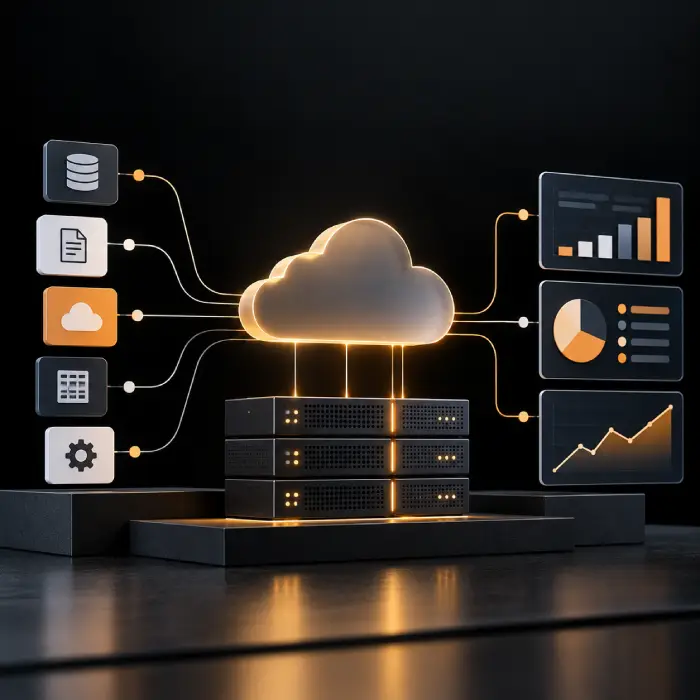
Why Businesses Invest in Cloud Data Architecture & Storage
Most interest in cloud data architecture or cloud data storage solutions starts with one specific operational problem, not a broad push to “move to the cloud.” Not every business needs enterprise data architecture that replaces its current platform to fix it.
Fragmented Data Storage Across Systems
Customer, product, and operational data sit in different systems with no consistent structure, making it hard to get a single reliable view of the business.
Legacy Platforms That Limit Scalability
An aging on-premises or early-cloud platform can't keep pace with growing data volumes or new analytical and AI workloads without significant rework.
Difficulty Accessing Data for Reporting and Analytics
Analysts and data scientists spend more time hunting for and reconciling data than analyzing it, because there's no well-organized source to draw from.
Storage Costs That Are Difficult to Understand or Control
Cloud storage bills grow every month without a clear picture of what's driving the increase, or which data actually needs to stay readily accessible.
Duplicated Datasets and Inconsistent Organization
The same data gets copied, re-exported, and restructured across teams, so nobody's fully confident which copy is authoritative.
Unclear Data Ownership and Limited Discoverability
Teams don't know what data already exists, who owns it, or whether they're allowed to use it, so they recreate it instead of reusing it.
Security and Access-Control Complexity
As more systems and teams need access to data, permissions become inconsistent and harder to audit, raising both security and compliance risk.
Data Environments That Are Difficult to Extend for AI
An AI or RAG initiative needs a governed, accessible data foundation to build on, and the current environment wasn't designed with that in mind.

What Does a Cloud Data Architecture & Storage Solution Include?
Cloud data architecture defines how data is organized, stored, processed, accessed, secured, and governed across a cloud or hybrid environment. Cloud data storage services concern the specific technologies and structures used to persist that data, including how it is organized, accessed, protected, retained, and retrieved. A complete solution may involve storage, processing, ingestion, orchestration, metadata, governance, access controls, analytics, and monitoring. Not every implementation needs every component.
- We assess your data types, access patterns, and performance needs before choosing any technology.
- We select storage through data storage architecture decisions across object storage, analytical databases, and purpose-built platforms.
- We design the right pattern, whether a cloud data lake, a cloud data warehouse, a lakehouse, or a combination.
- We organize data into layered zones with metadata and discovery, so teams can find and trust what already exists.
- We integrate with ingestion and downstream systems, including your existing data ingestion and pipeline solutions.
- We secure the environment through cloud data security and secure cloud data storage practices, with backup, retention, and monitoring and cost visibility built in from the start.
Cloud Data Architecture & Storage Solutions Built for Your Business
Every data environment is different, so our cloud data architecture solutions are scoped around the business problem and the workloads actually involved, not a single pattern applied everywhere as part of a modern data architecture initiative. No architecture pattern described below is presented as the right choice for every organization.
Consolidating a Fragmented Data Environment
Data scattered across disconnected systems with no shared structure makes a single reliable view nearly impossible. We design a target-state architecture that consolidates it without necessarily requiring a single physical system, and measure progress through data discoverability and access-request turnaround time.
Designing a Data Lake for Varied Data Types
Structured, semi-structured, and unstructured data all need somewhere flexible and low-cost to land. Our approach is data lake architecture built around zoned raw, refined, and curated layers, with storage utilization and growth against capacity planning as the ongoing check.
Modernizing an Analytical Warehouse
An aging warehouse struggling with reporting performance and growing query volume rarely needs a full rebuild. We redesign the data warehouse architecture around current workload patterns as part of a focused cloud data platform modernization effort, and track results through query performance against defined targets.
Evaluating a Lakehouse for Mixed Analytical Workloads
Teams running both exploratory analytics and structured reporting on overlapping data often assume a lakehouse is the default answer. We evaluate a lakehouse architecture against both workloads first, then track workload performance across both use patterns before committing.
Separating Storage and Compute Where Appropriate
Storage and processing that scale together can quietly drive up cost during low-demand periods. Where the target platform supports it, we separate the two so each scales independently, with storage and compute costs measured and reported separately afterward.
Organizing Data for Reporting and Business Intelligence
Dashboards built on inconsistent, hard-to-trace sources erode trust fast. We build a modeled layer purpose-built for BI consumption, kept separate from raw storage, and measure success by data availability against agreed reporting requirements.
Building a Governed Data Foundation for AI
An AI initiative is only as good as the data underneath it. We design a data architecture for AI alongside data preparation, labeling, and enrichment needs, then track governance and metadata coverage as the foundation matures.
Designing a Hybrid Environment for Data That Must Stay On-Premises
Some data has to stay on-premises for regulatory or legacy-system reasons, and that shouldn't mean two disconnected environments. We design a hybrid cloud data architecture that connects on-premises and cloud consistently, validated through recovery test results and cross-environment access-control review.
Build a Data Foundation That Fits Your Business
Tell us about your current data workloads, storage requirements, scalability concerns, governance needs, and future analytics or AI goals. We'll help map what a workable cloud data architecture and storage solution looks like for your business.
Works With the Tools You Already Use
Our cloud data platform solutions work with the databases, cloud environments, and analytics systems you already run. We assess your data types, workload patterns, security needs, and budget during discovery to pick the right fit, not a fixed stack.
Our Cloud Data Architecture & Storage Process
A practical path from understanding your workloads to a validated, monitored architecture, with security and governance built in at every stage rather than added on afterward. Not every project requires the same scope or timeline.
- 1
Business & Workload Discovery
We identify data sources, workloads, users, business objectives, and constraints such as compliance or latency requirements.
- 2
Current-State Assessment
We review the existing data environment, storage patterns, dependencies, access needs, and pain points before proposing anything.
- 3
Target Architecture Design
We select appropriate cloud data infrastructure design patterns and lead data platform design decisions around data organization, storage, processing, and integration.
- 4
Security & Governance Design
We define identity, access, protection, retention, metadata, and cloud data governance requirements matched to the data's sensitivity.
- 5
Implementation & Validation
We configure the target environment, integrate relevant systems, and validate access, performance, reliability, and data organization.
- 6
Monitoring & Optimization
We review workload behavior, cost, data growth, and operational needs on an ongoing basis, applying data storage optimization as usage patterns evolve.
Cloud Data Architecture & Storage: Use Cases
The business situations that call for the solutions above, and what actually changes for the teams who depend on the data once the architecture is in place.
Centralizing Data for Enterprise Reporting
Finance, operations, and leadership stop reconciling exports from multiple systems and instead draw on one well-organized source, measured by data availability against agreed reporting requirements.
Building an Analytical Data Warehouse
A modeled, query-optimized layer becomes the foundation for data architecture for analytics, supporting recurring reporting and business intelligence, with query performance against defined targets as the ongoing benchmark.
Supporting Diverse Data Types in a Data Lake
Structured, semi-structured, and unstructured data land in one flexible, cost-effective enterprise data storage layer without a rigid schema forced on it upfront. Storage utilization and growth are the metrics that matter here.
Evaluating a Lakehouse for Combined Analytical Workloads
When exploratory and structured analytics run on overlapping data, one architecture gets evaluated against both needs rather than two separate systems, tracked through workload performance across both use patterns.
Preparing Data Infrastructure for AI Initiatives
An AI or RAG initiative needs a governed, accessible data foundation before it needs a model. We build that foundation in coordination with MLOps and AI infrastructure, then track governance and metadata coverage as it's used.
Separating Analytical Workloads From Operational Systems
Reporting and analytics stop competing with transactional systems for resources once they run against a dedicated environment, measured by workload performance under expected load.
Improving Data Discovery and Governed Access
Teams find and request access to existing data through metadata and cataloging instead of quietly recreating it, tracked by data discoverability and access-request turnaround.
Supporting Business Growth and Increasing Data Volumes
Growing data volumes shouldn't force a disruptive re-platforming project. A scalable data architecture absorbs that growth, with workload performance as volume increases the metric to watch.
Improving Storage Lifecycle and Cost Visibility
Lifecycle and tiering policies move infrequently used data to lower-cost storage automatically, so storage and compute costs stay visible against budget rather than surprising someone at month-end.
Organizing Data Across Hybrid Environments
Data that must stay on-premises and data that moves to the cloud connect through one consistent access and governance model, validated by cross-environment access-control review results.
Data Lake vs. Data Warehouse vs. Lakehouse
These three patterns are related but not interchangeable, and a sound cloud data platform architecture can combine more than one. Modern platforms increasingly overlap in capability, so the right choice depends on actual workload and operating model, not a universal ranking.
Industries We Help With Cloud Data Architecture & Storage Solutions
Since data volume, access needs, and regulatory context vary by industry, we scope architecture and storage work per business rather than applying a single template. Once the foundation is in place, teams often pair it with data analytics consulting services to put it to use.
Financial Services
Transaction and customer data organized with auditability, retention, and access controls appropriate to regulatory requirements.
Healthcare & Life Sciences
Clinical and operational data architected with privacy and compliance considered from the design stage, not added afterward.
Retail & Ecommerce
Product, inventory, and customer data organized across channels to support search, personalization, and reporting at scale.
Manufacturing
Sensor, production, and quality data organized into a data lake or warehouse that supports both monitoring and analysis.
Logistics & Supply Chain
Shipment, inventory, and carrier data consolidated to keep operational reporting and tracking consistent across systems.
Technology & SaaS
Product usage, telemetry, and support data organized to support analytics, AI model development, and internal reporting.
Professional Services
Engagement, billing, and client data consolidated and governed for consistent reporting across teams and offices.
Insurance
Policy, claims, and underwriting data architected with retention, availability, and access controls fit for regulatory scrutiny.
Why Choose Wappnet AI for Cloud Data Architecture & Storage?
Wappnet.ai treats cloud data architecture as part of a broader data engineering practice, designed around your actual workloads and governance needs rather than one vendor’s product line. Whether you’re evaluating a Cloud Data Architecture Company for a focused design engagement or a Cloud Data Storage Company for an ongoing modernization program, we scope the work to match, and our data analytics consulting services pick up once the data is ready to use.
- Start with business-led architecture planning before selecting any specific storage technology.
- Select workload-appropriate storage rather than defaulting to a single pattern for every dataset.
- Design for integration with your existing data environment, not a rip-and-replace assumption.
- Plan for scalability and performance against your actual, not hypothetical, workload patterns.
- Build security and governance into the architecture from the start, not as a later addition.
- Keep data organized and accessible, so teams can find and trust what already exists.
- Design for cost visibility and operational maintainability, not just initial implementation.
- Support analytics and AI readiness in coordination with our RAG-as-a-Service and LLM development practices where relevant.
Real-World Cloud Data Architecture & Storage Solutions We've Delivered
Explore how organizations transform fragmented, costly data setups into modern, high-performance data lakes, warehouses, and hybrid platforms.
Enterprise Lakehouse Migration for Global Retailer
Consolidated disparate transactional databases and ecommerce event streams into a scalable Databricks lakehouse, reducing query latency by 65% and lowering cloud storage costs by 40%.
Cloud Data Warehouse Modernization for Financial Services
Re-architected an aging on-premises data warehouse into Snowflake with automated RBAC, column-level masking, and instant BI dashboard refresh cycles.
Governed Hybrid Data Architecture for Healthcare Analytics
Designed a HIPAA-compliant hybrid storage architecture pairing secure on-premises patient archives with cloud-based analytics, enabling rapid ML model experimentation without compromising compliance.
Design a Data Architecture for Your Next Stage of Growth
Our team can help assess your current data environment, workload requirements, architecture challenges, security expectations, and future analytics needs before any commitment to build.
Latest AI Insights & Industry Trends
 RAG
RAG vs Fine-Tuning vs Prompt Engineering: Which Approach Fits Your Use Case?
Compare RAG, fine-tuning, and prompt engineering to explore costs, use cases, and the best approach for enterprise AI.
 AI Copilot
What is an AI Copilot? Use Cases & Build Guide
What is an AI Copilot? Learn how it works, how it differs from AI agents, key use cases, and how to build one for your business.
 RAG
What Is RAG? A Complete Guide to Retrieval-Augmented Generation
Learn what RAG is, how Retrieval-Augmented Generation works, reduces AI hallucinations, and powers smarter enterprise AI.
Frequently Asked Questions
Cloud data architecture defines how data is organized, stored, processed, accessed, secured, and governed across a cloud or hybrid environment, so that operational systems, reporting, analytics, and AI can all draw on a consistent, well-structured data foundation.
Cloud data architecture is the overall design: how data flows, where it lives, how it's organized, and who can access it. Cloud data storage services cover one part of that design: the specific technologies and structures, such as object storage, a data lake, or a data warehouse, used to persist the data itself.
A data lake stores raw and varied data, structured and unstructured, at low cost and with flexible schema, suited to exploratory analytics and AI workloads. A data warehouse stores structured, modeled data optimized for fast, repeatable queries, suited to reporting and business intelligence. This is the data lake vs. data warehouse question many businesses face, and many use both for different purposes.
A lakehouse architecture combines data-lake-style storage of raw, varied data with data-warehouse-style features such as transactional consistency and structured query performance, aiming to support both exploratory and analytical workloads on one copy of the data rather than maintaining separate systems.
The right architecture depends on the types of data involved, how it will be used, required query performance, governance and compliance requirements, existing systems, and budget. There is no universally correct choice; the pattern that fits one workload may not fit another within the same business.
A well-organized cloud data platform gives analytics and AI workloads consistent, accessible, and governed data to draw on, reducing the time teams spend reconciling fragmented sources. It does not by itself guarantee analytical accuracy or AI model performance, which also depend on data quality and how the data is used.
Common protections include identity and access management with least-privilege permissions, encryption of data at rest and in transit, network isolation, logging and monitoring of access, and regular review of who can reach which data. The right combination depends on the data's sensitivity and applicable regulatory requirements.
Yes. Many organizations keep certain data on-premises for regulatory, latency, or legacy-system reasons while running other workloads in the cloud. A hybrid cloud data architecture defines how data and access move between these environments consistently, rather than treating them as two disconnected systems.
Typical approaches include separating storage from compute so each can scale independently, applying storage tiering and lifecycle policies to move infrequently used data to cheaper storage classes, monitoring usage and growth, and right-sizing compute to actual workload patterns rather than peak estimates. This is an ongoing practice, not a one-time fix.
Architecture determines where data lives and how it's organized; governance determines who can access it, under what conditions, and how it's documented, retained, and tracked over time. An architecture designed without governance in mind tends to accumulate access and discoverability problems as it grows.
Timelines vary significantly based on the number of data sources, workload complexity, governance and compliance requirements, and how much of the environment is new versus migrated from an existing platform. A focused single-workload design can move faster than an enterprise-wide, multi-environment architecture; we provide a realistic estimate after a discovery assessment.
We start with business and workload discovery, assess the current-state data environment, design a target architecture matched to actual workload and governance requirements, define security and access controls, implement and validate the environment, and monitor cost, performance, and data growth after launch so the architecture can be adjusted as needs change.