
Enterprise Integration Services
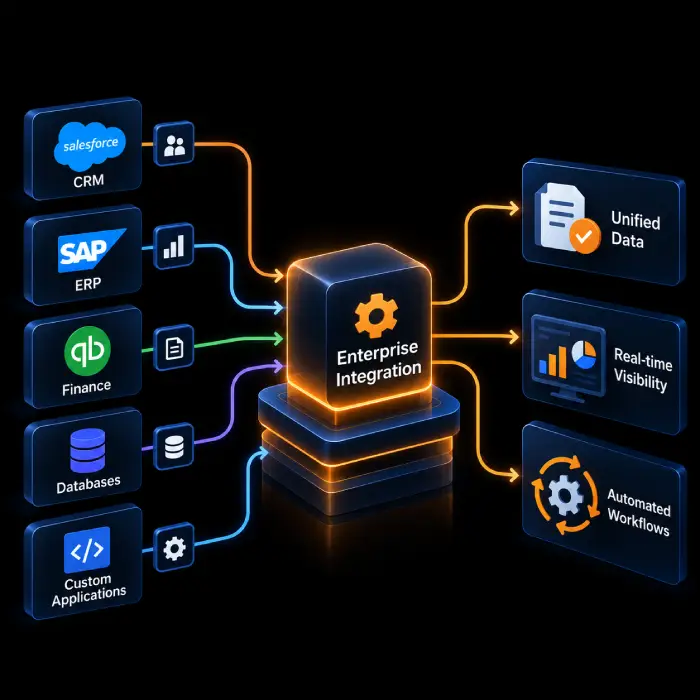
When your CRM, ERP, finance tools, and custom applications do not work together, teams rely on manual data entry, and records become inconsistent. As an enterprise integration company, Wappnet.ai provides enterprise integration solutions that connect applications, APIs, databases, and workflows so information moves reliably between systems. Our enterprise integration services prioritize testing, security, and monitoring from the start. We begin by identifying the business process that needs improvement, then recommend the right approach, from a single API connection to a comprehensive integration platform.
What Do Enterprise Integration Services Include?
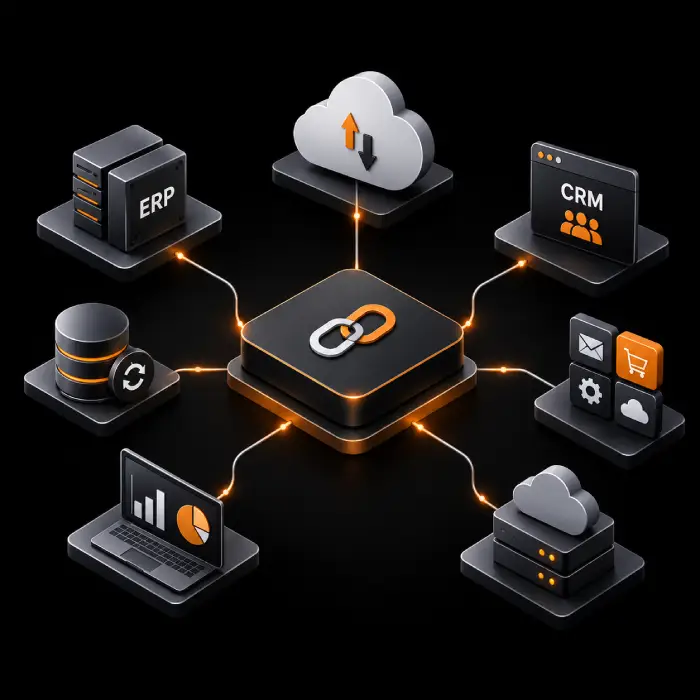
Enterprise integration is the practice of connecting separate business applications, databases and cloud platforms so they exchange data and trigger workflows in a controlled, monitored way. Our services cover the full path from planning to production support. Each item below names the problem it solves. We recommend a large integration platform only where your situation calls for one; often a smaller, well-built connection is enough. Your team stays in control, with testing and monitoring built in.
Our services cover the full path from planning to production support:
- We help you choose the right pattern with enterprise integration consulting services before anything is built.
- We deliver enterprise application integration services that link ERP, CRM, HR and finance systems that work in isolation today.
- We build API integration services, connecting your systems and partners through secure REST and GraphQL interfaces.
- We connect cloud applications with on-premises systems across AWS, Azure and Google Cloud, with secure hybrid connectivity.
- We link ERP and CRM platforms, and connect legacy systems, SaaS tools and partner platforms to them.
- We keep data mapped, monitored and maintained after launch, so connections keep working as systems change.
Why Businesses Invest in Enterprise Integration Services
Most organizations run dozens of applications, and the gaps between them are where manual work and errors accumulate. Integration closes those gaps. The benefit varies by environment, so we agree what to measure, such as manual hours or sync delays, before we build.
Less Manual Data Transfer
Replace copy-and-paste and spreadsheet uploads with API integration that validates data as it moves between systems.
Consistent, Timely Records
Reduce duplicate and conflicting data by agreeing which system owns each field, and choose real-time or scheduled sync to match how quickly each process needs it.
Connected Departments
Business process integration lets sales, finance, operations and support work from shared information rather than separate copies.
Operational Visibility
Monitoring and logging show where data is flowing, where it failed and what needs attention.
Legacy Investments Kept in Use
Legacy system integration connects existing systems to modern platforms, so you can modernize in stages instead of replacing everything at once.
Enterprise Integration Solutions Built for Your Business
Explore enterprise integration solutions that connect your business applications, streamline workflows, and improve data flow across systems. Our application integration services address your business challenges with practical, scalable solutions designed around your operational needs and measurable goals.
API-Led Application Connectivity
When direct connections become difficult to maintain, Enterprise API Integration Services help applications communicate through reusable, well-defined interfaces. We design API connections that support secure data exchange between internal systems, external services, and business partners.
ERP Integration and CRM Integration Services
Disconnected sales and finance systems can lead to inconsistent customer, order, product, and invoice records. Our ERP Integration Services and CRM Integration Services synchronize relevant information across platforms, with clear rules for data ownership and updates.
Cloud Integration Services
Our Cloud Integration Services connect cloud applications and platforms through APIs, webhooks, and supported connectors. We design authentication, error handling, and data exchange around your existing cloud environment and operational requirements.
Legacy System Integration
Older applications may lack modern interfaces or direct connectivity. Our Legacy System Integration Services use available APIs, database access, file exchange, or adapter layers to connect existing systems with modern applications, depending on technical constraints.
SaaS and Third-Party Application Integration
Marketing, support, HR, and finance platforms often maintain overlapping business data. Our SaaS Integration Services and Third-Party Application Integration solutions connect these applications through supported APIs, webhooks, and connectors, accounting for vendor limitations and authentication requirements.
Real-Time Data Synchronization
When business processes require timely updates, Real-Time Data Synchronization uses webhooks, event streams, and message queues to transfer changes between systems. Retry mechanisms and duplicate-event handling help maintain reliable data exchange.
Enterprise Workflow Integration
Processes that span multiple applications can become delayed at departmental handoffs. Our Workflow Integration Services coordinate data transfers and workflow steps across connected systems, with appropriate exception handling and notifications.
Hybrid Integration Architecture
Organizations operating both cloud and on-premises systems need secure, manageable connectivity between environments. Our Hybrid Integration Architecture combines suitable APIs, middleware, gateways, and integration platforms to support your infrastructure and security requirements.
Data Integration and Engineering
Enterprise applications often need to exchange data with warehouses, analytics platforms, and reporting systems. We coordinate application connectivity with Data Engineering Services for data movement and transformation, helping keep operational integration and analytical pipelines aligned.
Ready to Connect Your Enterprise Systems?
Tell us which systems you run, where data gets stuck and what the manual work costs your team today. As an enterprise integration company, we will tell you plainly which approach fits and what it would take.
Our Enterprise Integration Process
Our enterprise integration architecture work follows six steps. Steps and effort vary with system complexity, the integration approach, data sensitivity and business requirements. We confirm a milestone plan after discovery.
- 1
Business and System Discovery
We map the applications, data owners and manual handoffs involved, and review existing interfaces and constraints.
- 2
Requirements and Architecture Design
We design the enterprise integration architecture, choosing between direct APIs, middleware or an integration platform, and define security, latency and volume needs.
- 3
API, Data and Connectivity Planning
We review API documentation and authentication, define data mapping and transformation, and set error-handling and retry rules.
- 4
Development and Configuration
We build connectors, APIs and workflows, and set up access controls and secrets management.
- 5
Testing, Security Validation and Performance Checks
We test data accuracy, failure handling, access controls and load against agreed scenarios.
- 6
Deployment, Monitoring and Optimization
We deploy with a rollback plan, set up monitoring and alerting, and tune as volumes and systems change.
Enterprise Integration Services: Use Cases
Disconnected systems can create delays, duplicate work, and inconsistent information across departments. The following examples illustrate how enterprise integration can address common business scenarios.
Synchronizing Sales and Finance Records
A sales team updates customer details and order information in its CRM, while finance manages invoices in an ERP. Integration can synchronize agreed fields between the systems and reduce discrepancies between departments.
Connecting E-commerce Orders With Inventory
An online store receives orders while inventory is managed in a separate warehouse system. Connecting the platforms helps update stock availability and order status as transactions occur.
Transferring Payment Status to Order Management
Payment information needs to reach the system responsible for processing orders. An integration using payment notifications and appropriate duplicate-event handling can help prevent inconsistent order states.
Sharing Employee Data With Payroll
HR maintains employee records while payroll uses a separate application. A controlled integration can transfer approved employee details and changes, reducing repeated data entry.
Keeping Marketing and Customer Support Records Aligned
Customer information is stored across marketing, CRM, and support platforms. Synchronizing selected fields can help teams work with more consistent contact details and customer records.
Updating Product Information Across Business Systems
Product details change in catalogues, ERP platforms, and sales channels. Defined field mappings and synchronization rules help distribute approved changes to the relevant systems.
Making Legacy Data Available to Modern Applications
An older business application holds information needed by a newer platform. An API layer, adapter, or scheduled data exchange can make the required information accessible without immediately replacing the legacy system.
Sharing Shipment Updates Across Logistics Systems
Carrier platforms and warehouse applications maintain shipment information separately. Integration can pass tracking updates to order management and customer-facing systems, reducing manual status checks.
Coordinating Cross-Department Approvals
A business process moves between departments using email attachments or spreadsheets. Workflow integration can transfer the relevant data between systems and notify teams when an action or exception requires attention.
Connecting Cloud Applications to On-Premises Data
A cloud-based application needs information stored within an organization's internal infrastructure. A suitable gateway or integration component can enable controlled data exchange while respecting network and access restrictions.
Point-to-Point vs. Middleware/ESB vs. iPaaS
Each approach suits different needs, and many enterprises combine them. Compare how they differ before choosing the right fit for your systems.
Technologies We Use for Enterprise Integration
We match API integration, middleware integration services, and iPaaS to your existing systems, data volumes, and security needs. The technologies below are commonly used in these projects, and we confirm the final stack during discovery.



















































Industries We Help With Enterprise Integration
Why Choose Wappnet.ai as Your Enterprise Integration Partner?
Businesses need an enterprise integration partner that starts with the business problem, not a preferred tool. We combine integration consulting and engineering to connect your existing systems, improve data flow, and build reliable workflows. From architecture and testing to security and monitoring, we design integrations around your operational needs.
Business-First Planning
We map the manual steps and data conflicts first, then choose the lightest approach that solves them.
Custom Integration Development
Custom API development and integration services where off-the-shelf options fall short. See AI consulting and development.
Built Around Your Existing Systems
Salesforce, SAP, Oracle, Dynamics, HubSpot, Zoho and custom applications, connected without forced replacement.
Testing, Security and Data Foundations
Failure handling, access controls and monitoring designed in, backed by data engineering where pipelines are needed.
Real-World Enterprise Integration Solutions We've Delivered
Production integration architectures delivering synchronized data, zero-downtime workflows, and seamless multi-system connectivity.
Bi-Directional Salesforce & SAP ERP Synchronization
Synchronizing real-time customer, order, and invoice data between Salesforce CRM and SAP ERP with sub-second latency.
Legacy AS/400 Mainframe to Cloud iPaaS Adapter
Enabling REST and event-driven data streaming from on-premises legacy core systems to modern cloud applications.
Automated Multi-Channel Order & Inventory Orchestration
Connecting e-commerce storefronts, 3PL warehouse fulfillment systems, and carrier tracking via webhooks and queues.
Stuck With Systems That Will Not Connect?
Whether it is legacy system integration, a difficult third-party API or a set of disconnected SaaS tools, share one integration challenge and we will outline an approach.
Latest AI Insights & Industry Trends
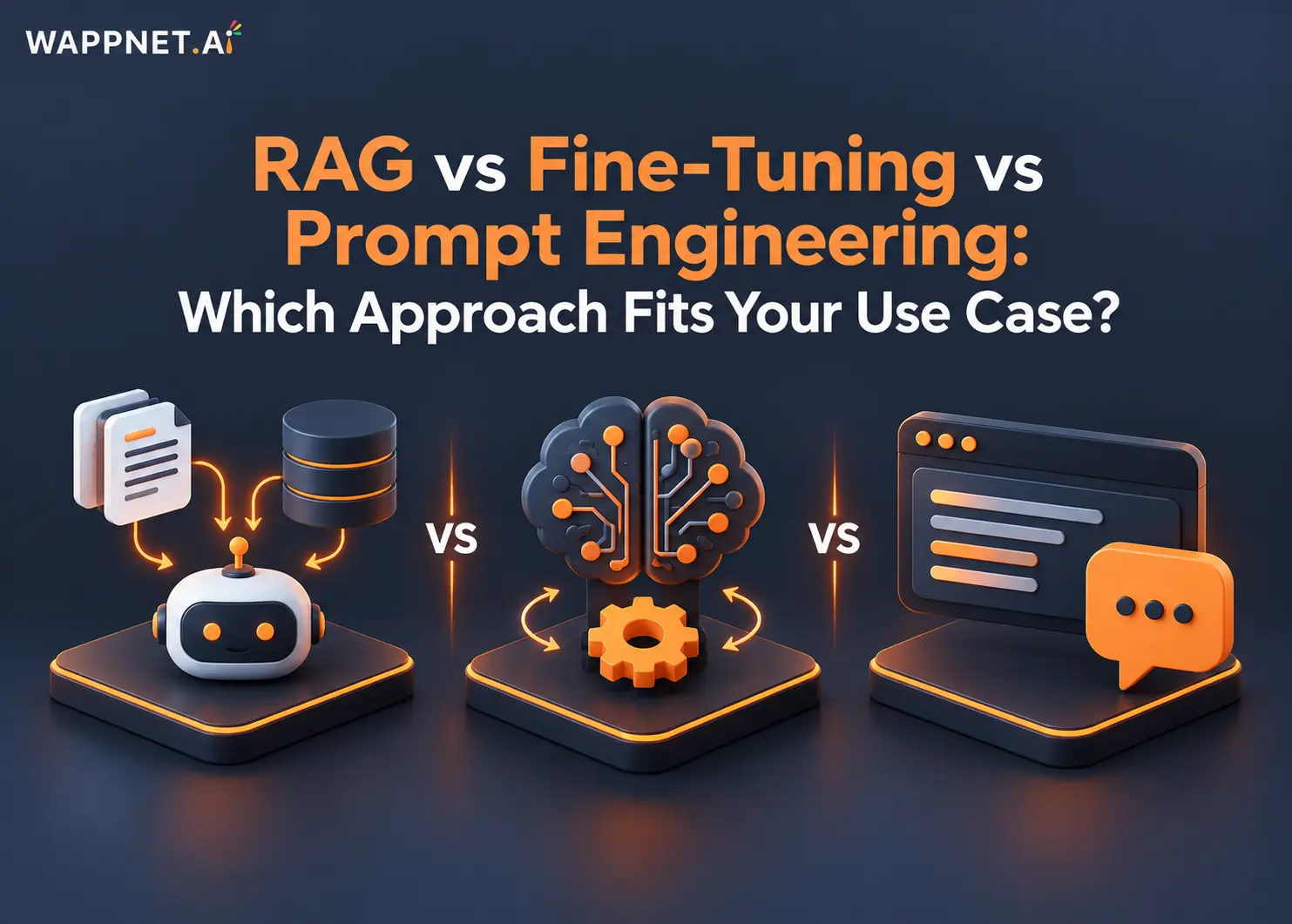 RAG
RAG vs Fine-Tuning vs Prompt Engineering: Which Approach Fits Your Use Case?
Compare RAG, fine-tuning, and prompt engineering to explore costs, use cases, and the best approach for enterprise AI.
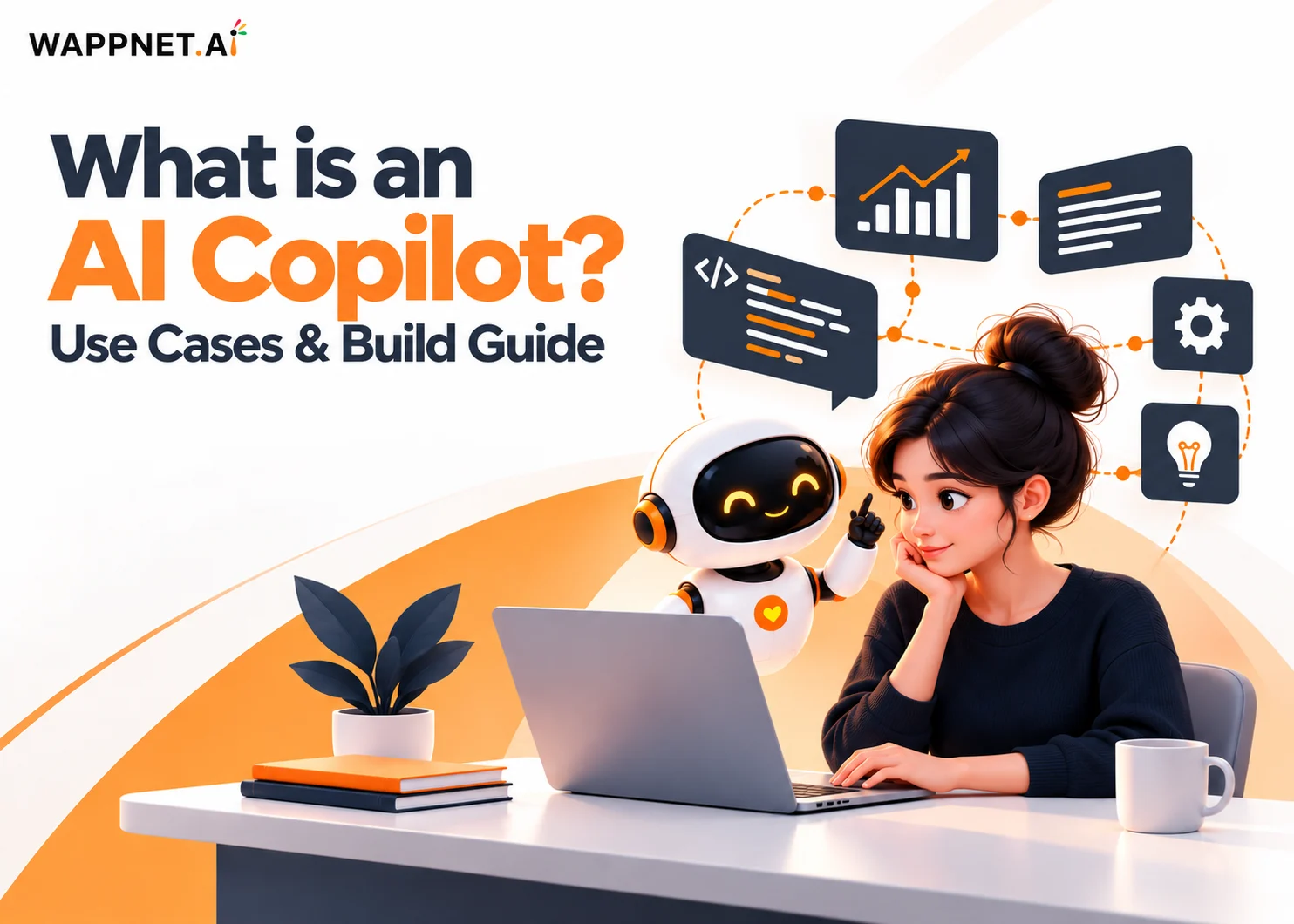 AI Copilot
What is an AI Copilot? Use Cases & Build Guide
What is an AI Copilot? Learn how it works, how it differs from AI agents, key use cases, and how to build one for your business.
 RAG
What Is RAG? A Complete Guide to Retrieval-Augmented Generation
Learn what RAG is, how Retrieval-Augmented Generation works, reduces AI hallucinations, and powers smarter enterprise AI.
Frequently Asked Questions
Enterprise integration services connect business applications, databases, cloud platforms and APIs so they share data and trigger workflows reliably. They cover architecture, development, testing, security and ongoing monitoring.
Enterprise application integration (EAI) links applications such as ERP, CRM, HR and finance systems so they share data and coordinate processes, using APIs, middleware or an integration platform.
API integration connects systems through their APIs. Enterprise integration is broader: it combines APIs with middleware, data transformation, security and monitoring to connect many systems reliably.
System integration makes applications work together as one process. Data integration moves and consolidates data, often for analytics. They overlap, and pipelines are covered by our data engineering services.
Middleware is software that passes data between applications. An ESB is a middleware pattern with a central message bus. iPaaS offers similar capabilities as a managed cloud service, and all three can coexist.
iPaaS is a cloud platform with prebuilt connectors and workflow tools for linking applications. It suits teams connecting many SaaS and cloud apps, but may not fit specialized protocols or strict data-residency needs.
Often through what the legacy system already exposes, such as APIs, database access or file exchange, or through an adapter layer in front of it. We assess interfaces and risk first.
Yes, when both systems support it. Webhooks, event streams and message queues move changes within seconds, while scheduled sync suits less urgent data. Retries and duplicate-event prevention keep it reliable.
Through authentication and authorization, encrypted transport, least-privilege access, secrets management, audit logging and monitoring. Specific controls depend on your data and industry.
It depends on the number of systems, API quality, data mapping complexity, security reviews and testing. We share a milestone plan after discovery rather than a fixed timeline upfront.
Cost depends on the number of systems, integration pattern, data volumes, custom development, platform licensing and support needs. We scope after discovery and tie estimates to milestones.