
Big Data Analytics Services
Data piles up in applications, databases, logs, and files, yet reports still arrive late, numbers disagree between teams, and forecasts rest on partial information. As a big data analytics company, we connect your sources, build the pipelines and platform to process them at scale, and deliver reporting, real-time views, and predictive models your decision-makers can use. We size each architecture to your data and goals, so you build only what the use case needs. Our big data analytics solutions are for CTOs, CIOs, chief data officers, analytics and BI leaders, data engineering teams, and operations owners.
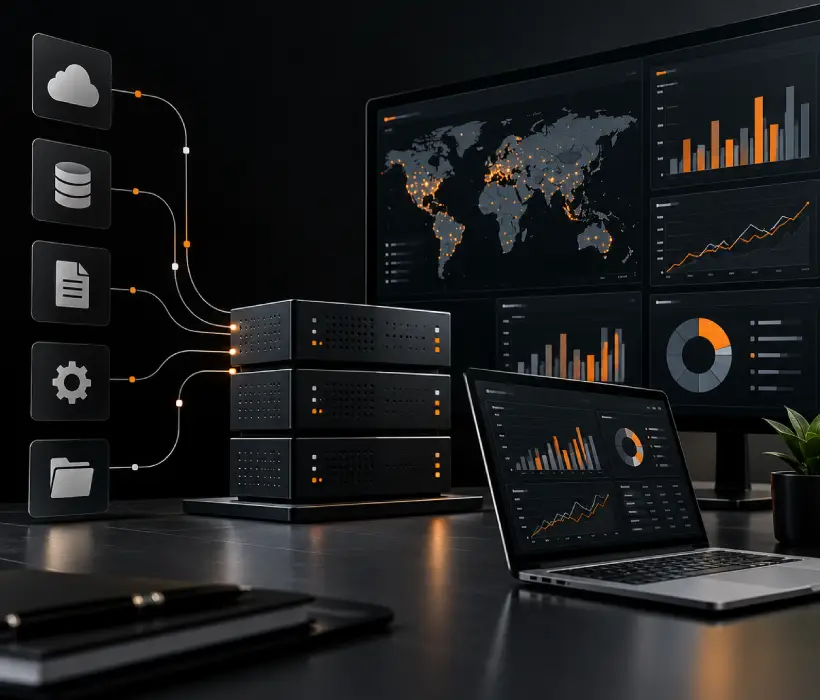

What Do Big Data Analytics Services Include?
Big data analytics is the process of collecting, processing, and analyzing large, varied, or fast-moving datasets to find patterns, explain performance, and estimate what may happen next. The services behind it run from strategy and data engineering to platform design, reporting, and ongoing support. Your scope depends on data volume, the number of sources, how fresh insights must be, and the infrastructure you already run.
Our big data analytics services cover the entire data lifecycle from ingestion to actionable intelligence:
- We provide big data analytics consulting that prioritizes use cases, reviews your current setup, and sets a roadmap tied to business goals.
- Our big data integration services bring applications, databases, files, APIs, and event streams into one governed environment through ingestion and transformation pipelines.
- Our big data processing services run batch processing for large volumes and stream processing where freshness matters, with monitored ETL and ELT pipelines behind them.
- Our big data platform development work selects a data lake, warehouse, or lakehouse for your workloads and models the data so it can grow with you.
- Our big data management services build validation, lineage, cataloging and access control into the platform so teams can trust the numbers they see.
- Our big data visualization services and advanced data analytics services turn modeled data into dashboards, forecasts, and predictive models where your data supports them.
- After go-live, we monitor, support, and optimize the platform as data volumes and usage change.
Why Businesses Invest in Big Data Analytics Services
Interest usually grows when data outpaces spreadsheets and single-purpose reports: more sources, more users, more questions, and less time to answer them. Well-built enterprise big data analytics gives teams a shared, timely view to support data-driven decision-making. We describe benefits as what can change for your organization, not as guaranteed savings, accuracy, or ROI. Results depend on data quality, architecture, analytics methods, and whether the business acts on what the data shows.
More Complete, Timely Decisions
Combining data from several systems gives leaders a fuller picture than any one report, and processing choices determine how current that picture is.
Operational Visibility
Shared metrics and monitoring help teams find bottlenecks, delays and unusual activity earlier than periodic reviews usually allow.
Forecasting and Planning
Historical and current data can support demand, capacity and risk forecasts. Predictive analytics services estimate likely outcomes; they do not predict with certainty.
Customer and Product Understanding
Behavior, usage and transaction data across channels show what people actually do, which helps prioritize product and service improvements.
Limits We Plan For
A dashboard cannot repair weak data or a weak architecture, and a larger platform does not guarantee better answers. Poor source data, unclear metric definitions, and low adoption limit value. We size the solution to your data and questions, and we tell you when a simpler approach is enough.
Big Data Analytics Solutions Built for Your Business
Explore our custom big data analytics solutions tailored to your data, business goals, and analytics needs. Combine services to address complex challenges, or explore our specialized solutions for data visualization, real-time data analytics, and data engineering.
Enterprise Big Data Analytics
Large organizations hold data in many systems and formats. Our big data analytics services for enterprises create a shared foundation with agreed metric definitions, so teams work from the same numbers.
Real-Time Big Data Analytics
Some decisions cannot wait for tomorrow’s report. We build real-time big data analytics on stream and near-real-time processing sized to the latency you actually need, which is not always zero delay.
Data Integration and Analytics
Disconnected systems produce conflicting reports. We deliver big data integration and analytics solutions that bring sources together through ETL and ELT pipelines and model the data for consistent analysis.
Predictive and Forecasting Analytics
Planning needs more than last quarter’s numbers. We apply statistical methods, time-series analysis, and machine learning to produce predictive insights on demand, risk, and likely outcomes.
Customer and Behavioral Analytics
Interactions are spread across channels. We combine usage, purchase and engagement data to show segments, patterns and where customers drop off.
Operational Performance Analytics
Operations teams need to see problems as they form. We build metrics and monitoring over process, equipment, and transaction data to surface delays and anomalies.
Data Visualization and Reporting
Reports that take days to assemble lose value. Our enterprise data analytics and reporting solutions use governed dashboards and recurring reports on a modeled data layer, so figures stay consistent.
Cloud-Based Big Data Analytics
Fixed infrastructure struggles with growth. We design cloud-based big data analytics on elastic storage and compute, with cost and security controls planned in. See also cloud-based analytics.
Big Data Platform Modernization
Older warehouses and Hadoop clusters can be costly to run and hard to extend. Our data platform modernization work assesses what to keep, migrate or retire, and plans the move in phases.
Not Sure Whether You Need a Big Data Platform?
Tell us which data sources you rely on, how reporting works today and which decisions feel slow or uncertain. We will help you judge what architecture fits and scope a practical first step.
Our Big Data Analytics Development Process
Our big data analytics implementation process covers business discovery, solution design, development, testing, and deployment. Timelines depend on data volume, complexity, quality, and project scope, with a delivery plan defined after discovery.
- 1
Business and Data Discovery
We clarify business decisions, KPIs, users, and constraints, then identify the data needed to address them.
- 2
Data Source and Architecture Assessment
We assess source systems, data volumes, quality, latency requirements, and your existing platform to identify gaps and requirements.
- 3
Analytics Strategy and Solution Design
We define the architecture, data model, security approach, and analytics methods that align with your business use cases.
- 4
Data Pipeline and Platform Implementation
We develop data ingestion, transformation, storage, and processing pipelines with data quality checks and access controls.
- 5
Analytics, Reporting and Validation
We create dashboards, reports, or analytical models and validate the results against source data in collaboration with your team.
- 6
Deployment, Monitoring and Optimization
We deploy the solution, monitor pipeline health and performance, and optimize cost and speed as data volumes and usage grow.
Big Data Analytics Services: Use Cases
Explore how big data analytics services help businesses address common challenges, improve decision-making, and uncover valuable insights. The outcomes depend on your data, existing systems, and implementation approach.
One View Across Many Business Systems
Sales, finance, and operations each report from their own system. Consolidating the data into a modeled layer gives one version of key metrics. Consider who owns each definition.
Customer Purchase and Engagement Analysis
Behavior is split between web, app, store, and support data. Joined and analyzed, it shows segments and drop-off points. Consider consent and privacy rules.
Operational Performance Monitoring
Managers learn about delays after the fact. Metrics computed over process and event data show them sooner. Consider which alerts people will act on.
Inventory and Demand Forecasting
Planning relies on rough estimates. Time-series analysis and machine learning models over sales and supply data can improve estimates. Consider seasonality and data gaps.
Near-Real-Time Operational Dashboards
Some teams need current status, not yesterday’s. Stream processing feeds dashboards within an agreed latency. Consider whether batch refresh is enough.
Detecting Unusual Patterns in Business Data
Odd transactions or sensor readings hide in large volumes. Statistical and machine learning methods flag them for review. Consider false alerts and who investigates.
Big Data Analytics vs. Business Intelligence vs. Data Engineering
Data engineering prepares data, big data analytics uncovers insights, and business intelligence presents findings through reports and dashboards. Together, these capabilities support informed, data-driven decisions.
| Discipline | What it is | Main question it answers | Typical outputs | How it fits with the others |
|---|---|---|---|---|
Big data analytics | Extracting insight from large, varied or fast-moving datasets | What is happening, why, and what is likely next? | Analyses, forecasts, segmentation, anomaly detection | Uses prepared data from engineering and shares results through BI |
Business intelligence | Reporting, dashboards and descriptive analysis for business users | How are we performing against our measures? | Dashboards, scorecards, scheduled reports | The delivery layer; modern BI tools can include advanced analytics |
Data engineering | Building and maintaining the pipelines and infrastructure that make data usable | Is the right data available, reliable and on time? | Pipelines, data models, lake, warehouse or lakehouse | The foundation that analytics and BI depend on |
Predictive analytics | Statistical or machine learning methods that estimate likely outcomes | What is likely to happen, and how confident are we? | Forecasts, risk scores, propensity models | One technique within analytics; needs good historical data |
Technologies We Use to Build Big Data Analytics Solutions
We select technologies based on your business goals, data requirements, and existing infrastructure. Our technology stack is tailored to your needs, with a focus on building reliable, secure, and scalable big data analytics solutions.























Industries We Help With Big Data Analytics
Why Choose Wappnet AI as Your Big Data Analytics Company?
A platform nobody trusts or uses delivers little. Our big data analytics consulting for enterprise organizations treats analytics as a business outcome supported by sound data engineering, so quality, security, and usability are designed in rather than added later. We are direct about what a project can and cannot deliver and about the assumptions behind any estimate.
Analytics Tied to Business Goals
We begin with the decisions and KPIs that matter, then work back to the data and architecture, instead of starting from a tool.
Built Around Your Existing Data
We assess your sources and current platforms first, and extend what works. See our analytics consulting and strategy.
Data Quality and Governance Built In
As a big data engineering company as well as an analytics team, we make validation, lineage, access control, and security part of pipeline design from the start.
Planned Delivery and Ongoing Support
You get phased milestones, documented metrics, and optimization after launch. Our AI and ML teams can extend analytics into AI solutions when it fits.
Real-World Big Data Analytics Solutions We've Delivered
Scalable data lakes, multi-source enterprise warehouses, and predictive analytics platforms built for global business operations.
Multi-Tenant Cloud Lakehouse & Unified Analytics Platform
Consolidated 15+ disparate transactional databases, ERPs, and external API feeds into a unified Databricks lakehouse, reducing query latency by 70%.
Retail Demand Forecasting & Real-Time Inventory Optimization
Engineered a time-series machine learning pipeline processing billions of historical records to deliver accurate multi-store SKU-level demand predictions.
High-Throughput Financial Telemetry & Anomaly Detection
Designed a real-time Kafka and Spark streaming architecture evaluating millions of daily financial events for fraud indicators and latency outliers.
Ready to Turn Your Data Into Usable Insight?
Bring your data sources, reporting pain points, and timeline. We will discuss architecture options, a realistic first phase, and how analytics can fit the systems your teams already use, with no obligation.
Latest AI Insights & Industry Trends
 RAG
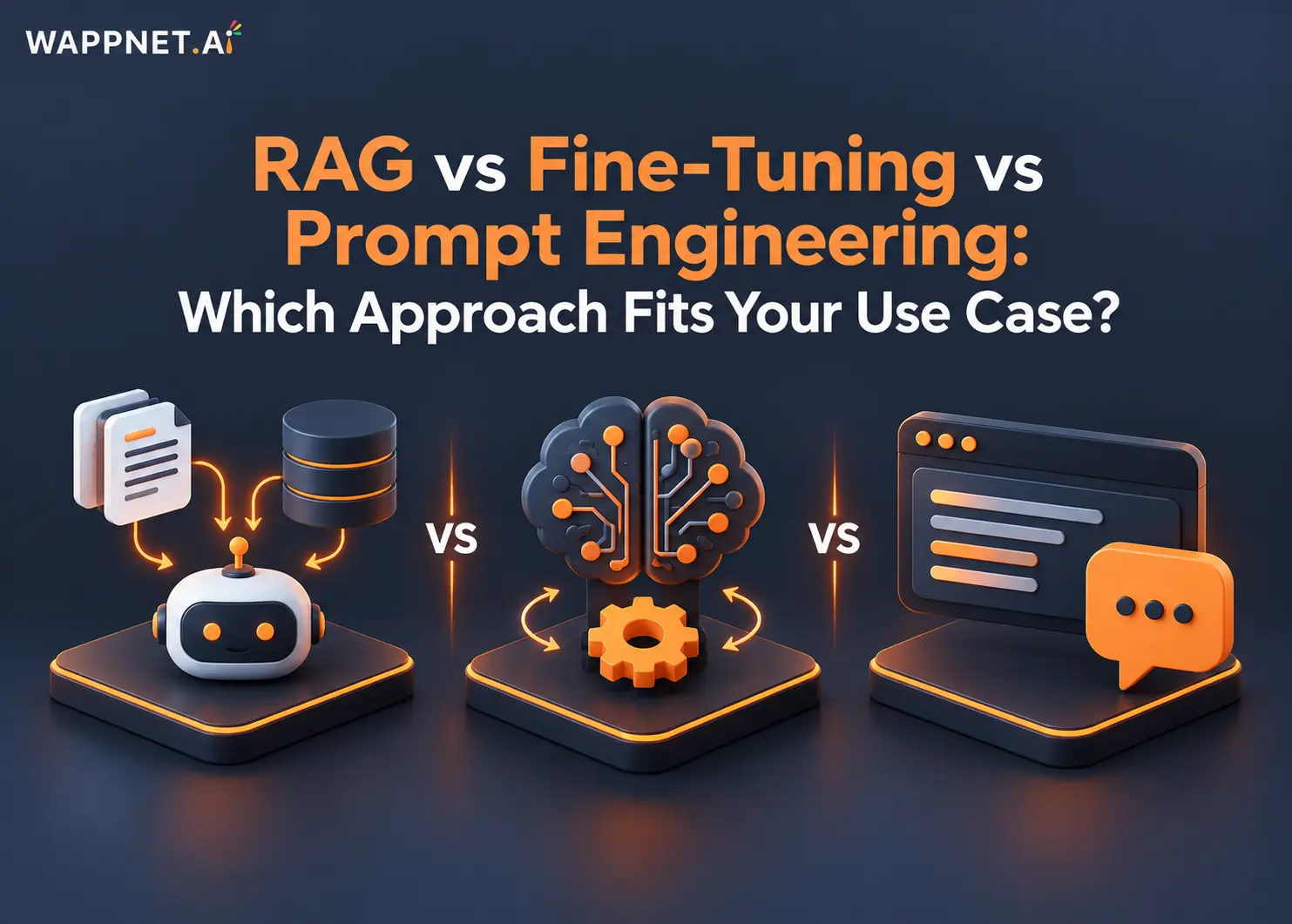
RAG vs Fine-Tuning vs Prompt Engineering: Which Approach Fits Your Use Case?
Compare RAG, fine-tuning, and prompt engineering to explore costs, use cases, and the best approach for enterprise AI.
 AI Copilot
What is an AI Copilot? Use Cases & Build Guide
What is an AI Copilot? Learn how it works, how it differs from AI agents, key use cases, and how to build one for your business.
 RAG
What Is RAG? A Complete Guide to Retrieval-Augmented Generation
Learn what RAG is, how Retrieval-Augmented Generation works, reduces AI hallucinations, and powers smarter enterprise AI.
Frequently Asked Questions
Big data analytics services help a business collect, process, and analyze large, complex, or fast-moving data so it can be used for decisions. They typically cover consulting, data integration, pipelines, platform architecture, reporting and predictive analytics, and ongoing support.
A big data analytics company assesses your data and goals, designs an architecture, builds the pipelines and storage, and delivers dashboards, reports or models. It also handles data quality, security, and ongoing optimization, and should explain trade-offs rather than push one technology.
Benefits can include more complete and timely information, better operational visibility, stronger forecasting, and clearer understanding of customers. Outcomes are not guaranteed: they depend on data quality, architecture, analytics methods, and how the organization acts on insights.
Business intelligence mainly reports on what has happened through dashboards and descriptive analysis. Big data analytics works with larger or more varied data and can add forecasting, pattern detection, and machine learning. They are complementary, and modern BI tools often include some advanced analytics.
Common choices include Apache Spark and Hadoop for distributed data processing, Apache Kafka and Flink for streaming, cloud warehouses and lakehouses such as Snowflake, BigQuery and Databricks, and BI tools such as Power BI and Tableau. The right set depends on volume, latency, and your existing platforms; many projects need only a subset.
Data integration pulls data from your applications, databases, files, and APIs through connectors and pipelines into a central platform, and results are returned through dashboards, APIs, or exports. We assess your current infrastructure first so the new solution extends it instead of forcing a rebuild.
Through data quality management (validation and cleansing in the pipelines, clear ownership and metric definitions, lineage tracking) and data governance with role-based access control, encryption and monitoring. These controls need to be designed in from the start and reviewed as data and users change. Legal and compliance obligations should be confirmed with your own advisers.
Big data analytics implementation time depends on data volume, number and complexity of sources, data quality, architecture and analytics scope. A focused pipeline and dashboard project takes less time than a full platform build or migration. We propose a phased plan after discovery instead of a fixed duration in advance.
Cost depends on data volume, source complexity, architecture, cloud usage, analytics requirements, security needs, and whether you want advice only or hands-on implementation. We provide an estimate once requirements are clear rather than quoting figures before we understand your data.
Look for a big data analytics services provider that starts with your business questions, explains why it recommends a given architecture, shows how it handles data quality and security, and is candid about limits. Be cautious of guaranteed results, one-size-fits-all stacks, and unsourced claims. You can start with a big data analytics consulting conversation with us.