
AI-Ready Data Services
Most AI initiatives don't stall because the model is wrong. They stall because the data underneath it was never structured, validated, or governed in a way AI can actually use. Our AI-ready data services assess, structure, and validate your data so it's genuinely usable by machine learning models, LLM applications, RAG systems, and enterprise analytics. Our focus is on assessing and preparing data for specific AI workloads. When existing pipelines need changes to support data quality or freshness, we coordinate with our broader data engineering team to address those requirements.
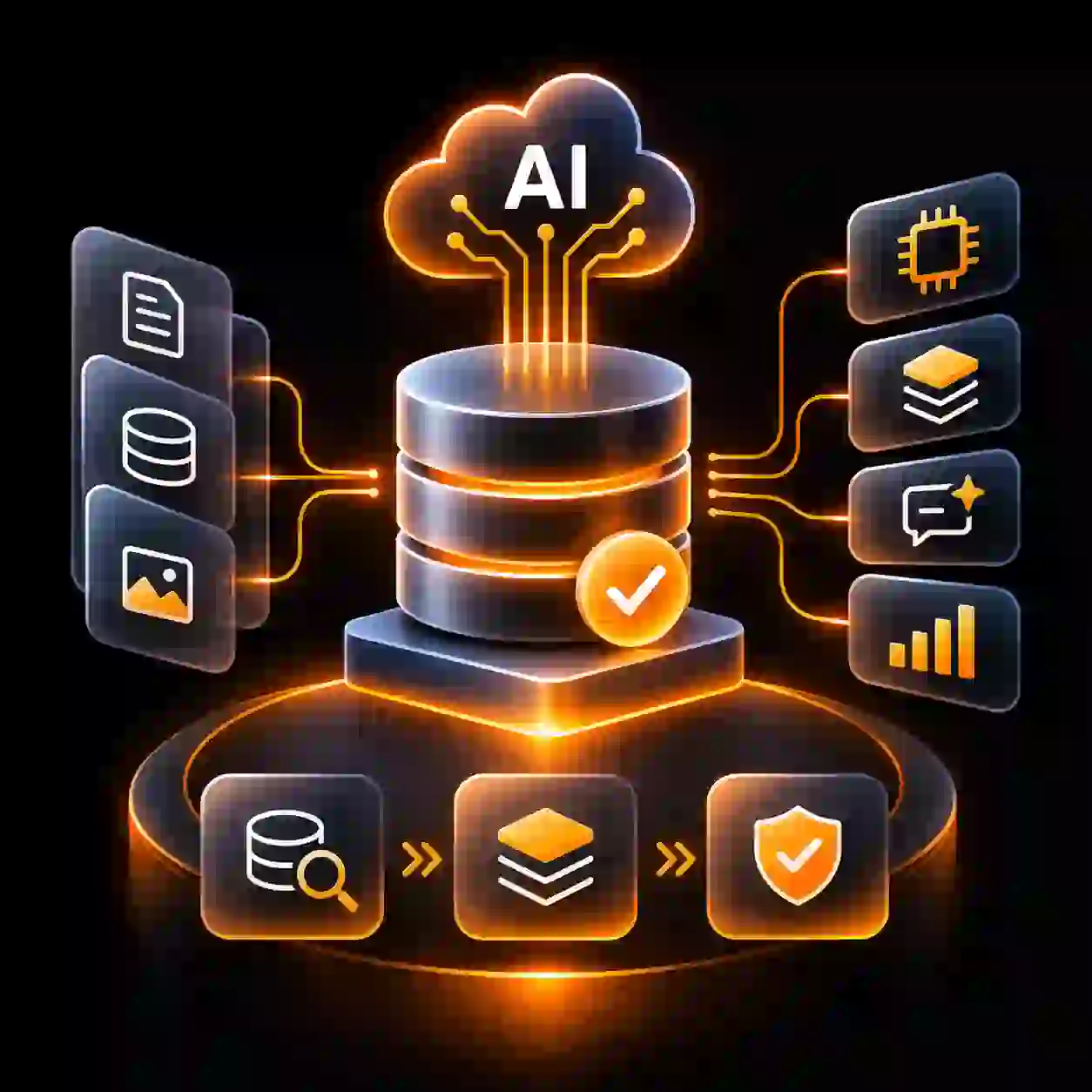
What Do AI-Ready Data Services Include?
AI-ready data services turn raw, inconsistent business data into data your AI, machine learning, and RAG systems can actually rely on. The goal is simple: make sure the data behind every model and application is accurate, well-structured, and trustworthy enough to produce results you can act on.
A successful AI-ready data engagement moves through four connected steps:
- Assess your data against the quality, structure, and metadata criteria your specific AI use case needs.
- Clean, standardize, and enrich your data so it's consistent, documented, and trustworthy.
- Prepare structured and unstructured data alike for the model, LLM, or RAG system that will use it.
- Validate and monitor your data on an ongoing basis so it doesn't quietly drift out of readiness.
Why Businesses Invest in AI-Ready Data
Most organizations significantly overestimate how ready their data actually is for AI. The gap usually isn't visible until a model underperforms.
Inconsistent Data Quality
Duplicate records, missing fields, and conflicting formats can lead to unreliable model outputs. Improving data quality helps AI systems work with more consistent and trustworthy information.
Fragmented Data Sources
When data is scattered across disconnected systems, AI applications may lack the context needed to deliver reliable results. We help businesses identify these gaps and prepare data from multiple sources for their intended AI workloads.
Poorly Structured Documents
Contracts, manuals, and support tickets often contain valuable business knowledge. We help extract relevant information, organize documents, and add metadata as part of the data pipelines for AI that keep this content usable, so AI applications can retrieve the right information when needed.
Limited Metadata and Context
Data without clear ownership, source, or definitions can't be trusted or interpreted correctly by people or AI systems. A data readiness assessment is usually the first step toward closing this gap.
Unreliable Data Pipelines
Pipelines that break, run late, or deliver stale data undermine even a well-built AI application, since machine learning data preparation and RAG data preparation both depend on data arriving consistently.
AI-Ready Data Solutions Built for Your Business
Each solution below addresses a specific readiness gap, scoped to your data, not a one-size checklist.
Data Readiness Assessment
Our data readiness assessment evaluates your data against AI-specific criteria before any engineering work begins.
Data Cleaning and Enrichment
Data cleaning and enrichment remove duplicates, correct invalid values, and standardize formats across sources.
AI Data Preparation Services
Our AI data preparation services parse documents and PDFs into defined fields, covering both structured and unstructured data processing.
Data Pipelines for AI
We assess and improve existing data pipelines to help keep AI-ready data consistent and up to date. When a larger pipeline rebuild is required, our data engineering team can support the implementation.
AI Data Infrastructure Alignment
Making sure your AI data infrastructure storage, access, and compute supports your AI workload's freshness and scale needs.
LLM and RAG Data Preparation
Prepare LLM and RAG data, including chunking and metadata enrichment, before indexing begins.
Get Your Data Ready for AI
Before you invest further in a machine learning model, an LLM application, or a RAG assistant, find out whether the data behind it can actually support that investment.
Our AI-Ready Development Process
A practical, assessment-first approach from discovery through continuous improvement.
- 1
Data Discovery & Readiness Assessment
Our data readiness assessment reviews your current data against the specific AI use case you're building toward.
- 2
Data Profiling & Quality Analysis
We profile data for completeness, consistency, duplication, and accuracy, which are core elements of data quality for AI.
- 3
Cleaning, Transformation & Enrichment
We handle data transformation for AI and data cleaning and enrichment across structured and unstructured data.
- 4
Pipeline & Workflow Alignment
We align data pipelines for AI with readiness requirements, working with our broader data engineering team when pipeline rebuilds are needed.
- 5
Validation & AI Workload Preparation
We perform data validation for AI based on the dataset's specific intended use.
- 6
Monitoring & Continuous Improvement
We monitor data quality and freshness after launch because readiness can change over time.
AI-Ready Data Services: Use Cases
How readiness works shows up in real business workflows, from internal search to predictive models.
Enterprise Documents for RAG
RAG data preparation, including data chunking and metadata enrichment, so retrieval systems can search relevant information effectively.
Reliable Datasets for Machine Learning
We prepare datasets for machine learning by profiling, cleaning, and validating data before feature engineering and model training begin.
Consolidating Inconsistent Data
Reconciling conflicting formats across systems through data transformation for AI.
Product & Customer Data for Search
Structuring and tagging data so semantic search can rank results effectively.
Improving Pipelines for AI Operations
Reengineering enterprise AI data pipelines to meet the freshness and reliability requirements of AI workloads.
Historical Data for Forecasting
Cleaning and standardizing years of operational data for predictive models.
Data Engineering for Generative AI
Data engineering for generative AI that structures and validates content before it enters a prompt or retrieval pipeline.
Internal Knowledge Assistants
Organizing scattered wikis and support tickets into a format AI assistants can use effectively.
Manual Data Preparation vs. Automated Data Pipelines for AI
Which approach fits depends on scale and how often your data changes, not which one sounds more advanced.
Technologies We Use to Build AI-Ready Data Solutions
Technology choices depend on your existing infrastructure and roadmap, not on a fixed stack.







Industries We Help With AI-Ready Data
Why Choose Wappnet AI as Your AI-Ready Data Company?
Choosing an AI-Ready Data Company is a long-term commitment, not a one-time cleanup. You need a partner who understands the data readiness requirements of your AI use case. Here's what you can expect when you work with us.
Assessment Before Engineering
Our data readiness assessment targets the gaps that directly affect your outcomes.
Structured & Unstructured Expertise
We handle structured and unstructured data processing together rather than treating them as separate workstreams.
Built for Your AI Data Infrastructure
We work with your existing AI data infrastructure without forcing migration, connecting with our broader data engineering, RAG, and MLOps practices.
Ongoing Data Validation for AI
Data validation for AI is an ongoing process, not a one-time task. AI data quality improves your chances of success but does not guarantee model accuracy.
Real-World AI-Ready Data Solutions We've Delivered
Enterprise Document Structuring for Legal RAG
Parsed and metadata-tagged 50,000+ unstructured legal contracts and agreements to enable high-accuracy semantic retrieval.
High-Throughput Feature Store & Dataset Profiling
Automated data cleaning and validation pipelines for predictive healthcare models, eliminating duplicate records and format drifts.
Multi-Source Data Unification & Enrichment Platform
Unified fragmented customer and product data across 6 siloed systems into an AI-ready vector and analytical warehouse.
Not Sure If Your Data Is Ready for AI?
Tell us what you're trying to build, whether it's a predictive model, an LLM application, or a RAG assistant, and what data you currently have. We'll provide an honest assessment before any engineering work begins.
Latest AI Insights & Industry Trends
 RAG
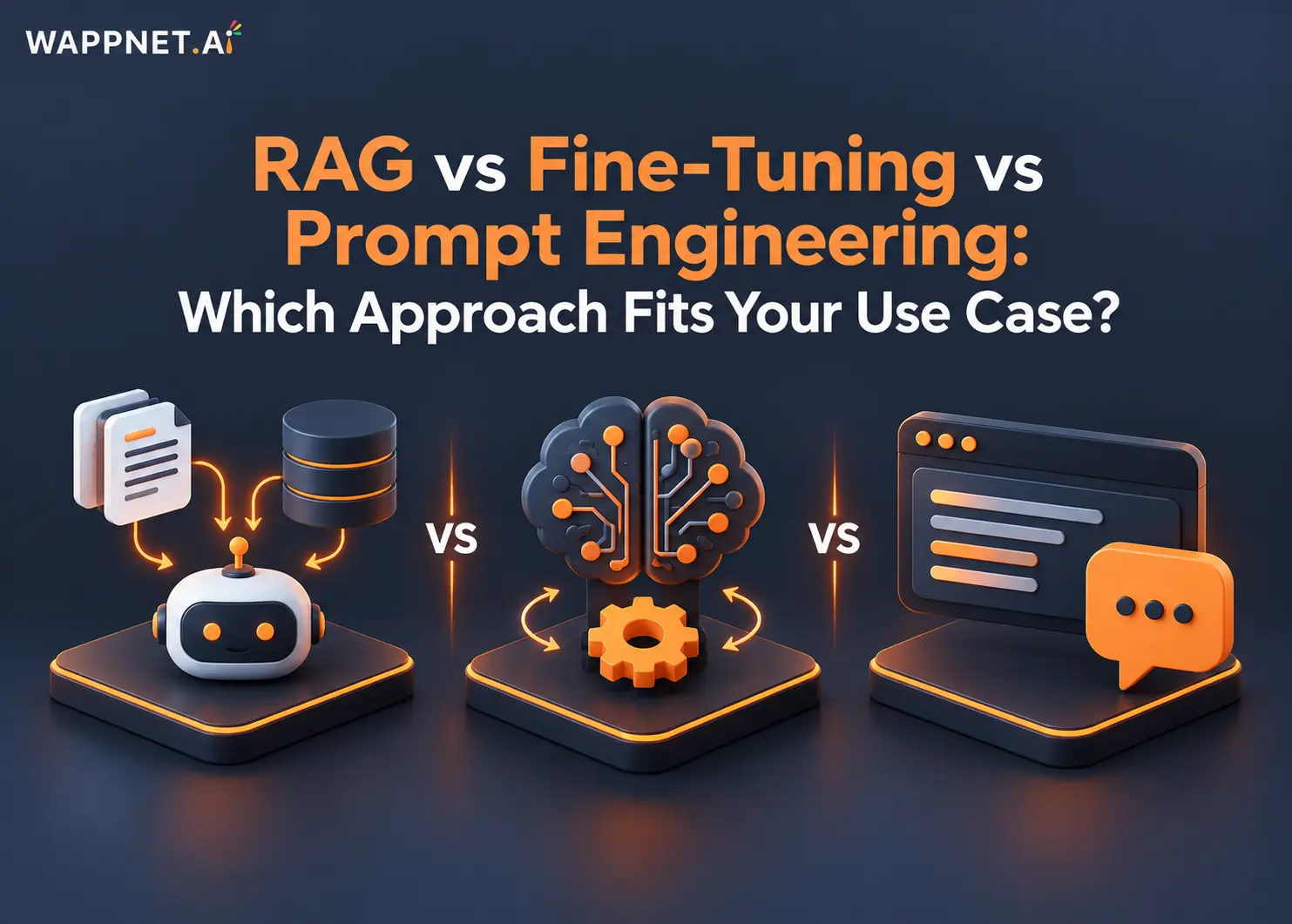
RAG vs Fine-Tuning vs Prompt Engineering: Which Approach Fits Your Use Case?
Compare RAG, fine-tuning, and prompt engineering to explore costs, use cases, and the best approach for enterprise AI.
 AI Copilot
What is an AI Copilot? Use Cases & Build Guide
What is an AI Copilot? Learn how it works, how it differs from AI agents, key use cases, and how to build one for your business.
 RAG
What Is RAG? A Complete Guide to Retrieval-Augmented Generation
Learn what RAG is, how Retrieval-Augmented Generation works, reduces AI hallucinations, and powers smarter enterprise AI.
Frequently Asked Questions
AI-ready data is data that has been assessed, cleaned, structured, and validated specifically for the AI, machine learning, or analytics workload that will use it.
AI-ready data services evaluate and improve data against the quality, structure, metadata, and governance criteria required by a specific AI workload. This differs from the broader practice of building the pipelines and platforms through which data moves.
Data quality for AI matters because models and applications learn from or retrieve information directly from the data they're given. Inconsistent data can produce unreliable answers regardless of model quality.
Businesses typically start with a data readiness assessment, then apply data preparation for AI by cleaning, structuring, and enriching data, followed by data validation for AI and ongoing monitoring.
Data preparation for machine learning involves profiling and cleaning data for completeness, structuring it for training, and validating it before feature engineering and modeling begin.
Data preparation for LLMs and RAG involves structuring documents with retrieval metadata, including data chunking and metadata enrichment. Implementation details are covered on our RAG as a Service page.
Data engineering builds the pipelines through which data moves, covered by our broader data engineering team on a separate page. AI-ready data services focus on whether that data meets AI-specific readiness criteria.
Python and SQL support transformation, cloud platforms such as AWS, Azure, and GCP provide infrastructure, and warehouses such as Snowflake and Databricks support AI data infrastructure. Airflow handles orchestration, while dbt helps implement data quality for AI rules.
A data readiness assessment evaluates data quality, completeness, structure, metadata, lineage, and freshness against the requirements of the intended use case.
Yes. These services are designed to work with your existing cloud platforms, warehouses, and AI data infrastructure without requiring a migration.
Data validation for AI checks data against rules specific to its intended use before it trains a model or populates a retrieval system. Ongoing monitoring helps maintain data quality.
No. AI data quality and readiness improve the likelihood of reliable outcomes, but model selection, evaluation, and deployment decisions also matter.