
Cloud AI Solutions
Many AI projects work in a notebook and then stall: the model needs more compute than anyone planned for, the data sits in five systems, security asks questions nobody has answered, and the cloud bill is hard to predict. As a cloud AI development company, we design and build cloud AI services that cover architecture, model deployment, integration with your existing applications, security, and cost control. We help CTOs, architects, and product teams choose the right platform and then run AI workloads reliably after launch.

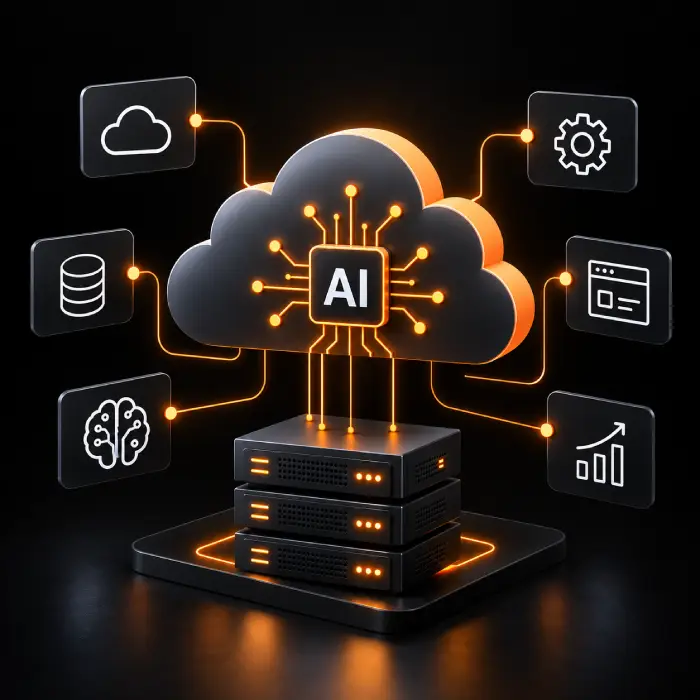
What Do Cloud-Powered AI Solutions Include?
Cloud-powered AI solutions combine cloud infrastructure with AI models and applications so that AI workloads can be built, deployed, scaled, and managed without owning the hardware. The work spans several layers: infrastructure, data, models, applications, deployment, and operations. Cloud computing is the platform. AI is what runs on it. Our job is to connect the two in a way that fits your systems, your data rules, and your budget. Scope varies by project.
Our cloud AI engineering spans several core capabilities:
- Cloud AI architecture and solution design, including platform selection for the workload, data location, and latency needs.
- Cloud-based AI application development and cloud-native AI development: containerized services, APIs and pipelines built for the cloud from the start.
- AI model deployment and hosting for custom models and for managed model services, including LLM and RAG workloads.
- Cloud AI integration services that connect models to your existing applications, databases, and business systems through APIs.
- Data pipelines and cloud data processing for AI, so models receive clean, governed data.
- MLOps and AI lifecycle management: versioning, release, monitoring and retraining decisions.
- Cloud AI security, access control, and cloud AI cost optimization built into the design and reviewed after launch.
Why Businesses Invest in Cloud AI
AI workloads are uneven. Training and large inference jobs need a lot of compute for a short time, while a customer-facing feature needs steady capacity and fast responses. The cloud gives teams a way to match capacity to demand and to use managed AI services where building from scratch makes little sense. It also adds decisions about cost, latency, data residency, and platform dependence. We describe benefits as what can change for your teams, not as guaranteed savings or speed.
Capacity That Follows Demand
Compute can be added for training or peak traffic and reduced afterward, instead of buying hardware for the busiest day.
Flexible Deployment Options
Teams can choose managed AI services, custom models on containers, or a hybrid or multicloud setup that suits their data and risk rules.
Closer to Your Existing Systems
Cloud-hosted models expose APIs that applications, data platforms and workflows can call, which makes enterprise cloud AI solutions easier to wire into daily work.
Smoother Model Releases
With MLOps practices, models can be versioned, tested, released, and monitored in a repeatable way instead of by hand.
Trade-Offs We Plan For
Cloud AI is not automatically cheaper, faster, or more secure than on-premises or edge options. GPU usage, data transfer, and always-on inference can raise costs. Data residency rules, network latency, and dependence on one provider can limit choices. We weigh these early and tell you where another architecture is the better fit.
Cloud AI Solutions and Services Built for Your Business
Explore our cloud AI solutions and services designed to help businesses deploy AI workloads efficiently, securely, and at scale. From cloud-based AI applications to scalable infrastructure and model deployment, we tailor each solution to your business goals, workload requirements, and existing cloud environment.
Cloud-Hosted AI Applications
A model that works in testing is not yet a product. We build cloud-native AI applications with APIs, containers, and autoscaling, and deploy them alongside your existing web or mobile app so users see one experience.
Enterprise AI Integration
AI is only useful if your systems can reach it. Our cloud AI integration services connect hosted models to CRM, ERP, data platforms, and internal tools, so results appear where your team already works. For wider integration work, see enterprise integration.
Cloud-Based Machine Learning
Training on a laptop does not scale. We set up cloud-based machine learning solutions with managed or custom training, experiment tracking and repeatable pipelines, so models can be retrained as your data changes.
AI Model Deployment and Scaling
Models behave differently under load. Our AI model deployment services cover serving, versioning, autoscaling, and rollback, with inference tuned for the latency and cost your use case can accept.
LLM and Generative AI Hosting
Teams want LLM features without sending data everywhere. We deploy language models and RAG workloads on managed cloud services or your own cloud environment, with access controls and logging suited to your data rules.
Cloud Data and AI Workload Integration
Models depend on the data feeding them. We connect storage, pipelines, and processing so AI workloads get governed data, with help from our data engineering services where a larger data build is needed.
Cloud AI Migration and Modernization
Some AI already runs on servers or a single machine. We assess what to move, rebuild or retire, and plan the move to containers or managed services in stages so live systems are not put at risk.
Cloud AI Infrastructure Optimization
AI bills can grow faster than usage. We review AI infrastructure optimization options such as right-sizing, scheduling, caching, and model choice, and set budgets and alerts so spend stays visible.
Monitoring and Operational Support
Models drift, and systems change. We set up AI model monitoring for quality, latency, errors, and cost, and keep tuning the solution after launch, or work beside your team through dedicated AI developers.
Unsure Which Cloud AI Architecture Fits?
Tell us what you are building, where your data lives, and what limits you face on security, latency, or budget. We will help you compare options and scope a practical first step with a cloud AI solutions provider that starts from your workload, not from a platform.
Cloud AI Solutions: Our Cloud AI Development Process
Our cloud AI development process takes your project from business requirements and architecture planning to development, deployment, and ongoing optimization. During discovery, we define a clear implementation plan and timeline based on your project scope, data readiness, integration requirements, security needs, and approval processes.
- 1
Discovery and Readiness Assessment
We review your goals, workloads, data, existing systems, and constraints, and agree on what to build first and how success will be judged.
- 2
Architecture and Platform Selection
We design the cloud AI architecture and compare platforms and services on fit, latency, data residency, security, and cost, and document the trade-offs.
- 3
Data, Model and Application Build
We build the data pipelines, model or managed-service setup, and application services as code, so environments can be repeated and reviewed.
- 4
Integration and Validation
We connect the solution to your systems and test accuracy, load, failure handling, access control, and security before anything reaches users.
- 5
Deployment and Production Readiness
We deploy with CI/CD, release and rollback steps, logging, alerts and cost budgets so the team can operate it with confidence.
- 6
Monitoring, Optimization and Support
We track quality, drift, latency, and spend, review results with you, and keep improving the solution after launch through MLOps and AI lifecycle management.
Cloud-Powered AI Solutions: Use Cases
Explore practical use cases for cloud-powered AI solutions across different business functions. From automating workflows and processing data to deploying scalable AI applications, each use case demonstrates how cloud AI can address business challenges based on your data, infrastructure, and operational requirements.
Customer-Facing AI Features
Traffic to an AI feature can spike without warning. A cloud-hosted model behind an autoscaling API can serve more users at busy times and fewer at quiet ones, with response time and cost monitored.
Document Processing
Teams read and key in invoices, forms, and contracts by hand. Cloud-based OCR and language models can extract fields into your systems, with human review for uncertain results.
Forecasting and Predictive Analytics
Planning relies on slow reports. Cloud data processing and machine learning can refresh forecasts on a schedule and retrain as new data arrives.
Enterprise Knowledge Retrieval
Staff cannot find answers across documents. A RAG assistant hosted in your cloud environment retrieves from approved content, respects permissions, and cites its sources.
AI-Assisted Business Workflows
Approvals and routing take manual effort. Models behind APIs can classify, summarize, or route requests inside existing workflow tools, with people in charge of final decisions.
Computer Vision Applications
Visual inspection and image review are slow and uneven. Cloud GPU inference can analyze images at scale, or edge devices can pre-filter them where connectivity is limited.
Model Deployment and Inference at Scale
A trained model sits unused for lack of a serving layer. A deployment pipeline with versioning, scaling, and rollback turns it into a dependable service.
Data-Driven Decision Support
Dashboards show what happened, not what to do. Cloud analytics and AI can surface patterns and recommendations next to the data, with the reasoning visible to the user.
Cloud AI vs On-Premises AI vs Edge AI: Which Do You Need?
Compare cloud AI, on-premises AI, and edge AI to determine the right deployment approach for your business. Understand how each option differs in scalability, data control, latency, infrastructure, and cost to choose a solution that aligns with your security requirements, workload demands, and operational goals.
Technologies We Use to Build Cloud-Powered AI Solutions
We use proven cloud platforms, AI frameworks, and deployment technologies to build cloud-powered AI solutions tailored to your business needs. Our technology choices depend on your workloads, scalability requirements, data privacy, latency, budget, and existing infrastructure to deliver secure, reliable, and efficient AI applications.














Industries We Help With Cloud AI Solutions
Why Choose Wappnet AI as Your Cloud AI Solutions Provider?
A cloud AI project can look fine in a demo and still fail on cost, security, or reliability in production. As a cloud AI development company, we treat architecture, data, deployment, and operations as one piece of work, and we are open about trade-offs before you commit budget. We plan for monitoring, security, and cost visibility from the first discussion.
Architecture Matched to the Workload
We start with your use case, data, and constraints, then recommend the platform and the simplest architecture that meets them.
Integration With Your Systems
Cloud AI works best when connected to your applications and data. Our cloud-based analytics and integration work show how we approach that.
Security and Responsible Deployment
We design access control, logging, and review steps into the build, supported by our Responsible AI practice. Compliance duties stay with your organization.
Operations and Cost Awareness
We set up monitoring, budgets, and alerts, and keep tuning after launch, or work alongside your team in the long run.
Real-World Cloud AI Solutions We've Delivered
Scalable cloud AI architectures, automated MLOps pipelines, and secure enterprise model deployments.
Multi-Tenant Azure Machine Learning Pipeline for Financial Forecasting
Built automated model training and autoscaling inference clusters handling 10M+ daily transactions with automated drift alerts.
HIPAA-Compliant Private Bedrock Deployment for Clinical Notes
Architected zero-data-retention Amazon Bedrock integration with KMS encryption and granular IAM access controls for hospital networks.
Kubernetes GPU Cluster Optimization & Autoscaling for Retail Vision
Implemented Spot instance scheduling, model quantization, and Triton serving, slashing cloud inference bills by 42%.
Ready to Build Your Cloud AI Solution?
Bring your workload, your data, and your constraints. We will discuss architecture, integration, security, and a practical first step, with no obligation.
Latest AI Insights & Industry Trends
 RAG
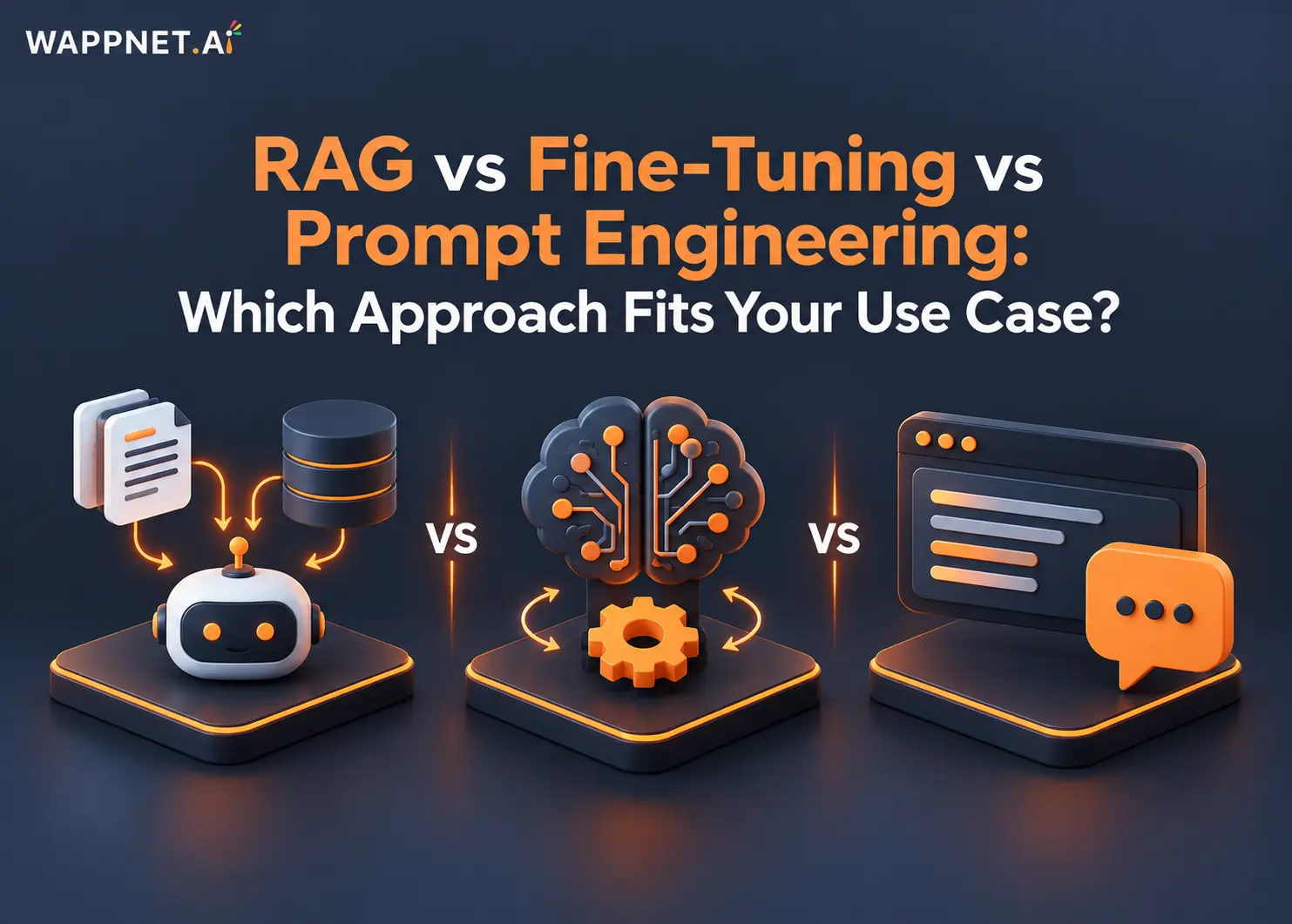
RAG vs Fine-Tuning vs Prompt Engineering: Which Approach Fits Your Use Case?
Compare RAG, fine-tuning, and prompt engineering to explore costs, use cases, and the best approach for enterprise AI.
 AI Copilot
What is an AI Copilot? Use Cases & Build Guide
What is an AI Copilot? Learn how it works, how it differs from AI agents, key use cases, and how to build one for your business.
 RAG
What Is RAG? A Complete Guide to Retrieval-Augmented Generation
Learn what RAG is, how Retrieval-Augmented Generation works, reduces AI hallucinations, and powers smarter enterprise AI.
Frequently Asked Questions
Cloud AI solutions are AI applications and models built, deployed, and run on cloud infrastructure. They usually include architecture, data pipelines, model deployment, integration with business systems, security, and ongoing monitoring.
Cloud-powered AI means using cloud computing, storage, and managed services to train, host, and scale AI, instead of relying only on hardware you own. The cloud supplies capacity and services, and the AI is the model or application on top.
It provides compute such as GPUs on demand, scalable storage for data, managed services for training and hosting, and tools for deployment and monitoring. Teams can start small and grow capacity as demand rises, within provider quotas and budget.
Common benefits are flexible capacity, faster setup, access to managed AI services, and easier integration through APIs. Costs, latency, and data rules can work against these gains, so the result depends on the workload and design.
Cloud AI runs on remote servers and suits heavy or variable workloads. Edge AI runs on or near the device and suits instant local decisions or weak connectivity. Many systems use both, for example, training in the cloud and running small models at the edge.
Teams package the model and application, often in containers, expose it through an API, set up scaling, logging, and access control, and release through a repeatable pipeline. After launch, they monitor quality, latency, and cost and update models through MLOps.
It depends on your existing systems, required services, data residency, team skills, and cost. AWS, Microsoft Azure, and Google Cloud each offer managed AI services. We compare options against your workload and can design for hybrid or multicloud when one provider is not enough.
Yes. Models are normally exposed through APIs that your CRM, ERP, data platform, or internal tools can call. The effort depends on the APIs available, data quality, and permissions, and integration is often a large share of the work.
Common measures include identity and access control, encryption, network isolation, logging, limits on what models can see and do, and regional data placement. Security is shared between provider and customer, and compliance obligations remain with your organization and legal advisers.
Cost depends on the type of workload, data volume, model approach, integrations, security needs, and ongoing cloud usage such as GPU hours and storage. A single managed-service integration costs less than a multicloud platform with custom models. We provide an estimate once requirements are clear.
Timelines depend on scope, data readiness, integrations, and approvals. A focused pilot takes less time than a production platform with several systems connected. We propose a phased plan after discovery instead of promising a fixed number in advance.
MLOps covers versioning, testing, release, monitoring, and retraining of models. It makes deployments repeatable and helps catch drift, errors, and rising costs after launch. See our MLOps and infrastructure page.
Set budgets and alerts, right-size compute, schedule or scale down idle workloads, cache repeated requests, and choose the smallest model that meets quality needs. Costs should be reviewed regularly, because usage patterns change.
Look for a team that starts with your workload, explains platform trade-offs, covers integration, security, and operations, and supports the solution after launch. Ask for documented examples and be cautious of guaranteed savings or speed.