
AI App Development Services
Plenty of teams can show an AI demo. Far fewer ship an app where the AI is reliable, connected to real data, secure, and still working six months later. As an AI app development company, we design and build AI-powered app development projects for web, mobile, and enterprise use, from the first use case to deployment and ongoing improvement. Whether you are starting a new product or adding AI to software you already run, our AI application development team builds around your users, your data, and your systems.
What Do AI App Development Services Include?
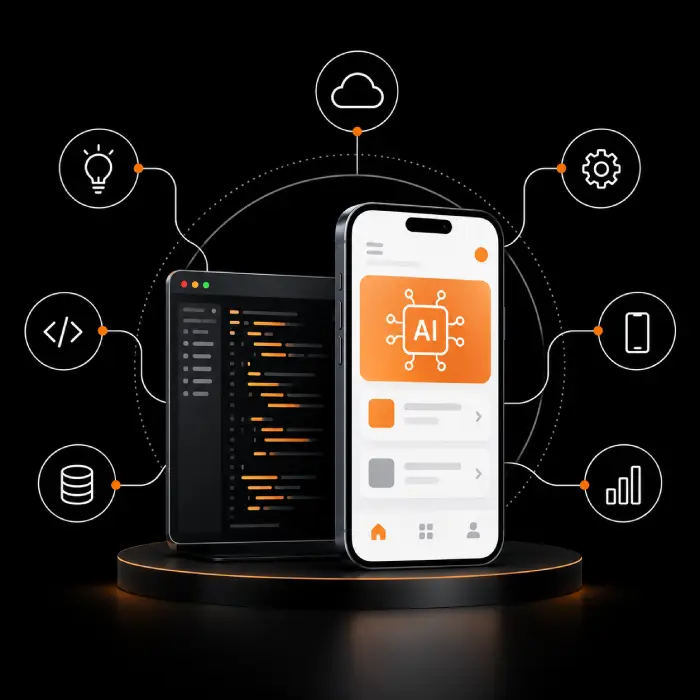
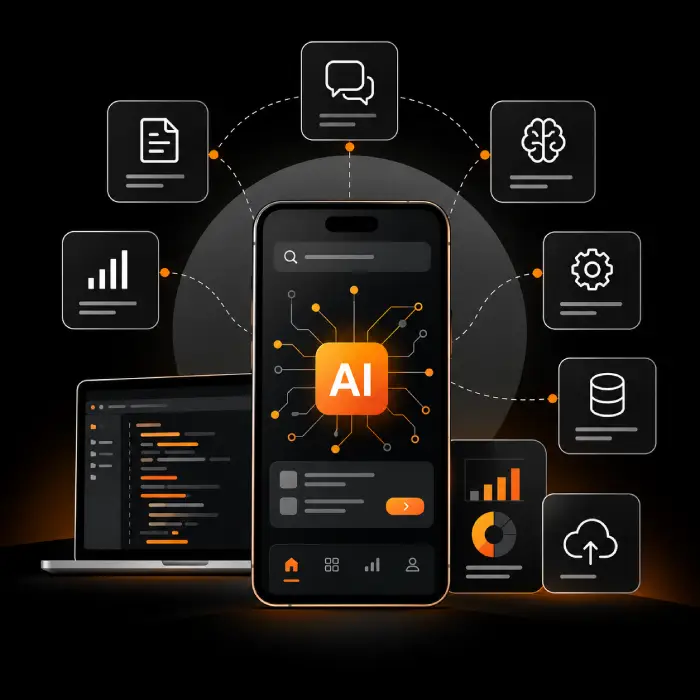
AI-powered app development is the design, engineering, and deployment of web, mobile, or enterprise applications in which AI performs a core function, such as answering questions, predicting outcomes, recommending items, reading documents, or automating decisions. It differs from standalone AI model development: the goal is a finished application that people use, with the AI connected to your data and workflows.
Our AI application development services cover the whole app, and the mix varies by project:
- Custom AI app development for web, mobile and enterprise products, from concept to launch.
- AI model integration and AI API integration, including language models, retrieval, vision, speech, and predictive models.
- Product discovery, AI solution architecture, and UX/UI design focused on how people will use the AI.
- AI app integration services that connect the app to your CRM, ERP, databases, and internal APIs.
- AI application testing for accuracy, safety, latency, and cost, plus security and data-privacy controls.
- AI application deployment, monitoring, and AI application maintenance after launch.
- Modernization of existing applications that need AI added without a full rebuild.
Why Businesses Invest in AI-Powered Applications
Conventional apps do exactly what they were coded to do, so every new case means new code. Intelligent application development lets an app handle language, documents, images, and patterns that fixed rules cannot cover. Outcomes depend on use case fit, data readiness, integration, and adoption, so we describe the value in terms of what changes for users and teams, not promised percentages.
Less Manual Work in Daily Workflows
Apps can read documents, classify requests, and draft responses, so staff spend more time on exceptions and judgment calls.
Better Experiences for Customers and Users
Conversational interfaces, search that understands intent, and personalized suggestions help users reach what they need faster.
Faster, Better-Informed Decisions
Predictive models and summarized insights put the relevant information in front of decision-makers inside the tools they already use.
Personalization at Scale
Recommendations and content adapt to each user’s behavior and context, which fixed rules struggle to do for large user bases.
A Product That Keeps Improving
AI features can be evaluated, monitored, and refined with real usage. Planning for evaluation, data quality, and maintenance from the start is what separates a lasting product from a one-time demo.
AI-Powered Application Solutions Built for Your Business
Explore our AI-powered application development services to build tailored solutions for internal teams and customer-facing products. Choose the application types that fit your business goals, or combine capabilities to create scalable AI-enabled business applications designed around your workflows and requirements.
Custom AI Web and Enterprise Apps
Dashboards, portals, and internal tools with AI built into the workflow, such as smart search, document handling, and decision support, delivered as AI web application development.
AI Mobile Apps
iOS and Android apps with AI features, using cloud AI or on-device models depending on latency, privacy, and connectivity needs. This is our AI mobile app development track.
LLM and Generative AI Apps
Assistants, copilots, and content tools powered by large language models, built as LLM-powered applications. Model-level work sits with our generative AI solutions team.
Conversational and Agent Apps
Chat and voice interfaces, and agents that complete multi-step tasks with human approval where needed. See AI chatbots and agentic AI development.
Knowledge and Search Apps
Apps that answer questions from your own documents and data using retrieval-augmented generation, with sources shown to the user. Built with our RAG experience.
Vision, Language and Speech Apps
Apps that read images, extract meaning from text or work with voice, drawing on our computer vision and NLP work.
Predictive and Recommendation Apps
Applications that forecast, score, or rank, from demand and risk indicators to personalized suggestions, as machine learning application development inside a usable product.
AI Integration for Existing Apps
New AI features added to an application you already run through APIs and your existing systems, as AI integration services for existing applications, with enterprise connections via our enterprise integration work.
AI App Modernization
Assessment and phased upgrade of older applications so they can support AI features, without forcing a risky full rebuild when a staged approach is enough.
What Should Your App Do That It Can’t Do Today?
Describe the product idea, the workflow you want to improve or the app you want to extend. We will help you judge what is realistic and what a first build could include.
Our AI App Development Process
We follow a structured approach to AI app development, starting with validating your use case before building, deploying, and improving the application. Based on your goals, data readiness, integration needs, and project scope, we define a clear implementation plan and timeline during discovery.
- 1
Discovery and Use Case Definition
We agree on the users, the workflow, and what success looks like. Output: a scoped brief, success measures, and an initial feature list.
- 2
Data, Architecture and Model Choice
We review data sources and access, then compare models and architecture options for accuracy, cost, latency, and privacy. Output: an architecture outline and data plan.
- 3
UX/UI Design and Prototype
We design how users interact with AI output, including confidence, corrections, and handoff to a person. Output: wireframes and a clickable prototype.
- 4
Build and AI Integration
We build the application and integrate models, retrieval, agents, or predictive services with your systems. Output: working increments reviewed at each stage.
- 5
Testing, Evaluation and Security
We test functionality, AI quality, latency, cost, bias, and security against the success measures. Output: test and evaluation results with open risks listed.
- 6
Deployment, Monitoring and Improvement
We deploy, monitor quality and usage, and refine the app as real data arrives. Output: a live app, monitoring, and an improvement backlog.
AI-Powered App Development Use Cases
Explore practical use cases for AI-powered application development across business operations and customer experiences. From automating repetitive tasks to delivering intelligent, personalized features, each solution is tailored to your goals, data, and user needs.
Customer Support and Booking Assistants
Customers wait for answers outside office hours. A conversational app answers routine questions, checks live data such as availability, and hands complex cases to staff, reducing repetitive load on the team.
Document-Heavy Back-Office Workflows
Staff re-key data from invoices, forms, or contracts. An app extracts the fields, shows a review screen for uncertain values, and exports to existing systems, so people verify rather than type.
Personalized Recommendations
Users face too many choices. A recommendation feature ranks products, content or actions using each user’s behavior and context, and is tuned against the business goal you define.
Sales and Call Coaching
Sales teams rarely get detailed feedback on calls. An app analyzes uploaded calls, flags missed opportunities and objections, and lets reps discuss suggested improvements through chat.
Internal Knowledge Assistants
Answers are buried in wikis, drives, and inboxes. A retrieval-based app answers questions from approved sources, respects access rules, and shows where each answer came from.
Predictive Analytics Dashboards
Teams react after problems appear. A predictive app surfaces forecasts and risk scores inside a familiar dashboard, with the data behind each score visible to the person deciding.
Visual Search and Inspection
Some checks depend on a person looking at images. A vision-enabled app flags likely defects or matches products from photos, and routes uncertain cases to a human reviewer.
Voice and Multilingual Experiences
Not every user types in one language. Speech and translation features let people speak or write in their own language, with the app handling transcription and responses.
Build a New AI-Powered App or Add AI to an Existing One?
Choosing between building a new AI-powered application and integrating AI into an existing app depends on your business goals, current technology, and budget. Compare both approaches to determine which best fits your needs, with the flexibility to expand as your requirements evolve.
Technologies We Use to Build AI-Powered Applications
We select AI technologies and development frameworks based on your business goals, data, existing systems, privacy requirements, and budget. Our focus is on building secure, scalable AI-powered applications using the tools best suited to your use case and long-term needs.


















Industries We Help With AI-Powered App Development
Why Choose Wappnet AI as Your AI App Development Company?
An AI app is only as good as the engineering around the model. As an AI app development company, we treat the application, the data, and the AI as one product, so what we build works in production and not only in a demo. Our team plans for integration, security, evaluation, and long-term maintenance from the first discussion, and we are open about trade-offs before you commit budget.
AI and Application Engineering Together
Our teams build generative AI, agents, RAG, NLP, computer vision, and data pipelines alongside the web and enterprise apps that use them, so nothing is lost in handoff.
Honest About Fit and Scope
We tell you when a simpler approach is enough or when the data is not ready. For early-stage questions, start with our AI consulting team.
Security and Governance Built In
Privacy, access control, and human oversight are designed in from discovery, supported by our Responsible AI practice. Compliance duties stay with your organization.
A Partner Beyond Launch
As an AI application development partner, we support deployment, MLOps, and ongoing improvement, or work alongside your team through dedicated AI developers.
Real-World AI-Powered Applications We've Delivered
End-to-end web, mobile, and enterprise AI applications engineered for high reliability, real data connectivity, and measurable ROI.
Omnichannel AI Support & Appointment Scheduling App
Built an intelligent web and mobile conversational application integrating CRM data, reducing human support overhead by 55%.
AI-Powered Document Intelligence & Verification Portal
Engineered an automated parsing web app for financial records and invoices with human-in-the-loop validation dashboards.
Real-Time Product Recommendation & Visual Search Mobile App
Integrated on-device vision models and vector similarity search into a high-scale retail iOS/Android application.
Ready to Build Your AI-Powered App?
Bring your idea, your users, and what you know about your data and systems. We will discuss scope, approach, and a practical first step, with no obligation.
Latest AI Insights & Industry Trends
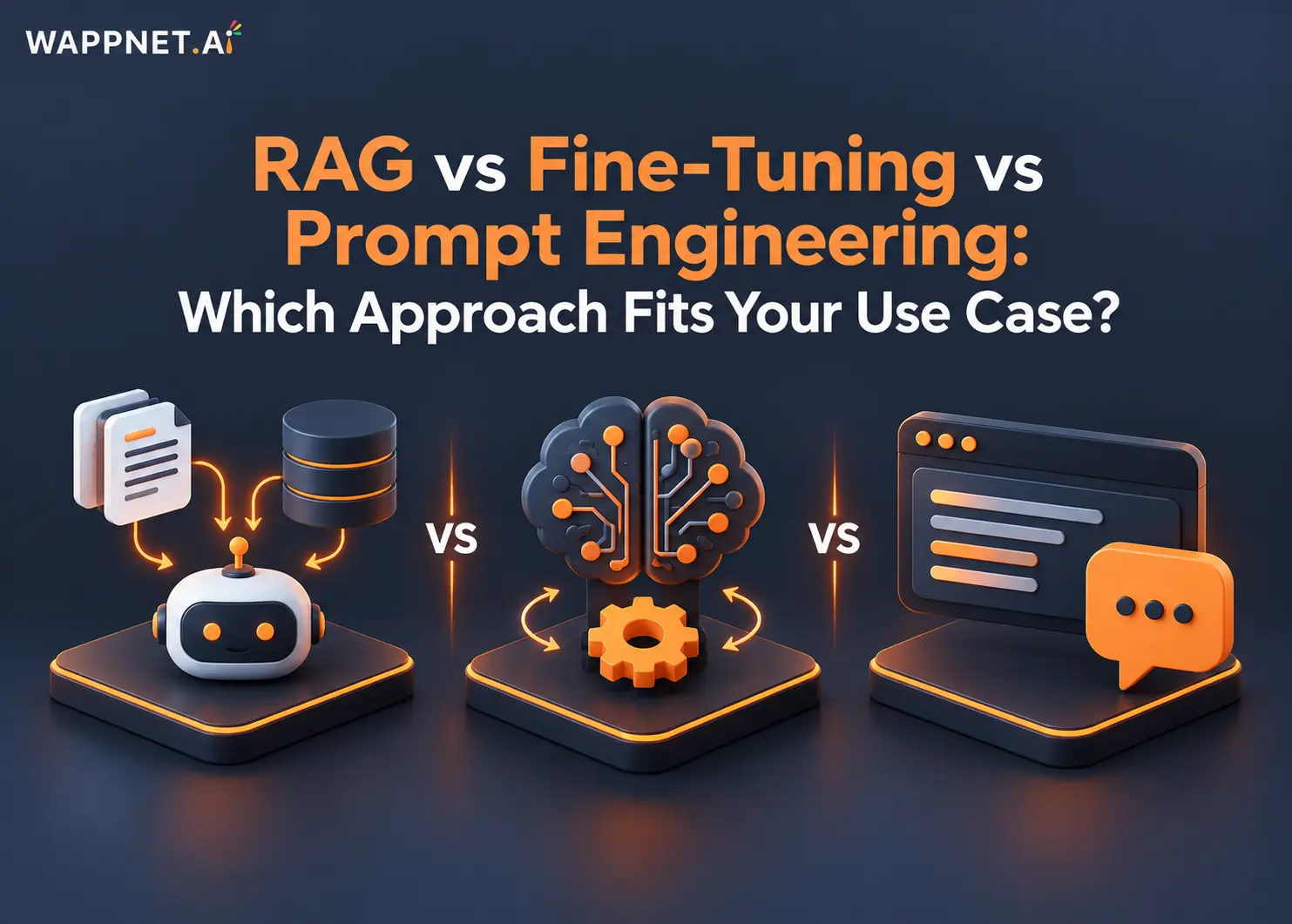 RAG
RAG vs Fine-Tuning vs Prompt Engineering: Which Approach Fits Your Use Case?
Compare RAG, fine-tuning, and prompt engineering to explore costs, use cases, and the best approach for enterprise AI.
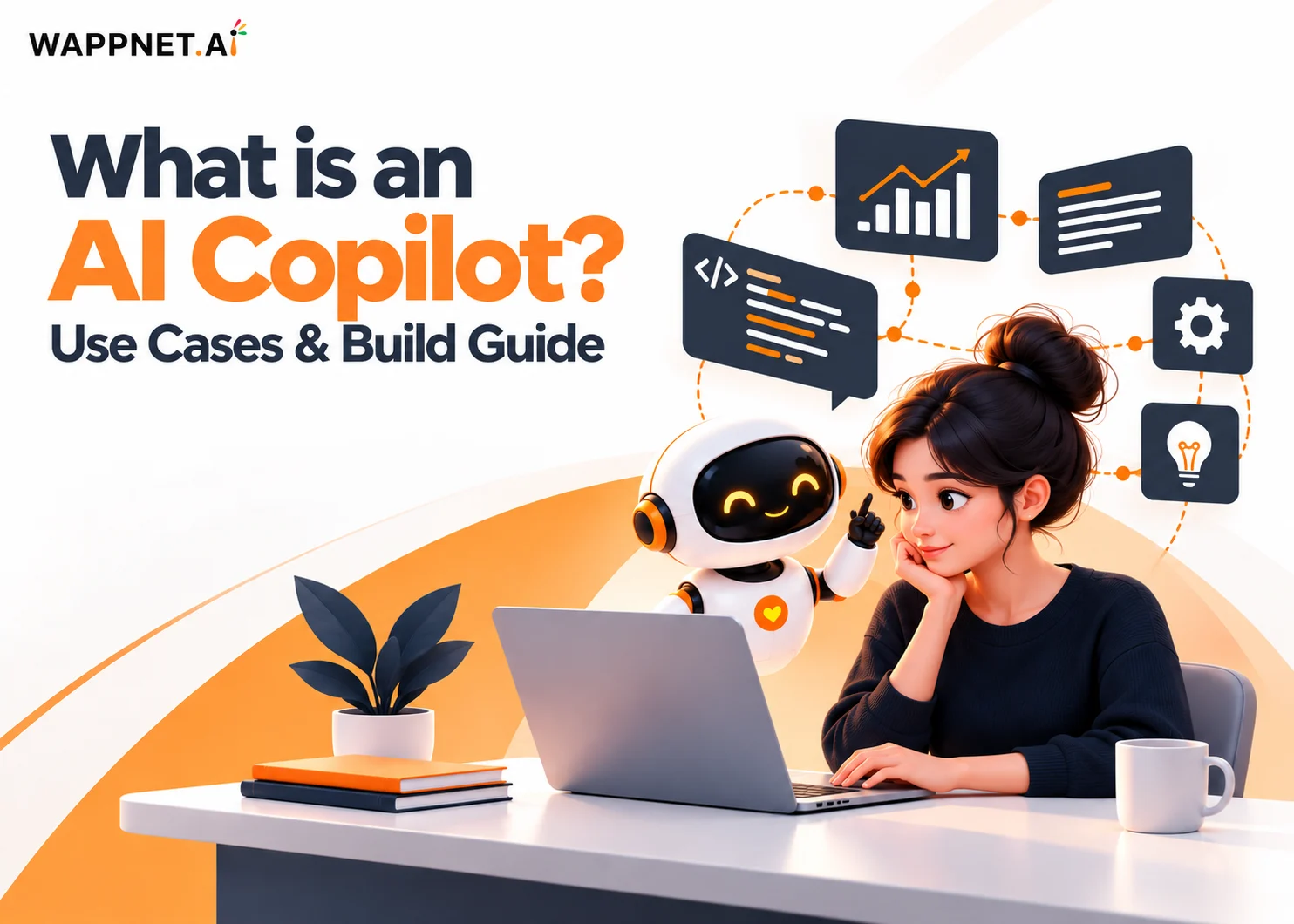 AI Copilot
What is an AI Copilot? Use Cases & Build Guide
What is an AI Copilot? Learn how it works, how it differs from AI agents, key use cases, and how to build one for your business.
 RAG
What Is RAG? A Complete Guide to Retrieval-Augmented Generation
Learn what RAG is, how Retrieval-Augmented Generation works, reduces AI hallucinations, and powers smarter enterprise AI.
Frequently Asked Questions
AI-powered app development is the design and engineering of web, mobile, or enterprise applications in which AI performs a core function, such as answering questions, predicting outcomes, recommending items, or processing documents. It covers the interface, backend, data connections, and AI components as one product.
They typically include discovery, architecture, UX/UI design, application development, AI model integration, system integration, testing, security review, deployment, and ongoing monitoring and maintenance. Scope varies, and some projects add AI to an existing app rather than building a new one.
Common builds include conversational assistants, document-processing tools, recommendation features, knowledge-search apps, predictive dashboards, vision and speech apps, and AI features added to existing software. What is suitable depends on your data, users, and risk tolerance.
AI lets an app understand language, images, and speech, personalize content, predict outcomes, and automate routine steps. The benefit depends on the use case and data quality. AI works best on tasks where rules are hard to write and a person can review uncertain results.
Cost depends on scope, the number of AI features, data preparation, integrations, security requirements, platforms, and ongoing model usage. A single feature added to an existing app costs less than a new multi-platform product. We provide an estimate once requirements are clear.
Duration depends on scope, data readiness, integration complexity, and how quickly feedback is given. A focused prototype takes less time than a full enterprise application. We propose a phased plan after discovery instead of promising a fixed number in advance.
Yes, usually through APIs, services, or embedded models, if the app’s architecture and data can support it. A feasibility review of your code, data, and integrations shows what is practical and whether any modernization is needed first.
Typical components include language models, machine learning frameworks, retrieval and vector databases, application frameworks, cloud AI platforms, and MLOps tooling. The right mix depends on accuracy, latency, cost, privacy, and your existing systems, and we recommend it after discovery.
We apply access controls, data minimization, encryption and monitoring, define what data models may see, test for misuse and unsafe output, and keep a person in the loop where decisions matter. Compliance obligations remain with your organization and legal advisers.
Look for a team that starts with your use case, explains limits honestly, and has delivered AI apps, not only demos. Ask how they evaluate AI quality, handle data and security, integrate with your systems, and support the app after launch.
Usually not. Many apps use existing models through APIs, with retrieval over your own data or light adaptation. Custom model training makes sense only when existing options cannot meet your accuracy, cost, or data-control needs, which discovery helps establish.
AI quality can change as data and user behavior change, so we recommend monitoring accuracy, cost, and usage, handling errors, and updating models or prompts as needed. Ongoing maintenance and improvement can be agreed as a separate support arrangement.